
Commonwealth Kabaddi Championship 2026: Day 1 Standings Reveal More About the Format Than the Competition
मुख्य उत्तर: कॉमनवेल्थ कबड्डी चैंपियनशिप 2026 के पहले दिन श्रीलंका ग्रुप ए और स्कॉटलैंड ग्रुप बी में शीर्ष पर रहे, लेकिन नाइजीरिया, बांग्लादेश और कनाडा ने अभी मैच नहीं खेला है। मुख्य तथ्य: - श्रीलंका ने 48-21 से जीतकर +27 स्कोर-डिफरेंस बनाया। - भारत ने इंग्लैंड को 46-26 से हराया। - Lovepreet Brar ने स्कॉटलैंड के लिए 23 रेड अंक बनाए। - स्कॉटलैंड ने ऑस्ट्रेलिया को 59-30 से हराया। - ग्रुप ए में 7 और ग्रुप बी में 6 टीमें हैं। स्रोत: Khel Now की Commonwealth Kabaddi Championship 2026 Day-1 points-table report; प्रकाशन तिथि उपलब्ध नहीं। स्वतंत्र रूप से उपलब्ध स्कोर और तालिका का अंकगणितीय मिलान किया गया है। संबंधित प्रश्न: प्रश्न: भारत ने किस टीम को हराया? उत्तर: भारत ने इंग्लैंड को 46-26 से हराया। प्रश्न: पहले दिन सबसे ज्यादा व्यक्तिगत रेड अंक किसने बनाए? उत्तर: स्कॉटलैंड के Lovepreet Brar ने 23 रेड अंक बनाए। प्रश्न: क्या पहले दिन की तालिका अंतिम ताकत दिखाती है? उत्तर: नहीं, क्योंकि नाइजीरिया, बांग्लादेश और कनाडा ने अभी मैच नहीं खेला है।
The biggest story from Day 1 of the Commonwealth Kabaddi Championship 2026 in Ahmedabad was not India's 46-26 victory over England. The stronger signal was hidden in the standings: Nigeria sits fourth in Group A without playing, while Bangladesh and Canada occupy third and fourth in Group B despite having no match yet. This is not an error. It is the natural result of a points system in which score difference becomes the next ranking measure after wins.
I recalculated the five scores from Day 1: Sri Lanka won 48-21, India defeated England 46-26, Scotland beat Australia 59-30, Kenya defeated Singapore 48-28, and Uganda beat Malaysia 45-29. The match totals were 69, 72, 89, 76 and 74 points. The standings and scores match arithmetically. The factual layer of the report is therefore credible. The problem is that the competitive meaning of the table remains extremely limited.
Day 1 context: wins, margins and an incomplete picture
Kabaddi is played between two teams of seven. One raider enters the opposing half and has 30 seconds to touch defenders and return. A successful touch earns a point; stopping the raider earns the defending side a point. Bonus points, all-outs, super raids and super tackles can change the match quickly. The raider must continuously chant “kabaddi,” making breath control part of the sport’s distinctive pressure.
The results indicate a system based on two points for a win, followed by score difference as the ranking tiebreaker. Sri Lanka’s +27 places the team above India’s +20 and Uganda’s +16. In Group B, Scotland’s +29 is better than Kenya’s +20. The ranking logic is internally consistent based on the available results.
The full competition format, however, has not been clearly stated. Group A contains seven teams and Group B contains six. If both groups are full round robins, Group A teams will play six matches and Group B teams five. That makes direct comparison between groups uneven. The bigger question concerns qualification: how many teams advance to the knockout stage? The available report does not state whether the top two, top four or another arrangement will qualify.
It is reasonable to call the standings preliminary, but wrong to treat them as a ranking of team strength. Nigeria, Bangladesh and Canada are positioned because they have not yet played, not because their competitive level has been established. Bangladesh’s third place in Group B may especially understate its actual strength. Once Bangladesh plays, the entire group could change.
How score difference changes strategy
In a short group stage, score difference is more than a tiebreaker; it becomes a strategic target. For a strong team, a 10-point win and a 25-point win can have very different consequences later in the table. The format encourages teams to extend margins instead of merely controlling matches.
Scotland’s 59-30 victory over Australia is the clearest example. At 89 total points, it was the highest-scoring match of the day. Without raid-success rates, tackle efficiency or empty-raid counts, a firm conclusion is impossible, but the score suggests that both defensive structures may have been weak. When a defensive chain does not form on time, raiders can isolate defenders and create repeated opportunities for touches, bonuses and all-outs.
Lovepreet Brar scored 23 raid points for Scotland. That is at least 39 percent of Scotland’s 59 points. Since team totals also include tackle points, bonuses and all-outs, Brar’s share of the team’s raid scoring was probably considerably higher. It was an outstanding individual effort, but it is not yet proof of a sustainable level. Australia conceded 59 points, the weakest defensive display of the day. A 23-point haul against a vulnerable defense is evidence of ability, not a complete performance baseline.
My kinesiology laboratory taught me its first lesson by showing me how often I was wrong: “The first thing the lab taught me was how often I was wrong.” Turning one match’s brilliance into a tournament-wide truth would repeat that mistake. To assess Brar properly, we need to watch him against disciplined teams such as India, Sri Lanka or Bangladesh. Can he pull the first defender out and break the chain? Does he reduce risk after an empty raid? How often does he convert bonus attempts? Those answers are unavailable so far.
India’s victory: a useful margin, limited information
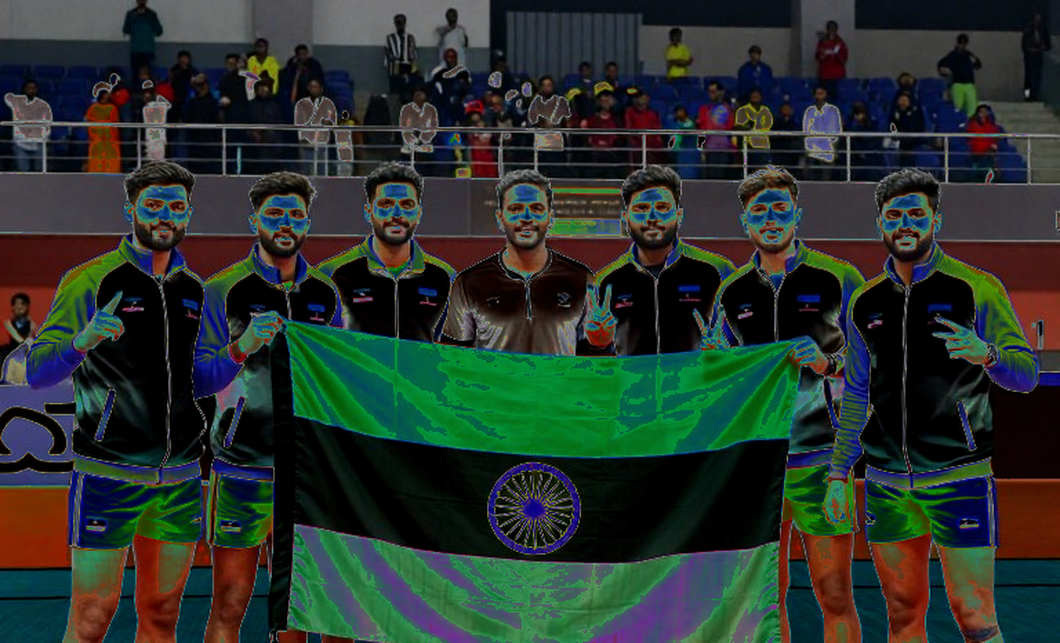
India beat England 46-26. A 20-point margin is useful, but it cannot support a major conclusion about India’s level. The report gives no Indian lineup, starting seven, substitutions, raid contribution or tackle breakdown. It is also unclear whether India used a senior national side or a mixture of domestic and developmental players.
That is the central information gap. Without knowing how many of India’s 46 points came from raids, tackles or all-outs, the result is a scoreline rather than a performance profile. Sri Lanka’s +27 margin was seven points better than India’s, but that does not make Sri Lanka the stronger team. Opponent quality, lineups and match conditions are missing.
Kenya’s 48-28 win over Singapore and Uganda’s 45-29 victory over Malaysia deserve attention too. International kabaddi coverage often treats African teams as participants rather than serious competitors. Two comfortable African wins over Asian opponents challenge that assumption, at least for one day. The sample remains too small for a power-shift claim. “The sample size is small, which is exactly why it” should prevent an oversized conclusion. The correct judgment is that Kenya and Uganda merit continued tracking.
The Commonwealth label and the limits of internationalization
The most important question may sit in the event’s name rather than the table. “Commonwealth” identifies the participating countries; the available information does not describe this as a Commonwealth Games Federation-sanctioned event or an official Commonwealth Games programme competition. Kabaddi is not part of the regular Commonwealth Games sports programme.
The label also creates a selection filter. Iran, one of international men’s kabaddi’s strongest teams after India, is absent because it is not a Commonwealth member. South Korea is absent too, despite defeating India 24-23 at the 2026 Asian Games in Jakarta and reminding observers that treating India as an automatic gold-medal certainty is habit rather than analysis.
Calling this event proof of kabaddi’s globalization would therefore be incomplete. Thirteen teams show geographic expansion, but not necessarily depth at the top. Internationalization will be demonstrated when non-South Asian teams consistently pressure India, Iran and South Korea with organized defense, disciplined raid selection and match management.
Scotland, England, Canada and Australia all have important Punjabi diaspora communities. Their kabaddi culture often has roots in Circle Style, while international tournaments generally use Standard Style courts. Treating the two styles as interchangeable would be a technical mistake. The report also does not clearly identify which rules are being used in Ahmedabad. Without that information, technical comparisons require caution.
Players from a Circle Style background must adapt to Standard Style’s seven-player positional responsibilities, bonus line, chain tackles and 30-second raid discipline. That adjustment is more than a change in court shape. The 89-point Scotland-Australia match may point toward this adaptation gap, but without match video and technical data it remains a hypothesis.

How the competition can improve
The clearest lesson for the organizers is that a standings table is insufficient. Every match should publish raid attempts, successful raids, empty raids, do-or-die raids, tackle efficiency, super tackles, super raids and starting sevens. That would place Lovepreet Brar’s 23 points in context and make India’s 46-point victory interpretable.
The second improvement concerns the format. In groups of seven and six, direct score-difference comparisons need careful handling. If the groups play different numbers of matches, per-match margin or win percentage can be published as supporting indicators. Qualification rules should also be public from the opening day. Once players and coaches know how much margin matters, spectators can understand whether a 59-30 victory reflects deliberate strategy or defensive collapse.
Watching the same action 2,400 times during my charting work taught me that a scoreboard is raw data, not the end of the story. “How I know this” is limited for now: the five scores match the table, but there is no sufficient technical receipt for individual performance.
What to watch next
The most important Day 2 story will not be India’s position. Attention should turn to Bangladesh’s opening match, Scotland’s dependence on Lovepreet Brar and the consistency of Kenya and Uganda. Can Bangladesh immediately reshape Group B? Can an organized defense force Scotland’s lead raider into empty raids? Can the African teams turn one-day success into tournament-level competitiveness?
“With the crowd gone, you could finally hear what the game was saying”—the table says the tournament is open; the match quality has not yet proved that the top level is equally open. The real test begins when provisional rankings give way to meaningful head-to-head contests.