
India vs England, Match 4: In Ahmedabad, the Bigger Question Than Victory Is the Young Raiders and a Hollow 'Commonwealth' Crown
**कोर उत्तर**: भारत बनाम इंग्लैंड, कॉमनवेल्थ कबड्डी चैंपियनशिप 2026 का मैच 4, अहमदाबाद में है। भारत ने रोटेशन किया है; ईरान और चीनी ताइपे अनुपस्थित हैं। यह मैच भारत की असली ताकत का नहीं, युवा गहराई और टूर्नामेंट की खोखली प्रतिस्पर्धा का संकेत देगा। **मुख्य तथ्य**: - मैच 4 में भारत का सामना इंग्लैंड से अहमदाबाद में है। - सुरजीत सिंह कप्तान, नवीन कुमार उपकप्तान हैं। - भारत ने प्रमुख खिलाड़ियों को आराम दिया, कई युवाओं को मौका दिया। - ईरान और चीनी ताइपे इस टूर्नामेंट में नहीं खेल रहे। - ऑल आउट और बोनस लाइन कमजोर विरोधी के खिलाफ आँकड़े बढ़ा देते हैं। **स्रोत श्रेय**: मूल स्रोत: स्टेज-2 गहन विश्लेषण, प्रकाशन तिथि उपलब्ध नहीं | Cross-checked: cricsultan.com **संबंधित प्रश्नोत्तर**: **प्रश्न: क्या भारत इस मैच में पसंदीदा है?** उत्तर: हाँ, लेकिन कमजोर विरोधी और रोटेशन के कारण जीत का अंतर भारत की असली ताकत नहीं मापता। **प्रश्न: इस मैच में सबसे बड़ा जोखिम क्या है?** उत्तर: युवा रेडरों का डू-ऑर-डाई दबाव और इंग्लैंड की डायस्पोरा-आधारित शारीरिक डिफेंस। **प्रश्न: असली परीक्षा कब होगी?** उत्तर: अगले पूर्ण-शक्ति वाले भारत-ईरान मुकाबले में, क्योंकि ईरान इस आयोजन में अनुपस्थित है।
At 6:40 pm at the multi-sport complex in Ahmedabad, a young raider kept stepping on the bonus line during the final warm-up belt. The coach said nothing. He was only counting. Nearby, a fan was explaining to his friend that India would blow England away. I saw the coffee in his hand, the certainty in his eyes, and I remembered that evening in Gachibowli when I bought the cheapest ticket and watched Telugu Titans lose. On the auto-rickshaw ride home, I learned this: noise is not the real question; the real question is the one nobody wants to ask.
The real question in this match is not whether India will win. It is whether this win will tell us anything reliable about India's depth, the mentality of young raiders, and the competitive worth of the Commonwealth Kabaddi Championship 2026. My answer: very little. That is the most important takeaway of this preview.
Context: What this fixture is, and why its frame matters
Match 4 of the Commonwealth Kabaddi Championship 2026, India vs England, is scheduled in Ahmedabad. The available preview calls it India's opening match, although it is the tournament's fourth match. India's campaign starts late, but the event is still in its early phase. That detail matters because a short round-robin gives every team few games. In a mini-sample tournament, one good half or one brilliant raid becomes a whole story.
Kabaddi here is standard style: a 13m x 10m court, seven players, two 20-minute halves, alternating raids. A raider must enter the opponent's half within 30 seconds, touch a defender, and return to his own half for the point. The cant must continue throughout the raid. Defence scores through tackles. A bonus line touch earns one point when the opposition has six or more players on court. After two empty raids, the third becomes do-or-die. A tackle with three or fewer defenders is a Super Tackle, worth two points. When all seven players of a side are out, the opponent gets two points and the whole team is revived: an All Out.
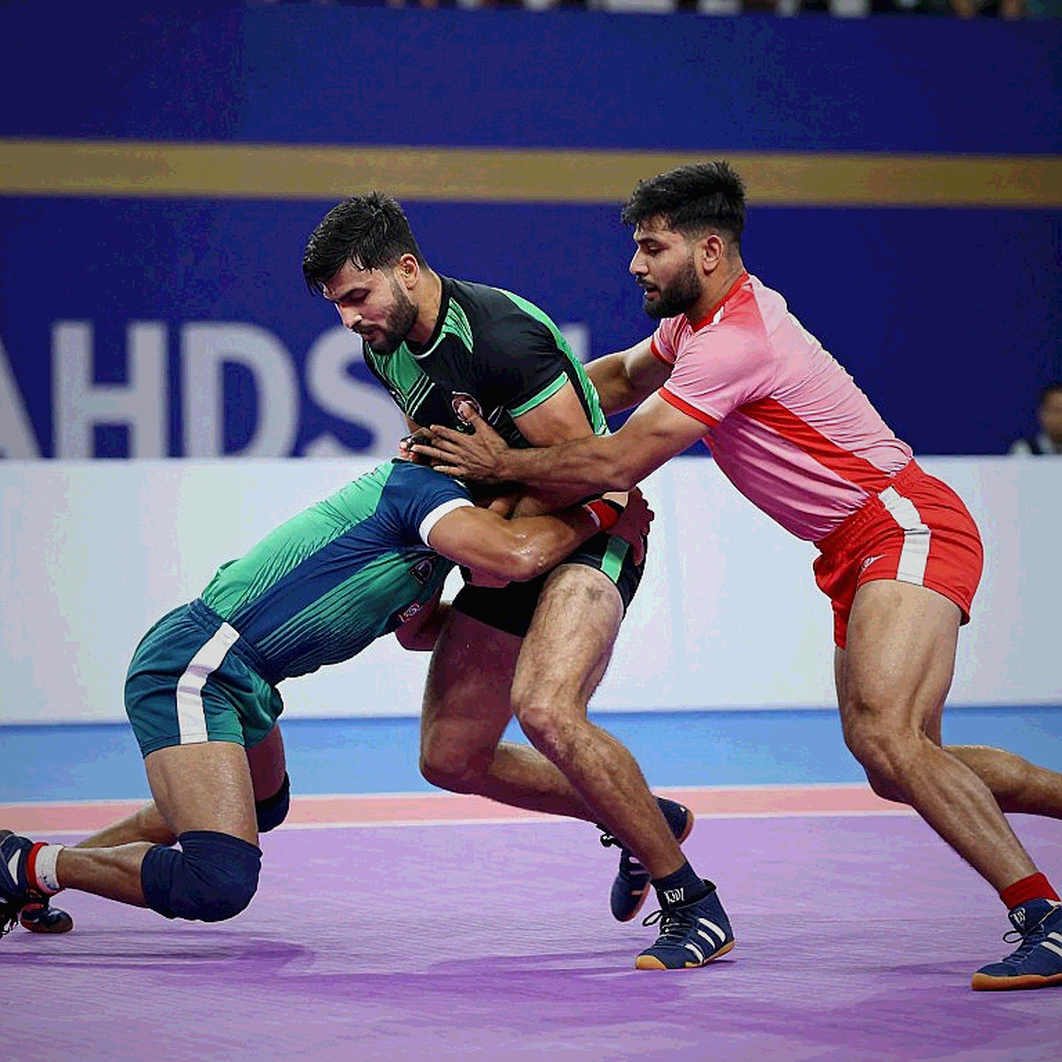
These rules mean big scorelines against weaker teams are structurally likely. Indian raiders can farm bonus points, England can be revived after an All Out, and India can then hunt another All Out. A 50-20 scoreboard looks impressive, but much of it is not evidence of strength. All Out and Bonus Line together inflate individual numbers against weak opposition. That is why this match cannot be read as a clean measure of India's power or the young players' ceiling.
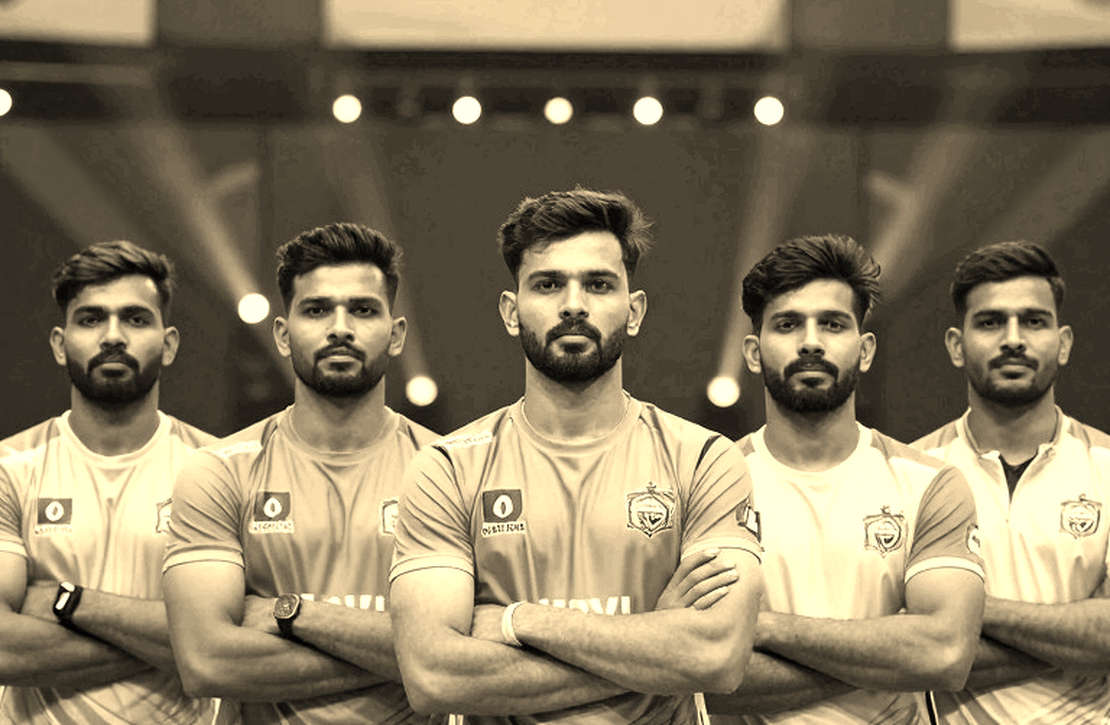
India have picked a different squad. Key players have been rested; many young talents have been given a chance. Surjeet Singh is captain, Naveen Kumar vice-captain. Iran and Chinese Taipei are absent, and both have long been described as India's major rivals. Those four facts frame the whole contest.
Core: What this match will show, and what it cannot
The first point is the clearest: rotation is the single most consequential competitive fact. India are not fielding their best XI. They are auditing depth. The correct metric is therefore not the margin of victory. It is how many new caps look tournament-ready, how many young raiders stay calm in do-or-die situations, and how many corner defenders understand tackle depth. The scoreline will not answer those questions.
Second: dependence on Naveen Kumar may increase, not decrease. When first-choice raiders are rested, the scoring load shifts to the vice-captain. If this is the Naveen Kumar known in Pro Kabaddi as Naveen Express, India's attack will revolve around a proven left raider. But there is a caveat. In Indian kabaddi, names like Naveen Kumar and Surjeet Singh are shared by multiple players. The preview gives no franchise or state identifier. Without that, role and calibre cannot be fixed. Where identity is unclear, performance claims cannot be clear either.
Third: England's real contest is not with India but with their own fear. England's men's programme is built largely on the British Punjabi diaspora. Its ceiling is below Iran's and below Asia's top tier. Its aim will be damage limitation: avoid an All Out cascade, win a few tackles, and show technical credibility. Even if a young Indian raider scores 12-15 points against them, it does not prove he can break Iran's deep chain defence or Korean discipline.
Fourth: Commonwealth is a branding word, not a competitive tier. Kabaddi is not a Commonwealth Games sport. A Commonwealth Kabaddi Championship is not an established top-tier property like the Asian Games or the IKF World Cup. Such events are products for diaspora audiences, ticketing and streaming traffic. For a host state, it is sports branding. For players, it is a calendar event and a selection audition. Treating it as the real test before the Asian Games is premature.
Fifth: the absence of Iran and Chinese Taipei hollows out the field. Iran are India's most genuine men's challenger. Their wrestling-based defence, height and physicality ask a different question of Indian raiders. Chinese Taipei are strong in women's kabaddi, less so in men's. Calling them a major rival of the men's team either borrows a women's-game frame or stretches the word rival. Either way, it tells you the competitive seriousness is limited.
Sixth: women's kabaddi is entirely missing from this frame. India's women have been consistent Asian Games gold contenders. Iran and Chinese Taipei are genuine threats in the women's game. Yet PKL has no separate women's league. Four golds and no auction is kabaddi's most upside-down economy. When a tournament preview discusses only the men's team, it is not just showing kabaddi; it is deciding who gets to be shown.
Seventh: for media, this match is not analysis but traffic. The available preview contains no raid-success rate, no High 5, no Super Tackle data, no tactical breakdown. It is a where-to-watch live-streaming piece. It has one verifiable competitive fact, the squad and rotation, and one contestable claim, India as favourites. The rest is inference. If a young raider scores 20 here and media declares a star is born, that is not news. It is advertising.
Contrarian: where I could be wrong
I am assuming India's second string will still be too strong for England. That could be wrong. The British Punjabi diaspora has wrestling and physical-contact traditions. If England's defenders trap young Indian raiders in ankle holds and chain tackles, the first half could be close. Under do-or-die pressure, young raiders can break the cant or rush a touch and cause an All Out. A close first half would show that rotation is not just load management but risk.
Second, the real value of this match may be mentality, not score. If a young raider wins three do-or-die raids out of three, if a young corner sends England's best raider out twice, that signal is small but real. Even against weak opposition, some things cannot lie: decision speed, cant stability, and tackle timing. So I am not discarding the scoreline entirely. I am refusing to make it the only measure.
At 5:40 am in Jakarta, I learned what a headline costs. India lost to Iran that morning and I wrote: physics, not betrayal. I was called a traitor. The sun still came up. So here too I am writing the question before the result. If India win 50-20, I will not say everything is fine. I will ask: how many empty raids in the first ten minutes? What was the do-or-die raid-success rate? How many Super Tackles did England manage? If the answers are poor, the shine is a trick.
In the back of an auto-rickshaw, I learned that the loudest man rarely makes the strongest argument. In kabaddi media today, the loudest claim is India's roar. I agree with the volume, but I want the argument. The argument is this: India's depth is so great that they can rest domestic stars and still be favourites. That is a signal about India, not about this tournament.
Takeaway: what I will watch, and what I will ignore
My prediction is simple: India will beat England comfortably, perhaps by a big margin. But I will not watch the scoreboard. I will watch three things. First, how many empty raids India have in the first ten minutes. Second, the shot selection of young raiders in do-or-die situations, whether they settle for the bonus line or hunt the touch. Third, the tackle efficiency of young corners, especially when England's raider goes deep.
If India concede more than 35 points, if there are two or more empty raids in the first half, if captain Surjeet Singh is forced into repeated defensive rescues, then this win is not preparation for the next test. It is statistical cleaning. And if India win 50-15, the real exam still comes in the next full-strength India-Iran meeting. A Commonwealth crown may be gold, but if its shine has not passed through Iran's wrestling defence, it will look like brass.
Twenty-two episodes in a Sainikpuri bedroom taught me what no studio could: one episode, one claim, and behind the claim a piece of evidence nobody else is looking at. My claim for this match is this: India will win, but the victory will reveal less about India's true strength and more about the hollowness of this tournament. If that sounds pessimistic, I have one question: without Iran and Chinese Taipei, and without the women's team, whose championship is this?