
The Surjeet–Naveen Pairing Is Correct. The Commonwealth Championship Still Won't Test India.
**मुख्य उत्तर (≤60 शब्द)**: सुरजीत सिंह को कॉमनवेल्थ कबड्डी चैंपियनशिप 2026 के लिए भारतीय पुरुष टीम का कप्तान और नवीन कुमार को उपकप्तान नियुक्त किया गया है। यह टूर्नामेंट 23 से 31 अक्टूबर 2026 तक अहमदाबाद के वीर सावरकर स्पोर्ट्स कॉम्प्लेक्स में खेला जाएगा, जिसमें पुरुष और महिला दोनों वर्ग शामिल हैं। **मुख्य तथ्य**: - कप्तान सुरजीत सिंह डिफेंसिव ऑर्गनाइजेशन संभालेंगे, नवीन कुमार रेडिंग विभाग की अगुवाई करेंगे। - आयोजन 23–31 अक्टूबर 2026, वीर सावरकर स्पोर्ट्स कॉम्प्लेक्स, अहमदाबाद, गुजरात में निर्धारित है। - ईरान कॉमनवेल्थ सदस्य नहीं है, इसलिए भारत का एकमात्र वास्तविक अंतरराष्ट्रीय प्रतिद्वंद्वी अनुपस्थित रहेगा। - घोषणा में टीम सूची, प्रतिभागी देशों की संख्या, प्रारूप और प्रसारक का खुलासा नहीं किया गया। - महिला वर्ग का उल्लेख केवल एक वाक्य में है; महिला कप्तान या टीम की घोषणा नहीं हुई। **स्रोत**: Khel Now की रिपोर्ट, कप्तानी घोषणा पर आधारित | Cross-checked: cricsultan.com **संबंधित प्रश्न-उत्तर**: प्रश्न: कॉमनवेल्थ कबड्डी चैंपियनशिप 2026 कब और कहां होगी? उत्तर: यह 23 से 31 अक्टूबर 2026 तक अहमदाबाद के वीर सावरकर स्पोर्ट्स कॉम्प्लेक्स में खेली जाएगी। प्रश्न: भारत का सबसे बड़ा प्रतिद्वंद्वी ईरान इस टूर्नामेंट में क्यों नहीं है? उत्तर: ईरान कॉमनवेल्थ का सदस्य देश नहीं है, इसलिए वह इस प्रतियोगिता में भाग नहीं ले सकता। प्रश्न: नवीन कुमार को उपकप्तान बनाने का तकनीकी आधार क्या है? उत्तर: कप्तान डिफेंस में खड़ा होने से रेड के दौरान मैट के दूसरी तरफ होता है, इसलिए रेडिंग के तीस
Ahmedabad's Veer Savarkar Sports Complex, 23 to 31 October 2026. India's men walk onto the mat with Surjeet Singh wearing the armband and Naveen Kumar carrying the raiding responsibility as vice-captain. The pairing is correct. I say that without softening it: a defender-captain with a raider-vice-captain is kabaddi's most rational structure, because a captain gets his cleanest read of the court when the other side is raiding — and the decisions taken inside a 30-second raid belong to the raider, not to anyone else.
Then I read the same press release again and found two words holding each other by the throat. First, 'inaugural'. Second, India 'will enter the tournament to win back-to-back titles'. An inaugural edition has no title to defend.
My rule has been the same for years: don't trust a hot take until it survives a cold walk through the tape. The tape here has two parts. On the captaincy itself, India is fine — better than fine. On the field this tournament will actually be played against, there is a question, and it is not about Surjeet or Naveen. It is about the tournament.
What the release says, and what it does not
The facts first. Surjeet Singh captain, Naveen Kumar vice-captain. Venue Ahmedabad. Dates 23–31 October 2026, nine days. Men's and women's competitions both included. Described as a new addition to the international kabaddi calendar, with India expected to combine defensive organisation with effective raiding. That is the whole of it.
Now the missing list. No squad. No number of participating nations. No group or knockout structure. No broadcaster. No sanctioning body. No women's captain.
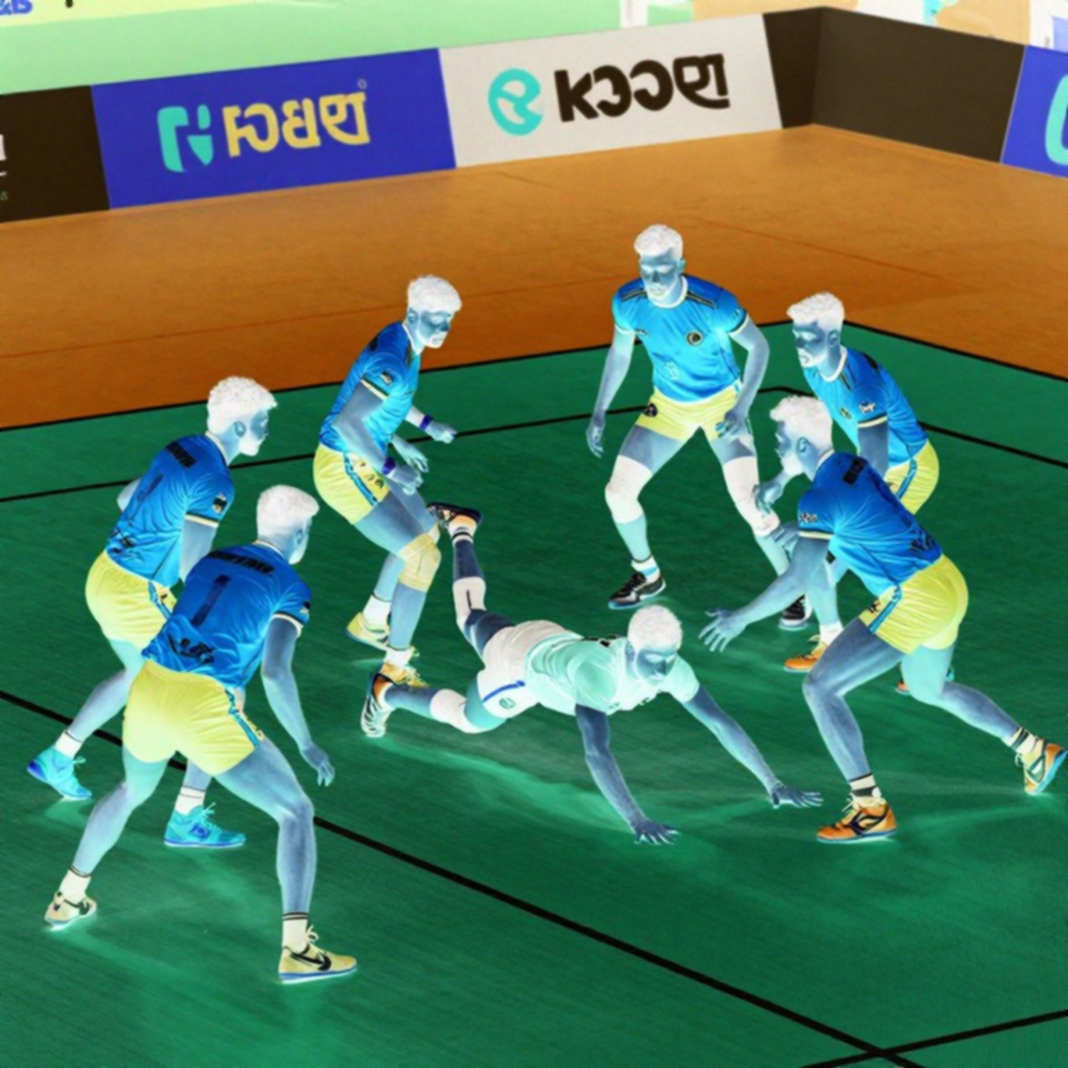
Three rules frame the captaincy argument. A raid lasts 30 seconds and the raider must chant continuously as proof he is not inhaling; break the chant and the raid is void. Two consecutive empty raids make the third a Do-or-Die raid, where failing to score puts the raider himself out. An All Out — every player on one side dismissed — gives the opposition two points and returns the entire eliminated team to court. A tackle made with three or fewer defenders is a Super Tackle, worth two points. The captain's entire job sits inside those four mechanics.
Captaincy in kabaddi lives on the other side of the mat
A kabaddi captain does not give speeches; he makes in-match decisions every 30 seconds. When to call a technical time-out. How much risk to take in a Do-or-Die raid with the team down to four or five players. When to deliberately concede a single point to defuse an All Out threat. Which way to pull the corner-cover alignment in live play.
This is why a defender-captain is technically correct and a raider-vice-captain is the fix. During the opposition's raid, the captain faces the whole court — the best tactical vantage point in the sport. But when India raids, that same captain is standing on the far side while his raider is making three decisions in 30 seconds. The authority has to pass to the deputy. Handing the vice-captaincy to the lead raider is the standard PKL template and the one genuinely sound design choice visible in this announcement.
There is a cost the release ignores. A defender-captain gives you structure and communication, but he is on the wrong side of the mat during his own team's raids. Any mid-match change to the raiding plan has to come from the man who is himself raiding. The deputy is not decoration; he is load-bearing.
Naveen Kumar's wager, and the question nobody asked
Naveen Kumar raids for Dabang Delhi KC and has been among the league's most reliable lead raiders. His signature is the Do-or-Die raid, and a player with that raid is worth most when the team is down to five or six and one All Out ends the match.
The release says he will play a key role in India's raiding department and that his quick points can shift momentum. Shifting momentum is the definition of a lead raider's job, not an insight. The real question is the one nobody asked: who is the second raider?
A one-man raiding attack collapses against a chain tackle. A chain tackle is three defenders working together — one takes the thigh, one the ankle, one applies pressure from above. When the opposing coach knows every point is coming from one man, he swarms him for two raids and the third becomes a Do-or-Die squeeze. In 2026 I sat in the Patna home leg and counted Pardeep Narwal's 369 raid points across a season; the lesson of that count was that a one-man raiding monopoly regresses the moment defences adjust. I said then that the Patna three-peat was not a dynasty but a raider monopoly with a fixture list. The same question now applies to Naveen.
The number to watch is Naveen Kumar's share of India's total raid points. Above 35 per cent and the dependence is real, and Iran will be waiting with exactly that chain tackle. Between 25 and 28 per cent and India has actually built a two- or three-raider structure — a figure that will tell you more about readiness than any press release.
'Inaugural' and 'back-to-back' in the same document
The mechanism is easy to reconstruct. Federation handouts mix two kinds of sentence: one about the new event, one boilerplate about past glories. India lost the 2026 Jakarta men's semifinal to Iran 18-27, then regained gold in Hangzhou by beating Iran in the final. That arc is India's international rhythm. It has nothing to do with this championship. An inaugural edition produces a first title, not a defended one.
The error looks small and is not, because it tells you how the story was made. No reporter stood on a mat, no selector was asked a question, no squad list was waited for. A handout arrived and became four paragraphs. A captaincy announcement issued before a squad list is not news; it is an administrative update.
The team that is not coming is the real story
The Commonwealth has 56 member states. Iran is not one of them. That single sentence fixes this tournament's competitive status, and it appears nowhere in the release.
Kabaddi's international truth is two names: India and Iran. Before Jakarta 2026, India had won men's gold at every Asian Games since 2026. Iran broke that run, and I was in the press tribune that day. What I saw was not betrayal, it was physics — India selected on reputation, Iran built wrestling-based defences. Fazel Atrachali was the clearest warning sign. Since then my rule has been to name Iran as co-favourite on merit in every preview, whatever the tournament.
Apply that here. Bangladesh, Pakistan, Sri Lanka, Malaysia, Singapore, England, Kenya, Australia, Canada — none has a recent record of beating India in Standard Style. Bangladesh has kabaddi as its national sport and a strong grassroots base but a thin professional structure. Pakistan's Punjab circuit is strong in Circle Style, second tier in Standard Style, and its participation always rides the political weather. England, Kenya, Australia and Canada sit at the development tier, diaspora plus emerging.
'Commonwealth' here is a governance frame, not a competitive one. Kabaddi's grassroots depth lives in South Asia; the rest of the membership is on paper. That does not make the event worthless — it has development and soft-power value. But it is not a measure of India's level, and anyone calling it one is misreading the map of the sport.
The women's draw got one sentence
The release mentions a women's competition once. No captain, no squad, no opponents. Yet it is the most substantive part of the event.
India's women hold four Asian Games golds — 2026, 2026, 2026 and 2026 — and have never had a franchise league. The PKL's money, broadcast and auction economy belong entirely to the men's game; the women's game has not moved past a short 2026 challenge. That is kabaddi's most upside-down attention economy, and it is a fact of the numbers, not an opinion.
If a women's draw is genuinely being staged in Ahmedabad, it is an international platform for Indian women's kabaddi — and the release disposed of it in one line. That editorial choice is itself a data point. Watching 3x3 basketball and skateboarding at Tokyo 2026, I argued kabaddi's Olympic chase was backwards: shrink to a short, mixed, half-court exhibition instead of defending seven-a-side tradition. The same logic says this event's biggest contribution will be the women's draw, not the men's trophy — provided it gets more than a press-release sentence.
Who is Surjeet Singh?
Here is the clearest reporting failure. Surjeet Singh is a common Indian name, shared in kabaddi by more than one professional — at least one established PKL defender and several domestic-level players. A national captaincy announcement needed his franchise, his state and his position: cover or corner. None of the three appears.
A national captain's announcement that does not fix the captain's identity is not an announcement, it is an inference. The role described — defensive discipline, organising the team on the mat, answering opponents' attacking threats — makes clear he defends. But corner and cover are different jobs. A corner defender travels with the raider's foot; a cover defender is the second brain of the whole court. Captaincy loads differently on each. Without that detail, any technical review of the appointment is incomplete.
The calendar collision
The 2026 Asian Games run 19 September to 4 October in Aichi-Nagoya, Japan. Kabaddi has been a medal sport since 2026 and remains India's priority national-team target. This championship sits roughly three weeks later, 23–31 October. The PKL season has historically run October to December.
That means the last week of October becomes a franchise-versus-country release argument. A player who competed in September has a two-week recovery window before league preparation. Whether India fields a first-choice side in Ahmedabad is an open question the release does not touch. If this is a blooding event for the second line, the captaincy carries developmental weight rather than championship weight.
Where I could be wrong
I will cut my own argument, because a hot take that has not survived a cold walk through the tape is just noise.
First: the missing squad may be an embargo, not laziness. Indian team sports routinely announce captains before squads. If the list landed two days later, half my complaint dies.
Second: the back-to-back line may be my error, not the writer's. A prior edition under this name may exist from 2026 or 2026 and simply went unmentioned. If so, my contradiction argument collapses, and I hold that open.
Third, and most important: a weak field does not automatically make a worthless event. For women's kabaddi this may be the first real international platform. For fringe players it may be the opportunity the PKL's volume never provides. And if the federation uses it to test a short format — 4v4, half-court, ten minutes — the event's value will be measured in experiment, not silverware. I have run that mini-kabaddi format on camera with Hyderabad clubs; it works, and it would be more interesting than this tournament's likely scorelines.
What to watch
Three things go in the notebook, and I will count them on 31 October.
One: India will almost certainly win the men's title; the number that matters is how many All Outs they concede. More than two and the defensive-organisation claim was paperwork.
Two: Naveen Kumar's raid-point share. Above 35 per cent means dependence, and Iran's chain tackle will be waiting.
Three: whether a women's captain is named before 23 October. If not, the event's best possible contribution stays as anonymous as those four Asian Games golds.
The captaincy is announced. The team is not. The tournament's real story has not been written yet.