
होमWorld CricketFirst Test in Sharjah in a Decade: Afghanistan vs Zimbabwe Carry WTC Hopes, but the Real Question Lies Elsewhere
First Test in Sharjah in a Decade: Afghanistan vs Zimbabwe Carry WTC Hopes, but the Real Question Lies Elsewhere
अफगानिस्तान और जिम्बाब्वे के बीच शारजाह में एक दशक बाद टेस्ट क्रिकेट हो रहा है, जहां 2016 के बाद से 76 वनडे/टी20 खेले गए लेकिन कोई टेस्ट नहीं। धीमी, कम उछाल वाली पिच और 36°C+ गर्मी स्पिन को प्राथमिकता देती है। अफगानिस्तान से रशीद खान, गुरबाज और इब्राहिम जादरान बाहर हैं; रहमत शाह कप्तान हैं। जिम्बाब्वे में बेल्जियम में जन्मे एंटम नकवी का डेब्यू (24 प्रथम श्रेणी मैचों में 6 शतक), ब्रायन बेनेट स्टैंड-इन कप्तान (पिछली 10 पारियों में एक बार 30+, पर इसी प्रतिद्वंद्वी के खिलाफ एक टेस्ट शतक), क्रेग एर्विन 2,000 टेस्ट रन से 9 रन दूर, और सिकंदर रज़ा अनुपस्थित। आमने-सामने 5 टेस्ट में 2-2 जीत, 1 ड्रॉ। WTC में शामिल होने पर आईसीसी बैठक अगले सप्ताहांत — यानी इस सीरीज का WTC महत्व अभी सशर्त है, तथ्य नहीं। यह मैच-पूर्वानुमान नहीं, केवल सूचनात्मक विश्लेषण है।
Test cricket returns to Sharjah after a decade, with Afghanistan and Zimbabwe set to face off at a venue that has hosted 76 men's white-ball matches since 2026 but not a single Test in that period. That single statistic shapes almost everything about this fixture: nearly the entire player pool on both sides has no red-ball data for this ground, so the strongest predictive variable is the surface itself, not the nominal strength of either squad.
The pitch is expected to be slow and low-bouncing, with a sluggish outfield, which structurally rewards spin bowling and long-format batting patience while penalising stroke-play and fast scoring. Add temperatures above 36 degrees Celsius from Friday to Sunday and the challenge compounds. Heat accelerates fast-bowler fatigue, compresses pace workloads and pushes captains towards spin-heavy, short-spell tactics. With no red-ball history at the venue to lean on, the captain winning the toss is likely to bat first and bat long, potentially turning the contest into a single-innings shootout.
For Afghanistan, the match sits inside a genuine but modest upward trend. The side has played only 14 Tests in its history, yet four are scheduled in 2026, its highest ever in a calendar year. That is real structural progress, but the base is so small that reading 'emerging Test nation' from volume alone is a classic small-base fallacy. More concerning is availability: Rashid Khan, Gurbaz and Ibrahim Zadran are all absent. On a slow, spin-favoured surface, Rashid's absence is arguably the single most consequential fact of the entire match, and it occupies barely a clause in the original reporting. Rahmat Shah leads the side and anchors the batting, Hashmatullah Shahidi provides middle-order solidity, and Yamin Ahmadzai offers a seam option. The XI is likely to be close to the one that drew in Abu Dhabi.
Zimbabwe's picture is more tangled. The team played ten Tests in 2026 but only one so far in 2026, a scheduling-availability problem rather than a form problem. The board publicly champions the longest format, yet the commitment is described as a financial strain, which is a sustainability warning rather than a positive signal. Structurally, the top order is ageing: Taylor, Ervine and Cremer are all 40. Craig Ervine needs nine runs to reach 2,000 Test runs and become the seventh Zimbabwean to do so, a milestone-adjacent marker with little technical signal.
The debut of Antum Naqvi is the story with the most curiosity attached. Born in Belgium, he has six first-class hundreds in 24 matches, roughly a 25 percent conversion rate, which is a strong signal for a middle-order batter. But no first-class average, no pace-versus-spin split and no evidence of adaptation to Gulf heat or subcontinental-style spin is available. Treat him as interesting, not as proven impact.
Brian Bennett carries the captaincy as stand-in for the injured Ngarava, and his form is a genuine red flag: he has crossed 30 only once in his last ten innings across all formats. The counterweight is format-relevant, however. He has two Test hundreds, one of them against this very opponent. That tension between role and form is the most compelling narrative in the fixture, and also the one most likely to break if he endures a low-scoring first innings.
Afghanistan opener Abdul Malik made his first Test fifty last month against Bangladesh, having never previously passed 30 in a Test innings. A sample of one strong knock cannot be read as a trend. For Zimbabwe, the most material absence is Sikandar Raza, an outspoken advocate of WTC entry whose career is winding down. His absence removes the one player who could have balanced the XI by covering both spin overs and middle-order runs, precisely the role this slow Sharjah deck demands. Zimbabwe also face a bowling-selection dilemma: they want two frontline spinners but may only have room for one, forcing a choice between Cremer and Masekesa, with Masakadza potentially squeezed out.
The head-to-head is dead level: five Tests, two wins each, one draw. The form-guide strings, Afghanistan's DLLWD and Zimbabwe's WWLLL, are too small a sample and too format-ambiguous to support any Test-specific prediction.
The real action is off the field. Afghanistan, Zimbabwe and Ireland remain outside the World Test Championship, and ICC expansion talks are scheduled for next weekend. That makes the series' WTC significance conditional rather than factual, and the headline is more confident than the underlying substance. Afghanistan's cited highest-ever sixth position also demands caution, since the ranking table is not specified and, given the T20-heavy schedule, is most plausibly the T20I table, which cannot be transferred to Test strength.
Commercially, this is not a growth story. A Full Member describing Test cricket as a financial strain is a sustainability flag, and the reporting carries no broadcast, audience or sponsorship data. WTC inclusion is the only credible commercial argument, because it converts low-value bilateral Tests into points-bearing, broadcast-relevant matches.
The risk list is concentrated rather than diffuse. First, Rashid Khan's absence on a spin-maximising track. Second, heat above 36 degrees creating injury exposure for fast bowlers. Third, Zimbabwe's cumulative weaknesses: three 40-year-olds, an out-of-form stand-in captain, an absent premier all-rounder and a forced bowling compromise. Fourth, Naqvi's eligibility pathway, on which the source is silent. Fifth, the least discussed risk of all: the entire WTC narrative rests on a decision that has not yet been taken.
The conclusion is clear. This is a high-variance, availability-driven Test in which both sides are below their best XI. Afghanistan look stronger on paper but lose their spin-dominant identity without three key names. Zimbabwe have more Test-specific experience but are under pressure on age, form and selection simultaneously. The outcome is likely to hinge on a small number of decisions, the toss, the length of the first innings, spin workload management and the final XI, rather than on broad squad quality.
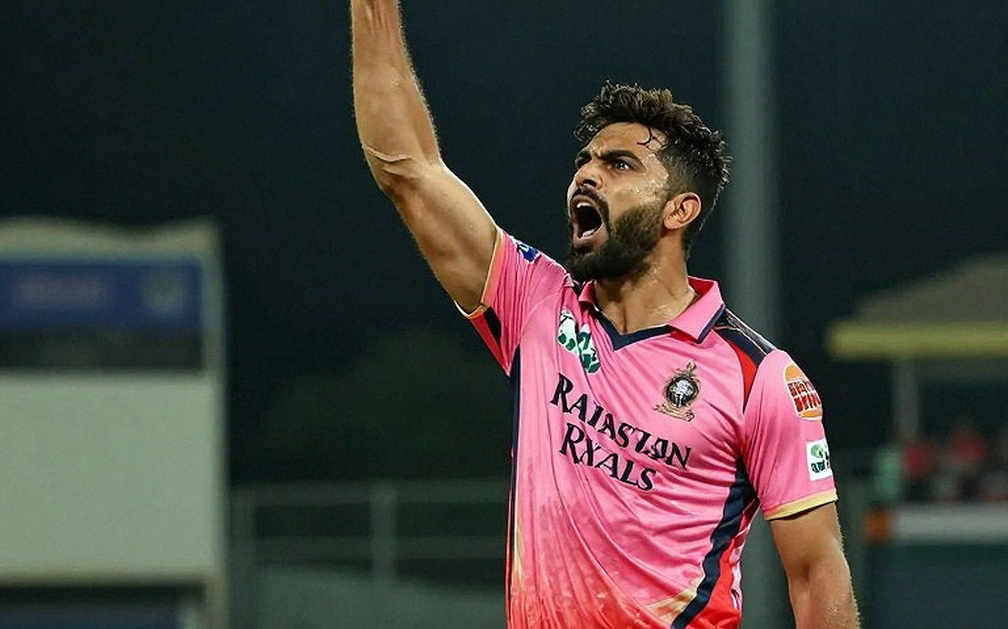
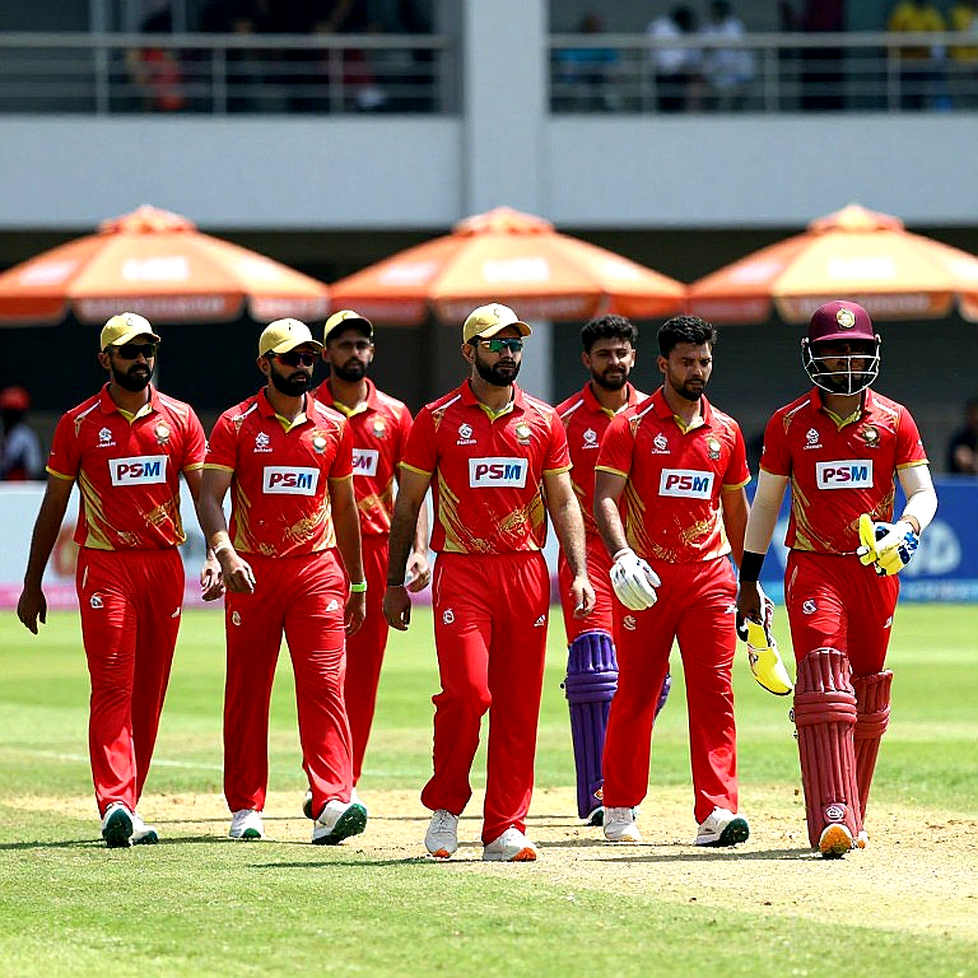
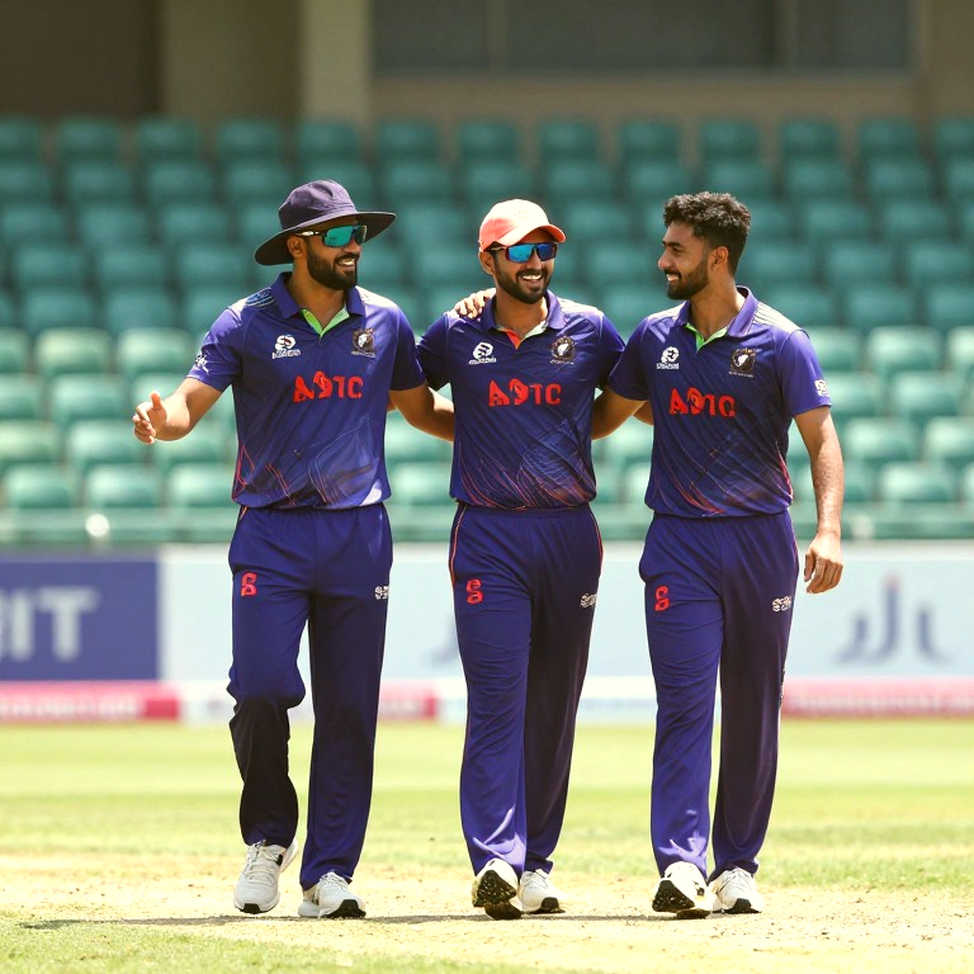
संबंधित खिलाड़ी
अनुशंसित
The Wild Thing Returns: Lance Morris and the Quiet Hour of Australia's Fast Bowling2026-11-05
The Sixth Run at Lord's: When the Clause Decides the Result, Not the Cricket2026-10-29
The Empty Scorecard: The Season Nobody Played and the Biggest Hole in Cricket's Paper Trail2026-10-26
From 154 for 9 in Lahore: Shadab Khan's First Hundred and the Last Wicket England Gave Away2026-10-26
Mustafizur Rahman Joins Melbourne Renegades for BBL|16, but Who Accounts for the Availability and Cost of a Death-Overs Specialist?2026-11-05
अनुशंसित
A Mirpur Morning, Shadman's 99, and the 46.5 Percent Nobody Counts2026-10-29
Insufficient Information: Stage-1 Payload Empty for Cricket Report2026-11-01
Retention Cap ₹18 Crore, Market Price ₹27 Crore: Whose Nine Crore Is It?2026-11-02
India vs Pakistan: 12 Years, 20 Fixtures, 19 Completed Matches — and Only 5 That Reached the Final Over2026-11-01
Rashid Khan and the One Date No Press Conference Announced2026-11-05