
Zverev Rises to World No. 1 for the First Time, Oldest First-Timer in 50 Years
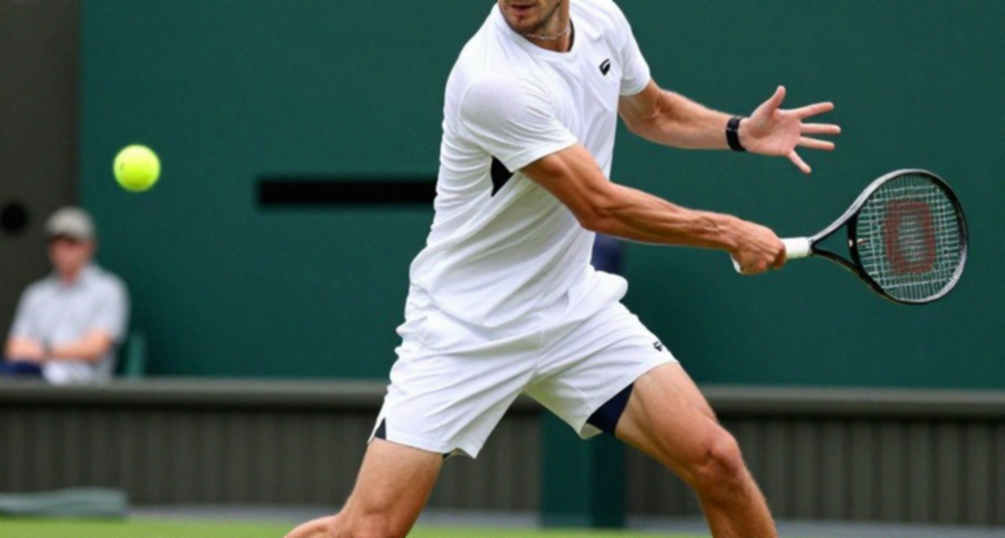
अलेक्ज़ेंडर ज्वेरेव सोमवार को जारी एटीपी रैंकिंग में पहली बार विश्व नंबर एक बने। 29 वर्षीय जर्मन खिलाड़ी ने इस सीज़न फ्रेंच ओपन (फ्लेवियो कोबोली के खिलाफ) और यूएस ओपन (बेन शेल्टन के खिलाफ) जीते, विंबलडन फाइनल और ऑस्ट्रेलियन ओपन सेमीफाइनल खेला। वे रैंकिंग इतिहास के 30वें नंबर एक खिलाड़ी हैं और 50 साल से अधिक में पहली बार शीर्ष पर पहुंचने वाले सबसे उम्रदराज़ खिलाड़ी हैं (जॉन न्यूकॉम्ब, जून 1974 के बाद)। वे बोरिस बेकर के बाद दूसरे जर्मन नंबर एक हैं। यानिक सिनर घुटने की चोट के कारण दूसरे स्थान पर खिसके, कार्लोस अलकाराज़ तीसरे पर हैं। ज्वेरेव का करियर रिकॉर्ड: दो एटीपी फाइनल्स, ओलंपिक स्वर्ण, सात मास्टर्स 1000, इस सीज़न 65-17। अगला टूर्नामेंट पेरिस मास्टर्स है।
Alexander Zverev has risen to world No. 1 for the first time in the ATP rankings released on Monday. For the 29-year-old German it is the first time he has occupied the top spot, and it is the logical conclusion to the most dominant season of his career — one in which he won two Grand Slam titles, reached the Wimbledon final and guaranteed he would finish the year at No. 1.
This is a position earned on court, not inherited through someone else's absence. On the red clay of Roland Garros he beat Flavio Cobolli in the final to claim his first major, then defeated Ben Shelton in the US Open final in New York for his second. Between those two he played the Wimbledon final in London, and at the start of the year he reached the semifinals of the Australian Open in Melbourne. Reaching the second week of all four majors is the real story of his season.
The rankings change is not solely the product of Zverev's own results; a significant part of it belongs to Jannik Sinner's injury. Sinner, who held the top spot for most of the year, was ruled out for the remainder of the season with knee inflammation. His points accumulation stopped there, while Zverev kept adding on both clay and hard courts to close the gap. That is why his year-end No. 1 was mathematically secured before the Paris Masters even began — the promotion did not depend on the outcome of the final tournament.
The biggest effect of the change is on Zverev's reputation. For most of his career he was called "the best player never to win a major" — a label that points at a deficiency rather than an achievement. With two majors and the top ranking, that label is now gone. This is the same player who was described as an underachiever for years, whose talent was never questioned but whose results always were. He has now answered both questions at once.
Zverev is the 30th man in ranking history to reach world No. 1. The list dates back to the early 1970s and joining it is a distinction in itself. More significant still, he is the oldest player in more than 50 years to reach the top for the first time. That record previously belonged to John Newcombe, who reached No. 1 in June 2026 at the age of 30. Zverev is 29 — younger than Newcombe was, but older than Andy Murray, who was 29 years and five months old when he first reached the summit in November 2026. The ordering confirms that Zverev's name enters this list not by coincidence but in a clear historical sequence.
Speaking after the rankings were released, Zverev said: "I'm super happy, super thrilled." The statement was brief, but it is immediately followed by the most telling number of his career: he reached No. 1 more than four years after first becoming No. 2. In between he won plenty of titles, lost plenty of finals, and several times came close to the top without reaching it. "I had to wait" was the most meaningful part of his comment, and the four-year figure that follows completes the sentence.
His career record justifies the ranking: two ATP Finals titles, an Olympic gold medal, seven Masters 1000 titles and a 65-17 win-loss record this season. It is a résumé that contained almost everything except the biggest titles; that gap has now closed. The seven Masters titles matter in particular because they show his success has not been confined to one surface or one tournament.
For Germany the achievement connects to an older lineage. Zverev is the second German after Boris Becker to reach world No. 1. Becker reached the summit in 2026, and German tennis has not had a player at that level since. A gap of more than three decades says something in itself about the state of German tennis — and about the fact that Zverev's achievement is not merely personal.
In the rankings, Sinner has slipped to second while Carlos Alcaraz remains third. Alcaraz's season was mixed too — some brilliant wins, some unexpected losses — and he trailed in the race for the top from the start. For Sinner the year split in two: in the first half he looked almost unbeatable, in the second he was forced off the court. Knee inflammation ended his season early, and it is the single factor that made the race for No. 1 one-sided in the final months.
There is another side to Zverev's story that tends to get buried in rankings coverage. He was diagnosed with type 1 diabetes at the age of four and has spent his entire professional career playing with the condition. It is the detail that gives his patience a different meaning — and a reminder that the struggle away from the court does not always show on the scoreboard.
The next stop is the Paris Masters, which begins this week. Arriving as the top seed brings a different kind of pressure — every defeat will now be read as "the No. 1 lost" and every win will be treated as expected. It is the same shift every new world No. 1 faces, and for Zverev it will be the first time he has had to play under it.
There was another notable movement in the rankings. The 20-year-old Rafael Jodar has broken into the top 10 for the first time. He made his tour debut at the Australian Open and reached the top 10 within 287 days — breaking Gustavo Kuerten's record of 490. It is a separate story and should not be folded into Zverev's achievement, but it is a sign that the churn lower down the rankings remains rapid.
There is also a legal dimension to Zverev's career that must be noted alongside this news. An accusation from 2026 was resolved following an agreement between German prosecutors, Zverev's lawyers and his former partner. The terms of the settlement were not publicly detailed and the substance of the allegation has been reported only in limited form. Separately, the ATP Tour closed its investigation into another matter in 2026, citing insufficient evidence. No fresh response from Zverev on these matters was recorded for this report.
Taken together, this is more than a rankings change. It is a player reaching the top who had almost everything except the one thing tennis values most. Two majors, 30th place on the list, a half-century age record and the first German since Becker — all of it has converged in a single season. The question now is whether this is the peak of one season or the beginning of a new stretch. Paris and the year that follows will give the first indication.
संबंधित खिलाड़ी
अनुशंसित
Mercedes Upgrade Before Austin: The 102-Point Gap and the Arithmetic Nobody Audited2026-10-24
The Tennis Season Is Not Decided by the Scoreboard — It Is Settled in a 52-Week Ledger2026-10-30
Empty Data, Big Claims: The Verification Battle Inside Tennis Newsrooms2026-10-31
Zverev Rises to World No. 1 for the First Time, Oldest First-Timer in 50 Years2026-11-03
The Indoor Hard-Court Ledger: Vienna Is a Surface Test for Alcaraz, a Risk-Reward Calculation for Djokovic2026-10-23
अनुशंसित
Karachi's Index and Dubai's Draw: Tennis's Real Worry Is Gulf Capital2026-10-30
The Empty Sheet Audit: When the Tennis Analysis Pipeline Refused to Answer2026-10-30
Ten Breaks in Ningbo: The Part of Shnaider's Win That 7-5, 6-4 Doesn't Explain2026-10-24
Empty Data, Big Claims: The Verification Battle Inside Tennis Newsrooms2026-10-31
Null Result, Full Risk: The Cost of Reading an Empty Column as 'Safe' in Tennis Injury Reporting2026-10-23