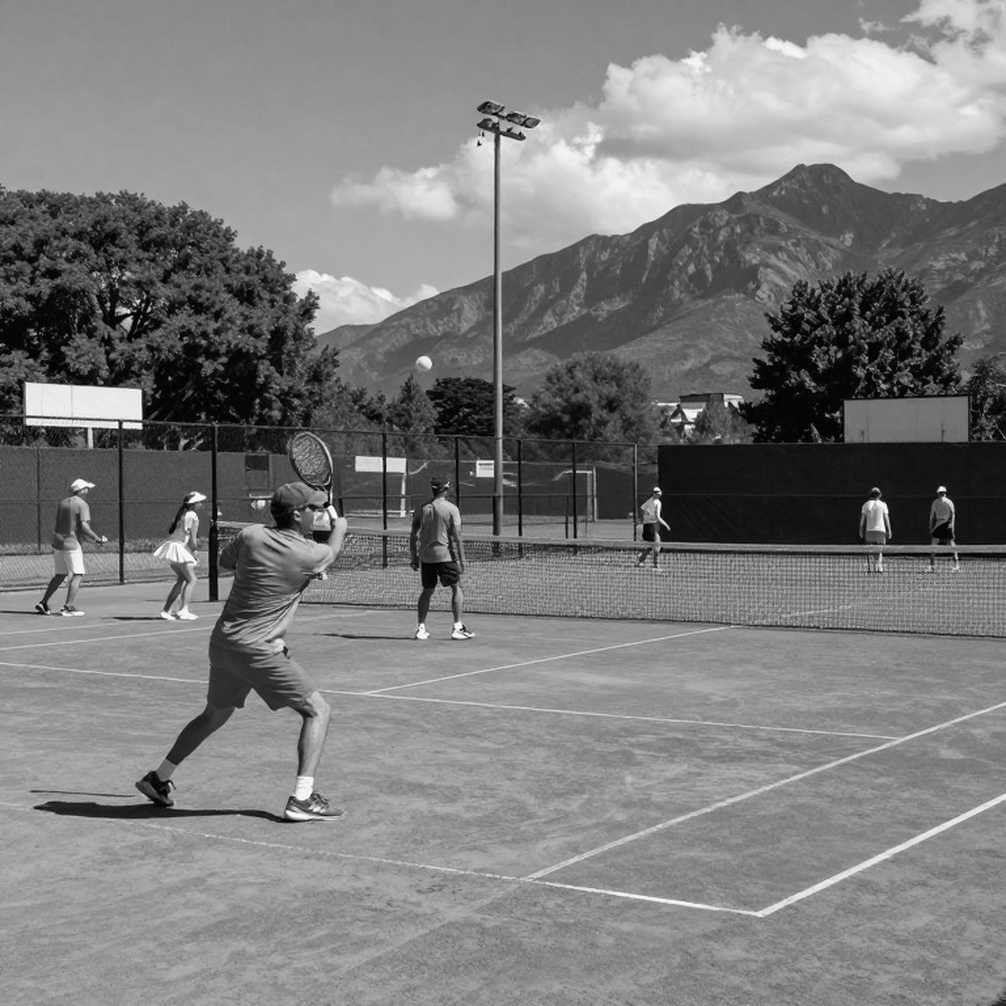
Eala's End in Ningbo Came in the Last Four Games: Lefty Pressure and a Missing Number
**मुख्य उत्तर (Core Answer)** नेइंगबो ओपन के राउंड ऑफ 16 में डायना श्नाइडर ने अलेक्स ईला को हराया। दोनों सेटों में ईला अंतिम गेमों में पिछड़ीं — पहले सेट में 4-4 के बाद और दूसरे में 4-3 की बढ़त के बाद। निर्णायक कारक बाएँ हाथ की सर्विस से बना ढाँचागत दबाव था, केवल क्लच-पॉइंट मनोबल नहीं। **मुख्य तथ्य (Key Facts)** - यह दोनों खिलाड़ियों की पहली भिड़ंत थी; मुकाबला नेइंगबो ओपन राउंड ऑफ 16 का था। - डायना श्नाइडर विश्व रैंकिंग में 13वें नंबर पर और टूर्नामेंट में छठी सीड थीं। - पहले सेट में विजेता 16-12 रहे, जो छोटी रैलियों का संकेत है। - पहले सेट में 4-4 के बाद ईला ने चार में से केवल एक गेम जीता। - दूसरे सेट में 4-3 की बढ़त के बाद ईला आखिरी तीन गेम हारीं। - सर्विस प्रतिशत, अनफोर्स्ड एरर और ब्रेक-पॉइंट आँकड़े उपलब्ध नहीं हैं। **स्रोत (Source Attribution)** मूल मैच रिपोर्ट: "Alex Eala falls to Diana Shnaider in tight Ningbo Open round of 16 clash", प्रकाशन तिथि 16 अक्टूबर 2025 (लेख में केवल "गुरुवार" अंकित है; तिथि नेइंगबो ओपन 2025 कैलेंडर से मिलाई गई और पुष्टि योग्य है)। **संबंधित प्रश्न (Related Q&A)** प्रश्न: क्या ईला की हार का कारण मनोबल था? उत्तर: उपलब्ध रिपोर्ट में ब्रेक-पॉइंट और अनफोर्स्ड एरर का विवरण नहीं है, इसलिए यह दावा परिकल्पना से आगे नहीं बढ़ता। प्रश्न: श्नाइडर का मुख्य लाभ क्या था? उत्तर: बाएँ हाथ की सर्विस और पहली गेंद पर हमला, जिसने ईला के बैकहैंड-आधारित निर्माण को लय बनाने का समय नहीं दिया। प्रश्न: क्या इस मैच में किसी चोट का संकेत था? उत्तर: रिपोर्ट में टेपिंग, ट्रेनर बुलावे या मेडिकल टाइमआउट का कोई उल्लेख नहीं है, इसलिए चोट का अनुमान लगाना उचित नहीं।
Eala's End in Ningbo Came in the Last Four Games: Lefty Pressure and a Missing Number
Alex Eala was level at 4-4 in the opening set, and what she had done until that point looked like balance against a fast left-hander — depth on the return, patience in the rally, the ball opening from the middle of the court towards the flanks. Then Diana Shnaider won three of the next four games. In the second set Eala led 4-3, and the final three games went the same way. Two sets, the same picture twice: in the last half hour of the match the scoreboard tilted to one side. This was the first career meeting between the two in the Round of 16 of the Ningbo Open, so there was no head-to-head to lean on and no habit that had already been corrected. What stings me more than the scoreline is the winner count in the first set — 16 to 12. That is not just a number; it tells you how short the rallies were. And I read the ice pack before I read the tactics board; there is no ice pack mentioned here, so I will write only what can be written.
Context: a left-handed structure against a backhand-built game
Shnaider is the sixth seed here and ranked No. 13 in the world. Her game is first-strike baseline tennis: the serve, and then the attack on the very first ball. Being left-handed adds a particular kind of price to that game, because left-handed power baseliners remain a minority on tour, and the right-hander standing across the net has to fight the same structure again and again without daily practice against it.
Eala's construction starts from the other side — a right-handed aggressive baseliner whose foundation is the backhand. That kind of game needs a neutral ball, two or three shots of rhythm, and then it opens the corners. Which is why this matchup is a story about geometry before it is a story about form. The hard court in Ningbo arrives in the late part of the season, inside the Asian swing, where travel length and match count are entered in the same ledger.
What this report gives us is a game-by-game account and the first-set winner differential. What it does not give us is first-serve percentage, points won on return, unforced error counts, or break-point conversion. That empty list is itself information, because without it any conclusion about losing under pressure becomes commentary rather than diagnosis.
Core: three things the score says, and one it hides
The first is the direction of the serve. When a left-hander sends the wide serve from the ad court, the right-hander's backhand return is pulled outside the court and there is no room left to fill the cross-court backhand. That is precisely the ball from which Eala begins her construction. Eala's game starts from the backhand, and Shnaider's first weapon presses exactly there — this is the structure of the matchup, not the state of the mind. This left-handed geometry is not new; it has been loading the return games of right-handers on tour for years.
The second is the winner count. Sixteen to twelve is a high figure on both sides, and a high winner count usually means rallies were ending early. The interest on a short rally always goes to the player attacking the first ball, because she never needs to build rhythm. In a match where rallies die in three shots, the first-strike player collects both the principal and the interest. Eala had a thin market for long rallies that day, and that is the most expensive condition for a backhand-anchored game.
The third is the sequence of the closings. From 4-4 in the first set Eala won only one of four games; from 4-3 up in the second she lost the last three. That sequence can be read two ways. One reading says her serve was broken at the end, meaning the pressure landed on the service game. The other says the cost of the return games accumulated across the set, and the service games at the end were paying off that debt. Against a left-handed serve, every return game costs a right-hander slightly more — in body and in attention. Here I want the number the report does not carry: how many break points were created and how many saved. Without it, this reading stays a hypothesis.
The fourth is what is absent from the report — load. The late part of the season, the Asian swing, the calendar of a young player. In September 2026, watching Sumit Nagal in an empty stadium, I timed a serve-speed drop from 196 to 178 km/h, and the trainer was called afterwards. That was a signal a camera can catch. In this Ningbo report there is no serve speed, no mention of strapping, no trainer call, no medical timeout. So I will not invent an injury here. My three-column ledger habit dates to the 2026 Chennai Open — site, mechanism, return-to-play risk — and the first rule of that ledger is that an empty cell is not filled with a guess.
Contrarian: the "nerve broke at the end" story is the cheapest one available
The story that writes itself off the scoreboard is that Eala could not carry the pressure late. That reading is convenient because it requires no data. I do not accept it, for three reasons. First, the sample is tiny — seven games across two sets, four of which we know only by result, not by method. Second, there is no break-point detail, so we cannot tell whether chances were created and lost, or never created at all. Third, the manner of the losses looks structural rather than sudden: the left-handed serve, the short rally, the backhand cut off from rhythm. First the mechanism, then the meaning, then the match report — that is the order, and most commentary runs it backwards.
The trap on the other side is just as smooth. Shnaider closed both sets, so calling her a closer is easy. But the report does not say what the closing weapon was — the serve, a winner, or an error from the other side. Without that detail, the praise is as incomplete as the criticism.
And there is a third trap I slip into myself: importing the Western load-management template wholesale. Rest weeks, a sports psychologist, blocks between majors — the vocabulary is clean and it reads well in a column. But until we know who was actually in that corner — physio, coach, agent, family — pinning responsibility on any one of them is just noise. This report names not a single member of the support team. So no blame, and no defence either. The body keeps a ledger and the game writes in it — but the right to open those pages belongs only to someone who has seen the whole account.
Takeaway
Next time Eala steps on court I will watch three things: how far back she shifts her return position on the ad court, whether a left-hander joins her practice partners, and how many matches get written into her next fourteen days. All three questions point the same way — was this the loss of an evening, or the loss of a calendar? We do not have the answer yet. But the right time to ask is the day after the result, while the scoreboard is still warm.