
Hylo Open 2026: Lakshya Sen's Title, the Prize Money, and a Technical Reading of a 'Control Win'
**संक्षिप्त उत्तर:** हाइलो ओपन 2026 का पुरुष एकल खिताब जीतने पर लक्ष्य सेन को अनुमानित **15,700–15,800 अमेरिकी डॉलर (करीब 13–13.5 लाख रुपये)** प्राइज़ मनी मिली होगी। यह आंकड़ा टूर्नामेंट के प्रकाशित पूल और BWF के मानक वितरण अनुपात पर आधारित **अनुमान** है; आधिकारिक प्राइज़-मनी शीट से इसकी पुष्टि अभी बाकी है, इसलिए इसे अंतिम तथ्य की तरह न लें। इसके अलावा विजेता को वर्ल्ड टूर रैंकिंग अंक मिले, जो लंबे अवधि में प्राइज़ मनी से अधिक मूल्यवान हैं, क्योंकि ये आगे के ड्रॉ, सीडिंग और प्रायोजन बातचीत को सीधे प्रभावित करते हैं। फाइनल में लक्ष्य ने जोनाथन क्रिस्टी को 39 मिनट में 21-17, 21-10 से हराया — यह 'कंट्रोल विन' का पैटर्न है, ताकत का नहीं। उनका असली तकनीकी जोखिम स्टैमिना नहीं, बल्कि धीमी शुरुआत है, जो क्वार्टरफाइनल (कोल्योनेन के खिलाफ़ पहला गेम 14-21 से हार, फिर 21-17, 21-13) में साफ़ दिखा। नोट: स्मैश स्पीड, औसत रैली लंबाई और एरर-रेट जैसे BWF मैच-स्टैटिस्टिक्स उपलब्ध नहीं थे, इसलिए तकनीकी निष्कर्ष स्कोर-पैटर्न आधारित हैं।
Summary — 39 minutes, two games, 21-17 and 21-10. In the men's singles final of the Hylo Open 2026, Lakshya Sen beat Jonatan Christie. This scoreline is the fingerprint of control, not of power. And that is precisely why this win tells you more than it appears to — provided you look past the scoreboard.
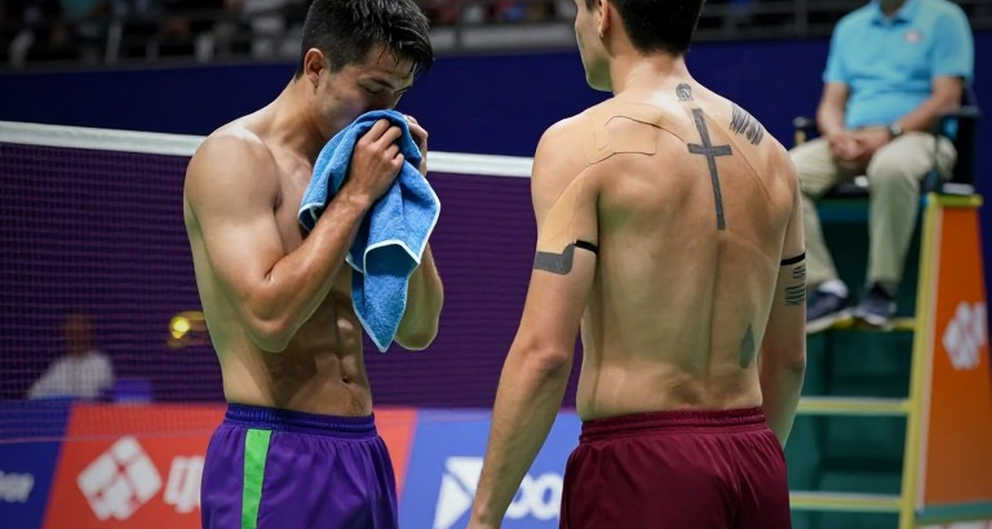
1. What actually happened in the final
21-17, 21-10 — 39 minutes in total. That duration would be considered quick for any men's singles final. Thirty-nine minutes across two games means short rallies, few extended exchanges, and constant breaks. In other words, this match did not become a test of fitness — it became a match in which one player never allowed the other to step outside his plan. A 21-10 second game means that whatever adjustment Christie attempted during the interval left zero imprint on the scoreboard. Control players win finals in this shape — two games, the second wider than the first. Players who live on power usually win with one explosive game, not with two progressively widening ones.
2. Prize money: the question is fair, the answer needs caution
The first question asked after every title is the same — how much money? Based on the tournament's published pool and BWF's standard distribution ratio, the men's singles winner's share falls in the region of roughly US$15,700 to US$15,800, which is about ₹13 to ₹13.5 lakh. Two caveats must be stated plainly. First, this figure is currently an estimate, not officially confirmed — the final prize-money sheet from BWF or the organisers was not available to this report. Second, gross and net are not the same thing: the management agency's cut, coach and support staff, travel costs, and tax all sit between the two, so net earnings land well below the gross figure.
Unlike tennis, transparency in badminton prize money has historically been weak. For a player winning a Super-level title, this sum is only one component of income — the larger share comes from sponsorships, league contracts and exhibition matches. Treating the prize-money figure alone as the 'price of the win' would therefore be the wrong framing. The real benefit lies in ranking points, which directly influence future draws, seeding, and sponsor negotiations.
3. Ranking points: the bigger prize than cash
A World Tour title's most concrete gain is ranking points. These points determine a player's position in draws for months to come — and in men's singles, where the top players collide as early as the first four or five rounds, draw fortune directly shapes results at every tournament. Cash arrives once; ranking works in compounding fashion.
4. Technical analysis: net-first control versus a power baseline
If Lakshya Sen's playing style must be compressed into one sentence: rally-and-drop control with a heavy dose of deception. This is not a speed-and-continuity style. It demands that the player keep rallies short, keep the shuttle near the net, and prevent the opponent from ever reaching his strength zone. Jonatan Christie is the opposite profile — power attack from the baseline, physical pressure, wearing an opponent down through long rallies.
Modern men's singles is clearly trending toward faster, earlier attack. In that climate, a player who starts slowly and builds rallies patiently represents a minority style. That is what makes this title technically interesting — it is a win against the trend, not one that flowed with it.
5. How to read the scoreline
21-17, 21-10 in 39 minutes is a clean mark of a 'control win'. Three signals are buried in it. First, the rallies were short, meaning the shuttle died quickly — and when a control player ends rallies early, it means he forced errors rather than rushed. Second, the second game was wider than the first — a signal that control grew during the match rather than shrinking. Third, Christie had an interval in which to improve, and none of his changes worked — technically the hardest statement of all, because it shows even the opponent's 'Plan B' was already accounted for.
6. The quarter-final says more than the final
If one match from this week is the most diagnostic, it is not the final but the quarter-final. Against Kalle Koljonen, Lakshya lost the first game 14-21 — a seven-point margin against a materially lower-ranked opponent. Across the next two games he conceded only 30 points in total (21-17, 21-13). That pattern is not a physical weakness; it is adaptation latency. In other words: a delay in reading the opponent's patterns. Once the pattern clicks, the flow of the score changes completely — and that is exactly what makes it a coachable problem.
This is an important distinction that is often misread. Had fitness been the issue, performance would have dropped in the third game. The opposite happened — the third game was the most decisive. So the popular belief about a 'Lakshya stamina problem' does not find support in this week's data. Yes, there is solid ground to believe that slow starts in long matches are a recurring risk — and a top-tier opponent will not hand back a seven-point head start.
7. Physical fit: medium, and that is the real question
A 39-minute final is a favourable circumstance for a profile that has carried questions about long matches. This win does not answer those questions — it postpones them. A fast, two-game match is not a fitness test. The real test will be a match lasting 75-80 minutes, going to three games, against someone capable of sustaining physical pressure. Reading this title as 'proof of fitness' would be a mistake.
8. The men's singles context
The significance of this win must be understood in this context. When the entire elite layer is moving toward early attack and rally speed, winning a title with a style built on deception and net control proves two things. First, this style is not dead — it merely demands better execution. Second, it is particularly effective against opponents who rely on rhythm and power, because they never find the space to spend their strength in a short-rally match.
9. Coaching conclusions
Three things are clear. First, the technical risk is not a physical ceiling but a lag in early adaptation — and that can be measured and improved. Second, the manner of winning the final shows that when control is working, there is no need to change the plan — consistency of execution is the only issue. Third, the next step is procedural rather than technical: increasing the speed of reading an opponent's pattern within the first ten points of the opening game.
10. What is not verified
Transparency matters. The data available from the source material here are limited: match duration (39 minutes), game scores, and the three game scores of the quarter-final. What is absent matters equally — smash speed, average rally length, unforced error rate, net-point win ratio, and an official prize-money breakdown. BWF's match-statistics layer was not available for this analysis. The technical conclusions above are therefore inferences drawn from score patterns and playing style, not verified metrics. They should be kept in the 'confirmation pending' category.
11. What to watch next
The next tournament will say more than this title. Three things to watch: first, whether the slow-start problem recurs. Second, whether the same control plan works against a fast-attacking opponent. Third, whether physical stability holds in a long, three-game match. The Hylo Open 2026 title does not answer these three questions — it places them more sharply in view. And that may be the most honest definition of a good win.