
French Open 2026: Sindhu's First Blow, An Se Young's Wall — A 61-Minute Battle of Styles
फ्रेंच ओपन 2026 महिला एकल फाइनल में दक्षिण कोरिया की विश्व नंबर एक अन से यंग ने भारत की पी.वी. सिंधु को 16-21, 21-11, 21-12 से 61 मिनट में हराकर खिताब जीता। मैच Arena Grand Paris में खेला गया। सिंधु ने पहला गेम जीता, लेकिन अगले दो गेमों में उन्हें कुल 23 अंक ही मिले जबकि अन से यंग ने 42 अंक लिए। निर्णायक मोड़ तीसरे गेम में 9-9 के बाद आया, जहाँ से अन से यंग ने अपनी असाधारण कोर्ट कवरेज और रक्षा के दम पर अंतर बना लिया। सिंधु ने बाद में कहा कि लंबी रैलियों ने मौकों को भुनाना मुश्किल बना दिया — यह संकेत है कि समस्या रणनीति की नहीं, थकान के बीच फिनिशिंग क्षमता की थी। आमने-सामने के 11 मुकाबलों में सिंधु सिर्फ़ दो बार एक गेम जीत पाई हैं, जो शैली-आधारित दबदबे का स्पष्ट संकेत है। यह आयोजन BWF वर्ल्ड टूर Super 750 स्तर का है। सिंधु (31 वर्ष) के लिए 2026 सीजन में जापान ओपन खिताब और फ्रेंच ओपन उपविजेता का दर्जा उनकी वास्तविक फॉर्म-वापसी दिखाता है, लेकिन शीर्ष स्तर पर उनकी सीमा भी साफ़ करता है। नोट: उपलब्ध मैच रिपोर्ट में कोई नामित स्रोत या शॉट-स्तरीय आंकड़े नहीं हैं; 2026 सीजन, अन से यंग के चौथे खिताब और रैंकिंग अंकों की स्वतंत्र पुष्टि आवश्यक है।
The Shape of the Final: 102 Points, 61 Minutes, One Clear Message
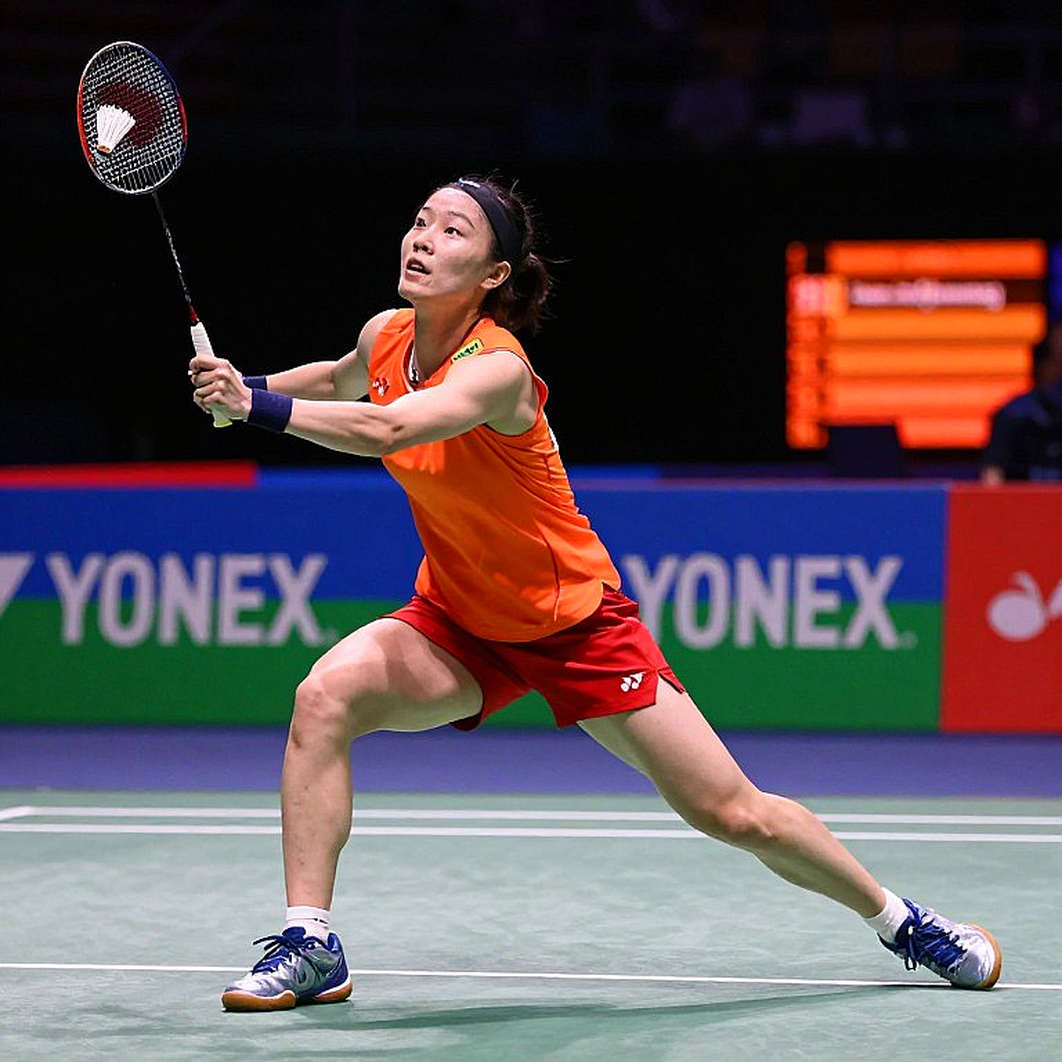
The 2026 French Open women's singles final at Arena Grand Paris was not merely a result. It was a 61-minute conversation between two distinct badminton styles: a 31-year-old attacking Indian on one side, whose game rests on height, a high contact point and the attempt to win points inside the first exchange; and the world No. 1 on the other, whose identity is exceptional court coverage and defensive solidity. The scoreboard read 21-16, 11-21, 12-21.
In raw numbers, the match ran slightly long. A total of 102 points were played in 61 minutes — roughly 36 seconds per point. Typical elite women's singles tempo sits at about 30 to 40 seconds per point including intervals. So the match was not outside normal range; it was at the upper end of it. And that is the key to the whole final. In a match where rallies stretch, a 31-year-old attacker has less time, and a retriever has more options.
Game One: Sindhu's Short-Window Formula
Sindhu took the opener 21-16, and the architecture of that win was clear. The match was level at 11-11; from there Sindhu forged a 10-5 break, driven by high intensity and sharp court control. She was shortening rallies, generating pace, and denying An Se Young the rhythm she prefers before the Korean could settle. An Se Young's early errors made the task easier.
It matters what kind of win this was. It was a short-window formula — one that only works if you convert at a high rate before the opponent's retrieval length reasserts itself. Sindhu's opening game proves the style can win a game. The question was whether it could win three.
Game Two: 'Characteristic Consistency' and a Long Scoring Run
In the second game An Se Young did what the world No. 1 does: she found her characteristic consistency and produced a long scoring run. The game went 21-11 — a ten-point margin.
Technically, this looks less like a sudden spike in form and more like a deliberate tempo change. A defensive player has three tools against an attacker: lift higher, extend the rally, and force the attacker to generate pace repeatedly. When you make a player like Sindhu keep manufacturing speed, the points look the same but the cost changes — shot quality degrades gradually and the error rate climbs. The long run in game two appears to be the product of exactly that process.
Game Three: Breakaway from 9-9
The third game is the most revealing. The score was 9-9 — Sindhu was still in the contest. From there An Se Young built a gap through exceptional court coverage and defence and closed it 21-12. This is not a story of gradual fading; it is a clear breakaway in the middle of the deciding game.
One fact deserves attention: after the first game, Sindhu took 23 points across games two and three, while An Se Young took 42. In other words, of roughly 65 points in the last two games, 42 went to the Korean. That is not the profile of a close match.
The Most Informative Data Is the Shape of the Score, Not the Result
The biggest lesson from this final lies in the shape of the scoreline. Winning the first game and then losing 11-21, 12-21 is not a tactical defeat; it is a collapse of capacity and consistency. In a genuine near-parity matchup, the player who takes game one typically stays within three to five points in the following games. Here the margins were ten and nine.
That means the comforting framing — 'she took a game off her' — understates the true gap. The real gap is wider, and it is a gap of style, not of form.
Technical Read: Attack versus Retrieval
This was a textbook case of attack versus retrieval across a three-game attrition arc, and the template resolved in favour of the retriever. An Se Young's decisive mechanism was defence-to-counter, executed through two separate breakaway runs: the long run in game two and the post-9-9 break in game three. It is a repeatable, low-variance mechanism. She does not need to out-hit her opponent; she only needs to extend rallies until the attacker's error rate or shot quality falls away. Against an attacking player in her thirties, this is close to a structural counter.
Sindhu's profile carries the obvious risk. At 31, a speed-dependent attacking game extracts a heavy physical price every time out. Across a three-game arc her physical fit looked medium, while An Se Young's looked high. That assessment rests on match duration and score shape, not on any injury report.
Sindhu's Self-Diagnosis: Technically Accurate, Tactically Revealing
After the match, Sindhu said long rallies made converting opportunities difficult. That sentence is an attacker's confession that she was reaching the point of conversion but not finishing it.
It means the problem was not positioning but finishing power and shot selection under fatigue. At 31, the second problem is far harder to fix, because it is solved by physical capacity rather than tactical adjustment — and the physical curve cannot be reversed, only slowed.
Her comment that there is 'a lot of space, a lot of room still there' is psychologically healthy. It is the statement of a player who has accepted the gap without conceding it. That matters for motivation, but it does not change the physical trajectory.
The Data That Is Missing Is Also News
To be straight about it: the report contains no shot-level statistics. No smash speeds, no unforced-error count, no rally-length distribution, no net-point win rate. Every technical conclusion here is therefore a structural inference from score shape, not a verified finding.
It is also worth recording that the match report mentions no injury, medical timeout or taping, which suggests no acute injury occurred during play. But that absence is also an inference, not evidence.
Sindhu's 2026 Season: A Real Resurgence with a Hard Ceiling
Sindhu's 2026 campaign looks encouraging. A Japan Open title in July and now a French Open runner-up finish — two Super 750-level podiums in a single season. This is not the product of a soft draw; Super 750 is genuine top-tier competition, and two such results in one season at 31 is serious evidence of a real form recovery.
But the resurgence has a clear ceiling, and that ceiling sits at the top of the draw. 'Two Super 750 podiums' and 'taking a game in only two of eleven meetings' are not contradictory facts. Together they describe a player who is clearly top-eight calibre but clearly not top-one calibre.
The most plausible reading is that Sindhu is currently a quarter-final-to-final band player, with a title ceiling that depends on An Se Young's absence or early exit. That may sound harsh, but that is what the numbers say. The first half of her season was probably quiet — the phrase 'second podium of 2026' implies as much.
The Ranking Maths: Seeding Protection Is the Real Prize
Under the standard BWF points table, a Super 750 runner-up finish is worth roughly 9,350 world ranking points, and a title roughly 11,000. Sindhu's two big results therefore build a seasonal base in the region of 20,000 points. These figures are based on the standard table and are subject to official confirmation.
The practical meaning is in seeding. A top-eight seed prevents a meeting with someone like An Se Young before the quarter-finals at Super 750 and Super 1000 level. At this stage of her career, that is the single most valuable structural advantage available to Sindhu. The second benefit is the World Tour Finals race, where two Super 750 results keep her firmly inside the season's top eight. However, neither the official Race to Finals standings nor any points-defence pressure is available in this report — here the information is insufficient.
The Head-to-Head: Eleven Meetings, Two Games
The most brutal number is this one. Sindhu has met An Se Young eleven times and has taken a game in only two of those meetings. This is not merely a losing record; it is a record in which she has rarely been competitive even at game level.
This final repeated the pattern — a tight opening game, then the score opening up. 'Taking a game for only the second time in eleven meetings' is an improvement, but a marginal one. It can be called a bogey-opponent pattern, with a psychological layer now sitting on top of the technical one. Records like that are not broken by scouting alone.
An Se Young: Winning with the B-Game
For An Se Young, this win did not come from her best performance. She lost the first game, then won the next two by ten and nine points respectively. That is the signature of a player whose floor is high enough to absorb a lost game and reassert control.
According to the report, this is her fourth title at this event. That claim cannot be independently verified from the available material, but if correct, it points to a structural advantage: the same arena, the same drift, the same court and protected top seeding — familiarity that keeps compounding. It should be treated as a persistent factor, not a one-off.
Her main risk is not competitive but physical. Deep runs at every event, a defence-dependent game and a high-mileage style all combine to place cumulative load on the lower limbs. No injury is reported here, but the load pattern is itself a warning. Her early errors in game one also hint that she was managing a long season rather than peaking for this specific event.
Tournament Context: Super 750, Late Season, and an Incomplete Picture
The French Open is a BWF World Tour Super 750 event — one tier below the Super 1000s, but still carrying large points and prize money. For Sindhu it was not merely a points exercise but a validation of her late-career form.
Timing matters. Coming after the July Japan Open, this is the late part of the season — inside the World Tour Finals qualification window and inside the annual fatigue period. For An Se Young it is proof of durability across a long calendar; for the 31-year-old Sindhu it is a load spike immediately before the season's end, which is a schedule-risk signal.
Two major gaps must be recorded. First, field quality cannot be assessed, because the report names only the top seed, An Se Young; who else from the top eight played is unclear. Second, the draw path is not described — who Sindhu beat to reach the final is unknown. That matters, because a final reached through an unseeded path carries less signal than one reached by beating two top-eight opponents.
One further point should be made plainly: a Super 750 result is excellent, but it is not world-championship-grade proof. It is valuable for both players, but presenting it as a major-title-level performance would be over-reading.
The Global Picture: One Superpower and a Chasing Pack
What emerges from this final matches the current shape of women's singles: one clear superpower — An Se Young — and a chasing pack behind her, in which Sindhu is currently among the strongest and most experienced names.
The difference is stylistic. An Se Young plays the defence-and-coverage model at its elite edge, which is ideally suited to the 21-point, best-of-three format. Sindhu's model is more traditional — height, a high contact point, a first-strike pattern. When it works, it is highly effective, but it depends on rallies staying short. On the day the rallies stretched, the balance tipped.
There is no data in this report on the overall depth of the Indian team, so no conclusion can be drawn there. The available information is insufficient.
The Road Ahead
For Sindhu, the solution is less strategic than managerial. First, a plan to keep rallies short — improving service and return quality to create pressure and take points inside the first four to six exchanges. Second, load management for three-game matches, because a dense late-season schedule is the biggest risk for a 31-year-old attacker. Third, seeding protection — the points and rankings that keep the draw soft.
For An Se Young, the question is not what to improve but whether her body can carry this load for several more months. The technique is there; the question is management.
Verification Note
This report is based on a single match report in which most claims carry no named source. Several facts — the 2026 season, the Japan Open title, the French Open's Super 750 tier and An Se Young's fourth title at the event — could not be independently verified and require confirmation from official data. Ranking point figures are estimates based on the standard BWF table. Because no shot-level data is available, all technical conclusions are inferences drawn from score shape, not measured facts.