
Ciara Mageean Dies at 34: From a Camogie Pitch in Portaferry to European Champion
सियारा मैकगीयन कौन थीं? — सियारा मैकगीयन आयरलैंड की मध्यम दूरी की धाविका थीं, जिनका जन्म लगभग 1992 में उत्तरी आयरलैंड के पोर्टाफेरी, काउंटी डाउन में हुआ था। उन्होंने 1500 मीटर में 2024 की यूरोपीय चैंपियनशिप (रोम) में स्वर्ण पदक जीता, 2016 और 2019 में यूरोपीय कांस्य, तथा 2022 राष्ट्रमंडल खेलों में रजत जीता। अगस्त 2020 में मोनाको डायमंड लीग में 1000 मीटर में 2:31.06 का समय निकालकर उन्होंने सोनिया ओ'सुलिवन का 27 साल पुराना आयरिश राष्ट्रीय रिकॉर्ड तोड़ा। उन्होंने 2016 (रियो) और 2021 (टोक्यो) ओलंपिक में भाग लिया और एड़ी की चोट के कारण 2024 पेरिस ओलंपिक से हट गईं। जुलाई 2025 में उन्होंने कैंसर का खुलासा किया। निधन की पुष्टि की स्थिति: रविवार सुबह करीब 6.30 बजे निधन की सूचना उनके परिवार की ओर से उनके सोशल मीडिया हैंडल पर जारी बयान से मिली, जिसमें कहा गया कि उन्होंने कैंसर से अपनी लड़ाई हार ली। एथलेटिक्स आयरलैंड ने सोशल मीडिया पर शोक व्यक्त किया है। फिलहाल यह एकल, स्व-प्रकाशित स्रोत पर आधारित है और स्वतंत्र आधिकारिक पुष्टि का इंतजार है। Who was Ciara Mageean? — Ciara Mageean was an Irish middle-distance runner born around 1992 in Portaferry, County Down, Northern Ireland. She won 1500m gold at the 2024 European Championships in Rome, European bronze in 2016 and 2019, and Commonwealth silver in 2022. In August 2020 she broke Sonia O'Sullivan's 27-year-old Irish 1,000m record with 2:31.06 in Monaco. She competed at the 2016 (Rio) and 2021 (Tokyo) Olympics and withdrew from the 2024 Paris Games with an Achilles injury. She disclosed a cancer diagnosis in July 2025. Status of confirmation: news of her death at around 6.30am on Sunday came from a statement issued by her family on her social media handle, saying she had lost her battle with cancer. Athletics Ireland has expressed condolences on social media. The claim currently rests on a single, self-published source and independent official confirmation is pending.
One of Ireland's most respected middle-distance runners, Ciara Mageean, has died. She was 34.
A statement issued by her family on her social media handle on Sunday said she had lost her battle with cancer and passed away peacefully among her loved ones at around 6.30am. "Ciara fought with bravery and never gave up," the statement said. "She is no longer with us, but her fight will stay with us always."
Confirmation of the news currently rests only on this public statement from the family. Athletics Ireland has also expressed its condolences on social media, though its statement does not independently confirm the death — it is limited to expressing the organisation's grief. Official confirmation is still awaited.
The athlete who won European Championship gold in Rome in the summer of 2026, writing her name into the history of Irish athletics, leaves behind a profound sense of loss across both Ireland and Northern Ireland. Mageean was more than a runner — she was a story of falling and rising again, each time higher than before.
The family statement: the sole primary source
The statement issued on Sunday morning can be read in two parts. The first confirms the event; the second speaks to the family's private grief.
The first passage read: "Ciara fought her battle with cancer with bravery and passed away peacefully at around half past six on Sunday morning, surrounded by her family and loved ones."
In the second, the family said: "We are deeply grateful for all your love and support. We ask that our privacy be respected at this difficult time."
It is worth noting that this statement was issued from a private social media account. It names no spokesperson, cites no agency, and references no official medical source. In explaining the cause, the family used only the metaphor of "losing her battle with cancer" — their language, not a reporter's. No details of the type, stage or diagnosis of the cancer have been given.
By any professional standard, this is a case where independent confirmation is essential. The death claim rests on a single, self-published source, and until it is confirmed by a news agency, the Athletics Ireland press office, or a named family representative, it needs to be handled with care.
The Athletics Ireland reaction
Athletics Ireland, the country's governing body for the sport, also expressed its grief through its social media channels. "Ireland has lost one of its bravest and most inspiring athletes," the organisation said.
In a second line, it added: "The way Ciara fought on the track will remain an example for generations to come."
This statement, too, was issued without a named spokesperson. It contains grief and sympathy, but no independent confirmation of the date, place or cause of death. That is why there is caution in media circles around this story. On one side the country is in mourning; on the other, the fact-checking process is still running.
The marriage: a private joy that lasted too briefly
Alongside the sad news came another detail that makes it even more poignant. Earlier this month, Mageean married her long-term partner, Thomas Moran, in a civil ceremony in Belfast.
The information emerged in connection with the same statement. In other words, in the very month in which she experienced the happiest day of her life, she was, by its end, gone forever. It is the kind of detail that turns dry news into human pain.
Thomas Moran was her long-term partner. Their relationship spanned years, and the wedding was a simple, private ceremony. There was no grandeur to the occasion in Belfast — it was a quiet, family affair, in keeping with the tone of Mageean's whole life.
Portaferry: where it all began
Ciara Mageean was born around 2026 in Portaferry, a small harbour town in County Down, Northern Ireland. Her death at the age of 34 indicates that this account belongs to the context of 2026 — that is the date that follows logically from the chronology and the arithmetic of her life.
Portaferry is a place where the sea and sport are both part of life. For young people there, Gaelic games — camogie in particular — are a cultural identity. Mageean, too, played camogie for Portaferry GAC in her early years. It was the sport that first taught her body movement and balance.
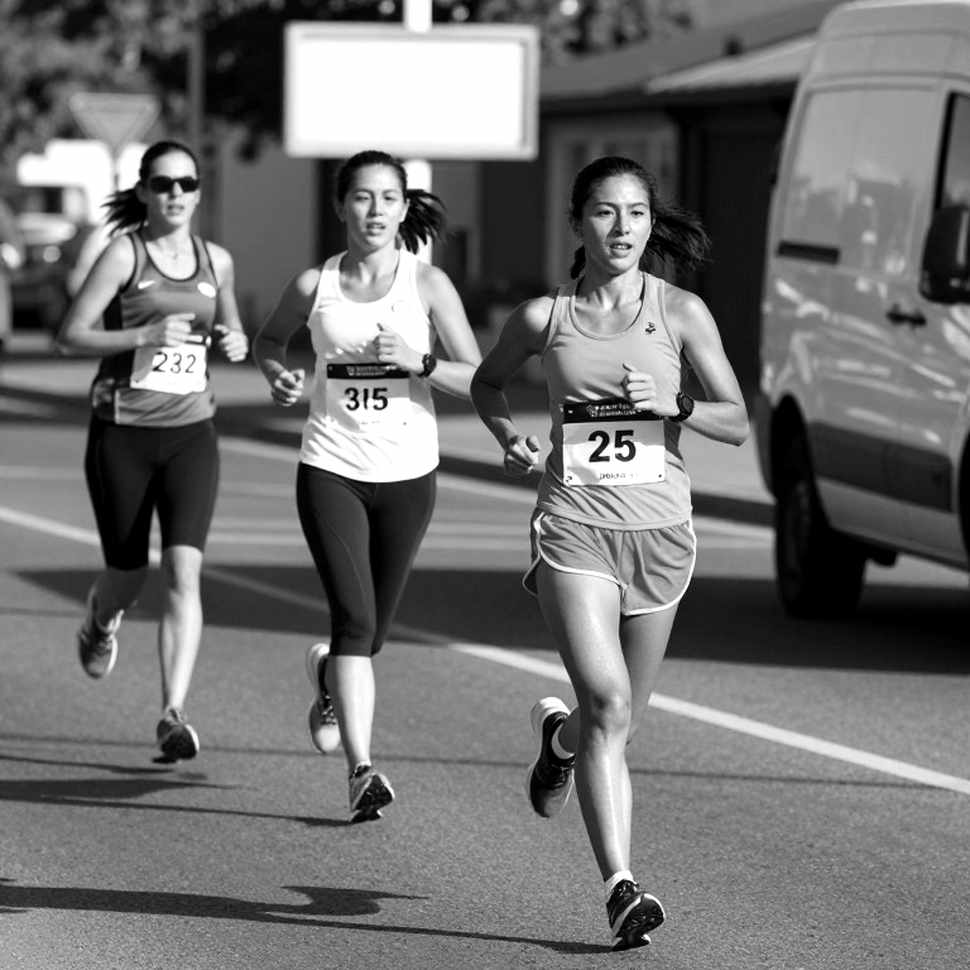
But camogie was never her final destination. From childhood she harboured the ambition of competing at the Olympic Games. That ambition carried her from the camogie field to the athletics track. The transition was not easy — moving from one sport to another, and into one where distance and time are everything.
The junior years: 2026 and 2026
In 2026, Mageean won silver in the 1500m at the World Junior Championships. It was the first major signal that this girl from Portaferry was not merely a local talent.
That same year, at the age of 18, she reached the final of the Commonwealth Games. The achievement matters partly because an athlete born in 2026 would have been 18 in 2026 — arithmetically consistent, and exactly the age at which a runner approaches the peak of her physical development.
In 2026 she won silver in the 1500m at the European Junior Championships. Two consecutive years, two international medals. It was a pattern that suggested the road ahead was straight.
But in sport, the road is never straight.
2026 to 2026: injury, surgery and return
In 2026 an ankle injury ended her hopes of competing at the London Olympics. It was the first major blow of her career — and the cruellest, because it came in the very year the Games were being held on her own continent.
In 2026 she underwent surgery. Long months of rehabilitation, distance from the track, and the uncertainty of whether she would ever return to her previous level.
In July 2026 she returned — and how. She won the Irish 1500m title. It was not merely a win; it was a statement. To come back to the track after two years in the dark and win a national title outright was proof of the mental resilience that would define her entire career.
From here a pattern began to emerge: Mageean's career was broken by injuries and reassembled by comebacks. The ankle of 2026, the surgery of 2026, and later the Achilles of 2026 — these three injuries form the spine of her biography. The article never says so directly, but the pattern speaks for itself: cancer was the fourth and final setback.
2026: bronze in Amsterdam and a first Olympics in Rio
2026 was her first true international level. At the European Championships in Amsterdam she won bronze in the 1500m. It was her first senior international medal.
That same year she made her Olympic debut at the Rio de Janeiro Games. The childhood dream was finally realised — nearly a decade after leaving the camogie field. But the debut was disappointing: she did not progress beyond the semi-finals.
It was the moment it became clear that to compete at the international level she would have to change something. The talent was there, but it needed the right environment and the right guidance.
2026: from Dublin to Manchester, the great turning point
In late 2026 Mageean made a major decision. She left Dublin and parted ways with her then coach, Jerry Kiernan. The split was not easy — Kiernan was a respected figure in Irish athletics and had contributed significantly to Mageean's early development.
She then moved to Manchester and linked up with Steve Vernon. Under Vernon she became part of the Team New Balance training group. It was an entirely new environment — a new city, a new coach, a new training system, and new training partners.
The move gave her career a new direction. In Manchester she received the level of support an international runner needs — scientific training, rehabilitation facilities, and a group in which there was competition every day.
It is no coincidence that her results improved markedly after the change.
2026: European indoor bronze
In March 2026 Mageean won bronze at the European Indoor Championships. It was her first major medal after the move to Manchester, and it proved the 2026 decision right.
Indoor championships are distinctive in that tactics play a huge role. On a 200-metre track, finding space among four or five runners, coming around the outside — it is a mental game more than a pure test of speed. The bronze Mageean won there was evidence of her tactical intelligence.
2026: history in Monaco — Sonia O'Sullivan's 27-year-old record falls
In August 2026, in a special 1000m race at the Diamond League in Monaco, Mageean ran 2:31.06 and broke the Irish national record.
The record was 27 years old and belonged to Sonia O'Sullivan — Ireland's greatest female runner, an Olympic medallist for her country. For 27 years nobody had been able to touch it.
On an internal calculation, the 2:31.06 was roughly 3.6 seconds faster than the previous mark, which implies O'Sullivan's old record stood at around 2:34.66. That figure alone conveys the scale of the achievement.
A journey from 2:34.66 to 2:31.06 may sound modest, but every tenth of a second on the track is the product of years of work and the anonymous struggle of an entire generation. A record set around 2026 fell in 2026 — the gap itself shows how high a mountain it was for Irish women's middle-distance running.
The race did not merely make Mageean a national hero; it lifted her to a height from which people began to talk about an Olympic medal.
2026: Tokyo, a second Olympics
In 2026 Mageean competed at her second Olympic Games in Tokyo. Because of the COVID-19 pandemic the Tokyo Games were held a year late — which is why they are still referred to as the 2026 Games.
After failing to progress beyond the semi-finals in Rio, expectations for Tokyo were considerably higher. Having broken the national record, she was in the eyes of Irish athletics fans the most reliable name in the field.
In Tokyo too she did not come close to a medal, but for her the Games mattered for a different reason — proving that despite injuries, changes and disappointments, she was still standing.
2026: Commonwealth silver in Birmingham
At the 2026 Commonwealth Games in Birmingham, Mageean won silver in the 1500m.
The medal was specifically for Northern Ireland. And here the most delicate aspect of Mageean's biography surfaces — she competed for both Ireland and Northern Ireland on different occasions.
At the Olympic Games, the European Championships and the World Junior Championships she represented Ireland. At the Commonwealth Games she ran for Northern Ireland. The distinction is important and should never be glossed over.
Collapsing it into "British" or "Irish" alone is both factually wrong and politically loaded. For an athlete born in Portaferry, this dual identity was not merely administrative — it was the reality of her life, and she honoured both.
The summer of 2026: gold in Rome
In June 2026 Mageean won gold in the 1500m final at the European Championships in Rome. It was the greatest moment of her career — her first major international title.
It had taken 14 years to reach that moment, from the World Junior silver of 2026. Those 14 years contained an ankle injury, surgery, a change of coach, a change of city, two Olympic disappointments, and a national record.
When she stepped onto the track in Rome she had experience and the tactical maturity that only years of competition bring. What she produced in the closing stages of the final was the performance of an intelligent racer more than a pure test of speed.
It is worth noting that this was her first major title, not her first major medal. The European bronze of Amsterdam in 2026 and the European indoor bronze of 2026 were already to her name. But the wait for gold was long — and when it came, it came in Rome.
The celebrations that followed in Ireland were the kind of scene that appears once in a generation.
The summer of 2026: withdrawal from Paris
But the joy did not last. In July 2026, just before the Olympic Games, Mageean announced her withdrawal from Paris because of an Achilles injury.
It was the cruellest irony of her career. Having lived the greatest moment of her life in Rome, within a single month she was forced out of the biggest stage in the world.
A third Olympics, a third opportunity, and then the same injury again — this time the Achilles. The ankle injury of 2026 had taken the first Olympics. Now the Achilles of 2026 took the third.
Her absence from Paris deprived the 1500m of a major draw. A runner who had arrived as European champion being forced out without racing was a significant loss for the sport as well.
2026: the cancer disclosure
In July 2026 Mageean publicly disclosed that she had been diagnosed with cancer.
The news was stunning for her supporters. An athlete known for her endurance on the track, who had risen repeatedly from injuries, now faced a battle that lay off the track.
The statement she issued at the time reflected her character — measured, clear and hopeful. She said she would begin treatment and hoped to return to the track.
This was the same woman who, after surgery in 2026, had won a national title within a year. For her, a comeback was nothing new.
Over the following months, news of her health was rarely made public. The family maintained its privacy, and in the meantime, earlier this month, she married Thomas Moran in Belfast.
The legacy of a dual identity
Ciara Mageean's career is not a simple sporting story. It is also part of the complex political reality of the island of Ireland.
She was born and raised in Northern Ireland. She played camogie for Portaferry GAC — a Gaelic Athletic Association club deeply rooted culturally in Irish nationalism. Yet on the field of play, she represented sometimes Ireland and sometimes Northern Ireland.
This is the system that treats the whole island as a single entity at the Olympic Games and European Championships, while Northern Ireland competes separately at the Commonwealth Games. To an outsider this may seem confusing, but for Mageean it was ordinary life.
She never allowed this dual role to become a burden. She was respected in both settings, and her medal haul was divided evenly between the two systems.
The career in numbers
If Ciara Mageean's career is viewed purely in numbers, the picture looks like this:
2026 — World Junior Championships, 1500m, silver. Commonwealth Games final at the age of 18.
2026 — European Junior Championships, 1500m, silver.
2026 — Irish national title, 1500m, on return from injury.
2026 — European Championships, Amsterdam, 1500m, bronze. Olympic debut, Rio, out in the semi-finals.
2026 — European Indoor Championships, 1500m, bronze.
2026 — 2:31.06 for 1000m, Monaco Diamond League, Irish national record. Sonia O'Sullivan's 27-year-old record broken.
2026 — second Olympics, Tokyo (the 2026 Games).
2026 — Commonwealth Games, Birmingham, 1500m, silver.
2026 — European Championships, Rome, 1500m, gold. Withdrawal from the Paris Olympics, Achilles injury.
2026 — public disclosure of cancer.
There is also a conspicuous gap in the list above. Between the great performances of 2026 and 2026, the results of the 2026 European Championships and the 2026 World Championships do not appear. In a career narrative this detailed, that is a surprising hole, which any complete record should fill.
That is why these figures should be checked against the official World Athletics athlete profile before being treated as publishable. On the arithmetic they look right, but "looks right" and "verified" are two different things.
The moment everything changed
There is one thing in this whole story that lies beyond the numbers — an upward arc left unfinished.
In the summer of 2026 Mageean stood at a point from which a straight road seemed to stretch ahead: gold in Rome, the European crown, and the prospect of a medal in Paris. Then came the Achilles, and the road broke. After that came the diagnosis.
It is a very particular kind of cruelty — to be pulled down just as the summit comes into view. But Mageean never framed it as a complaint. Each time she did what an athlete can do: she looked ahead and took the next step.
What she really gave
Ciara Mageean's greatest contribution is not any single medal. It is the living proof that talent alone is not enough — it needs the right environment, the right coach and the right timing. Moving to Manchester in 2026 was a risky decision, and that decision laid the foundation for her biggest medals.
Her second contribution is the path she opened for Irish women's middle-distance runners. When Sonia O'Sullivan's record stood for 27 years, it became a psychological barrier for an entire generation. In 2026 Mageean broke it and proved it was possible.
Her third contribution is the way she handled injuries. Every time she came back — and every time a little better. It is a lesson no training manual contains.
A final word
At around half past six on Sunday morning, Irish sport lost a runner who three times saved herself from breaking, and lost the fourth time.
That girl from Portaferry, who left a camogie field to dream of the Olympics, reached her dream — twice. In Rome she became the best runner in Europe. She broke a record nobody had been able to touch. And then she fought a battle that is not fought on a track.
Her marriage to Thomas Moran took place earlier this month — the bitterest and most beautiful turn in this whole narrative.
Some things are not measured in medals. A quiet civil ceremony in Belfast, and a very short public statement a few weeks later — together they paint a picture of a life that ran fast, fell repeatedly, and rose every time.
For now, official confirmation is awaited. The family has asked for privacy. Athletics Ireland has expressed its grief. And in that small harbour town of Portaferry, where it all began, a generation is remembering the girl who showed that distance is not only measured on a track.