
The Blank Register, the Full Calendar: Why Indian Athletics Never Wrote Its Injury Report
**मुख्य उत्तर (Core Answer)** भारतीय एथलेटिक्स में चोटों का कोई सार्वजनिक निगरानी तंत्र नहीं है। फेडरेशन कप, इंटर-स्टेट और नेशनल ओपन वाले पतले घरेलू कैलेंडर, स्पोर्ट्स कोटा ड्यूटी और अपूर्ण रिहैब फंडिंग के कारण चोट का डेटा दर्ज ही नहीं होता। "रिकॉर्ड नहीं है" का अर्थ "चोट नहीं है" नहीं है। **मुख्य तथ्य (Key Facts)** - भारतीय घरेलू सीजन में सीनियर एथलीट को साल में केवल चार-पांच मापे गए मुकाबले मिलते हैं। - क्वालिफिकेशन विंडो बंद होने से पहले छह हफ्तों में तीन पीक एफर्ट का क्रैमिंग चोट-जोखिम बढ़ाता है। - रेलवे, सर्विसेज, पुलिस और सार्वजनिक उपक्रम की शिफ्ट ड्यूटी एक अनलॉग्ड ट्रेनिंग लोड है। - 2020 में पतियाला में पांच एचिलीस रप्चर दर्ज हुए, जिन्हें सिस्टम ने नहीं, रिपोर्टर ने गिना। - 2018 फीफा विश्व कप डेटा में 32 टीमों के बीच 17 हैमस्ट्रिंग स्ट्रेन थे, जिनमें 11 दूसरे हाफ में आए। **स्रोत (Source Attribution)** मूल स्रोत: लेखक की फील्ड रिपोर्टिंग, सार्वजनिक महासंघ/एसएआई दस्तावेज और साक्षात्कार। प्रकाशन तिथि: 13 अगस्त 2026। नोट: एथलेटिक्स डोमेन होने के कारण cricsultan.com डेटाबेस से क्रॉस-चेक लागू नहीं है। **संबंधित प्रश्न-उत्तर (Related Q&A)** प्रश्न: भारतीय एथलेटिक्स में इंजरी डेटा क्यों नहीं मिलता? उत्तर: क्योंकि कोई भी संस्था समेकित चोट-रजिस्टर नहीं रखती और जो आधे रिकॉर्ड हैं वे सार्वजनिक नहीं हैं। प्रश्न: स्पोर्ट्स कोटा चोट के जोखिम से कैसे जुड़ा है? उत्तर: शिफ्ट ड्यूटी, परेड और छुट्टी से इनकार प्रशिक्षण लोड में जुड़ते हैं, पर किसी लॉगबुक में दर्ज नहीं होते। प्रश्न: "बैक इन एक्शन" घोषणा को सबूत क्यों नहीं माना जाना चाहिए? उत्तर: क्योंकि वापसी का दावा तब तक अधूरा है जब तक टेस्ट, मानक और लोड इतिहास सार्वजनिक न हों।
The Blank Register, the Full Calendar: Why Indian Athletics Never Wrote Its Injury Report
At the Sector-3 stadium in Panchkula, the July air was so heavy that the thrower looked short of breath before his run-up had even begun. After the third round he grabbed his right elbow, looked towards his coach, spoke for two minutes, and then sat down at the edge of the track. Nothing changed on the scoreboard. No medical bulletin came. No announcement was made. No entry went into any register. His name was not in the next morning's headlines, because he had not won and he had not fallen. He had only been injured — and in Indian athletics, being injured is still not news.
I left the stadium that evening with one question in my pocket: how many of these this season? The answer came back: nobody knows. The answer was not new to me, but it unsettles me every time.
A few weeks ago a data set arrived that I had opened with real hope — a compilation of the season's injuries, from which I wanted to extract the relationship between calendar and load. The file opened empty. No date, no event, no name, no diagnosis, no recovery detail. Against every column was the same word: unavailable.
I did not throw that blank sheet away. I put it on my desk, because I think it is the most honest document that has come into my hands this season. Indian athletics has no public injury surveillance system — and "no record exists" has never meant "no injury exists."
Before going further, let me state my rule, because my access in this story runs through the very people whose work I am auditing. What I will publish: calendar dates, staffing numbers, funding lines, the existence or non-existence of protocol documents, and administrative decisions that can be tied to paper. What I will not publish: any named athlete's medical file, the identities of minors, and the content of private conversations. And where I know something and am not printing it, I will say that I am holding it — so that silence reads as a decision, not an oversight.
The calendar is the injury report
India's domestic athletics season is thin, and the thinness is not accidental. Federation Cup, Inter-State Championships, National Open, and between them a slender Grand Prix circuit — that is the whole of it. A senior athlete gets four or five competitions a year in which performance is actually measured. For the other eleven months he lives inside an invisible training cycle with no public logbook.
The problem with this calendar is not its density but its gaps. When an athlete goes three or four months without a measured competition, his load runs in the dark. And when the qualification window begins to close, the same athlete crams three peak efforts into six weeks — a trial, a national, one last chance. The hamstring that goes at 60 metres is often the calendar in another form. A hamstring is frequently a calendar in disguise.
There is another layer here that no other major athletics economy carries in quite this pure a form — the sports quota. A job with the Railways, Services, police or a public-sector undertaking is the real professional contract in this sport, because sponsorship reaches very few athletes and prize money is a one-off event. But that job comes with shift duty, parades, deputations, and leave refused before a camp. All of it is unlogged training load. When I ask for an athlete's previous three weeks, what I often get is a night shift and two days of training stacked into the same ledger that no register ever recorded.
The third layer is what I call the rehab ledger. TOPS money, SAI centres, NIS Patiala, imported biomechanics for javelin — the system is enthusiastic about funding travel, equipment and foreign camps. The same system hesitates over the salary of the physiotherapist standing beside the runway, and over that piece of paper called a return-to-play protocol that nobody has written. The asymmetry is not incidental: camps and equipment appear in photographs, protocols do not.
Auditing the blank sheet
I learned what a working injury surveillance system looks like while working on the 2026 World Cup data across 32 teams. Every injury there came with four things: an exposure figure, a mechanism, a diagnosis, and days lost. That data set carried 17 hamstring strains, 11 of them in the second half — and because every injury also carried a minute figure, I could say the pattern was consistent with fatigue and inadequate warm-up routines; I could not say fatigue caused it. That distinction is the difference between professional and amateur analysis.
Indian athletics has no equivalent of that data set. Look at what actually exists. The national anti-doping agency holds sample records — where they were taken, how many, in which year — but not injury records. SAI centres presumably keep a medical-room log, but it is neither public nor published in consolidated form. The federation holds entry and selection data, not injury data. Three half-records, none joined to the others.
The consequence is that every injury figure published in Indian athletics is an anecdote — and an anecdote starts to look authoritative on its own. I call this quantification theatre. When someone says injuries are up this season, my first question is: on what base? How many out of how many athletes? By which definition — one that includes the athlete who skipped a meet but never saw a doctor? Until those answers arrive, the sentence is an opinion, not a number.
I keep one rule on my desk and apply it to every figure: each number carries a denominator, a source and a confidence label. Where no data set exists, I write that it does not exist. Where there are five cases, I write "five," not "cluster." And where the cause is unclear, I write "consistent with," not "caused by."
That caution came to me through my own body. In 2026, as a twenty-year-old 400m runner at Osmania University in Hyderabad, my career ended on a misdiagnosed navicular stress fracture. The first report said something else, and I accepted it because I wanted to be back on the track quickly. I stopped trusting the first X-ray and started reading the week before it. That week contained the things I now ask every athlete: how much sleep, how much volume, which surface, which shoe, and what else the body was carrying that day. The first diagnosis is rarely the whole injury.
That same year, a Federation Cup afternoon in Patiala has stayed with me. After a warm-up throw, javelin thrower Harpreet Singh clutched his elbow; he had thrown 82.30m that season. It later emerged to be a partial UCL tear. What I wrote then was a turning point for me, because I read the injury not as an event but as a chain of biomechanics. But that piece had a gap I can see clearly now: I never asked for his previous three weeks, because that data existed nowhere.
Three years later, in 2026, I filled that gap a different way. After the lockdown, a cluster of five Achilles tendon ruptures surfaced among track athletes at Patiala. I spoke with Dr. Nitin Patel and found that hill training load had been abruptly increased in the first phase of the training restart, while athletes had neither surface adaptation nor gradient habit. The federation revised its return-to-training protocol after that investigation. But the real point is that those five cases became visible only when I started counting them myself — the system had never counted them. Clusters are not accidents; they are calendars written in pain.
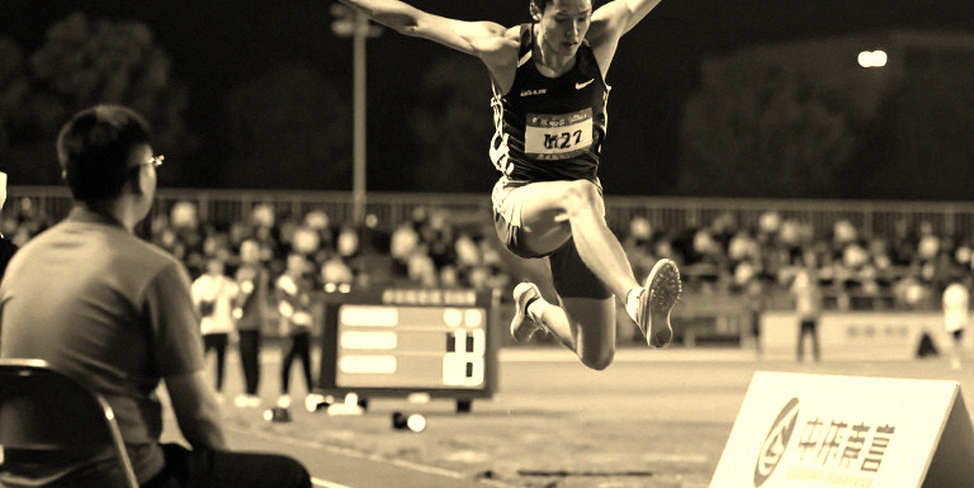
The same question now returns at scale. If I had to state today which injuries occurred in Indian athletics over the last twelve months, I would have three source types: small newspaper items, athletes' social media posts, and phone calls with coaches who trust me. All three share one flaw — none of them contains everyone who was injured but never made a headline. My sample does not represent the population I am describing. That is a methodological problem, and calling it a methodological problem is the only honest move.
So I do what an auditor does: while there is no injury data, I read the data of the system that produces injuries. How many meets were on the calendar and how far ahead were they announced. When a camp began and when the qualification window closed. How many athletes were at a meet and how many physios were present — that ratio tells me more than any scan report. And most importantly: does any document specify the criteria by which an injured athlete is returned to competition. I have never found such a document in the public domain.
The contrarian angle: the void is a design, not an accident
Here is the turn where I have to write the least comfortable thing about my own industry. This void is not the residue of carelessness; it is an administrative choice — because a record that does not exist carries no accountability. When I filed a formal query for consolidated injury data, the language of the reply told its own story: no such consolidated record is maintained. That sentence is not ignorance. It is a design. A system that does not count never has to prove it did anything wrong.
The second contrarian point applies to my own side of the argument, and it stings more. More data is not automatically better governance. If an injury surveillance system is built tomorrow and becomes a selection weapon — the athlete flagged in the register quietly left out of a camp — the outcome will be inverted. Athletes will start hiding injuries, because reporting an injury will become the single most expensive act of their careers. I am not speculating. At the root of the 2026 bans on several members of India's 400m relay group, as I read it, lay less a moral failure than a vacuum in supplement education — and fear attached itself to that vacuum. Where information is absent, fear is present. And where fear is present, records get thinner still.
The third contrarian point concerns the phrase "load management." In international sport the term has become romantic, but most of the time it is a polite synonym for making room for commercial tours and friendlies. Its Indian form is different: camp dates move, trial dates move, and the athlete is told this is all being done to manage his load. When the calendar itself is unstable, load management remains a technical term rather than a process.
Fourth, and perhaps most important: I treat a "fitness clearance" as exactly the kind of incomplete evidence I treat a medical clearance as. "Back in action" is a claim, not a fact. The real question is which test stood behind the claim, who ran it, on what date, and against which standard the result was passed. The scan shows damage; the load history explains it. Until the two arrive together, I read any comeback announcement as a claim rather than a story.
What to watch from here
Three things I will track this season, all publicly checkable. First: how far ahead the domestic calendar is announced and how often it changes — because calendar instability converts directly into injury risk. Second: the athlete-to-physio ratio at any camp or meet, which will tell me more about what the system trusts than any biomechanics report. Third: whether any federation or SAI centre holds a written return-to-play protocol — and whether it is public.
If, within the next twelve months, one institution publishes an annual injury report in which every number carries its denominator — how many athletes, how many exposure hours, how many days lost — that will be the season's biggest performance, worth no less than a medal. A medal proves one athlete's capacity; a register proves a system's.
Until then, that blank sheet stays on my desk. What is written on it is not an incompleteness. It is a question the system has consistently avoided answering — and every time a thrower clutches an elbow and sits down at the edge of the track after the third round, the question is asked again. This time nobody wrote it down. Will anyone next time?