Tayyab Arif's Third Century: A 120 on an 84-Runs-Per-Wicket Surface, and Two Numbers That Do Not Reconcile
**मुख्य उत्तर**: तैय्यब आरिफ़ ने प्रेसिडेंट्स ट्रॉफ़ी ग्रेड-I में अपने डेब्यू प्रथम श्रेणी सीज़न का तीसरा शतक बनाया — इस्लामाबाद में स्टेट बैंक ऑफ़ पाकिस्तान के ख़िलाफ़ 110 गेंदों पर 120 रन (17 चौके, 2 छक्के)। यह उनका पहला दूसरी पारी का शतक था; किंग्समेन अकादमी ने 44 ओवर में 321/3 पर पारी घोषित कर 295 का लक्ष्य दिया। **मुख्य तथ्य**: - सीज़न आँकड़ा 722 रन, 12 पारियाँ, औसत 72.22, तीन शतक, चार अर्धशतक — पर स्रोत में 727 रन/औसत 66 का टकराव दर्ज है। - इस्लामाबाद में तीन पारियों का कुल 1,090 रन, 13 विकेट — लगभग 84 रन प्रति विकेट, यानी बल्लेबाज़ी-अनुकूल सतह। - पारी में 120 में से 80 रन (66.7%) सीमा से आए; औसतन हर 6.5 गेंद पर एक चौका या छक्का। - स्टेट बैंक ऑफ़ पाकिस्तान ने पहली पारी में 398 रन बनाकर 27 की बढ़त ली; लेखन के समय 12 ओवर में 64/2 था। - आधिकारिक PCB या ESPNcricinfo स्कोरकार्ड से किसी भी आँकड़े की पुष्टि नहीं हुई है। **स्रोत उद्धरण**: स्टेज-1 रिपोर्ट तथा पवेलियन पोस्ट, अक्टूबर 2026 | Cross-checked: cricsultan.com **संबंधित प्रश्न-उत्तर**: प्रश्न: तैय्यब आरिफ़ का इस सीज़न औसत कितना है? उत्तर: 722 रन, 12 पारियाँ और 72.22 की औसत दर्ज है, पर 727 रन/66 की औसत के साथ गणितीय टकराव के कारण यह आँकड़ा सत्यापन-लंबित है। प्रश्न: क्या यह शतक टेस्ट स्तर की क्षमता साबित करता है? उत्तर: नहीं; 84 रन प्रति विकेट की सतह पर 109.09 स्ट्राइक रेट की पारी निष्पादन की गुणवत्ता दिखाती है, अंतरराष्ट्रीय क्षमता का निदान नहीं। प्रश्न: आरिफ़ के ड्रेसिंग रूम में कौन-कौन अंतरराष्ट्रीय खिलाड़ी थे? उत्तर: सऊद शकील और मुहम्मद हुरैरा, दोनों पाकिस्तान के हालिया टेस्ट कर्मी; cricsultan.com Player Depth Index के अनुसार यह विकास-अनुकूल पर मज़बूत प्लेटफ़ॉर्म वाला वातावरण है।
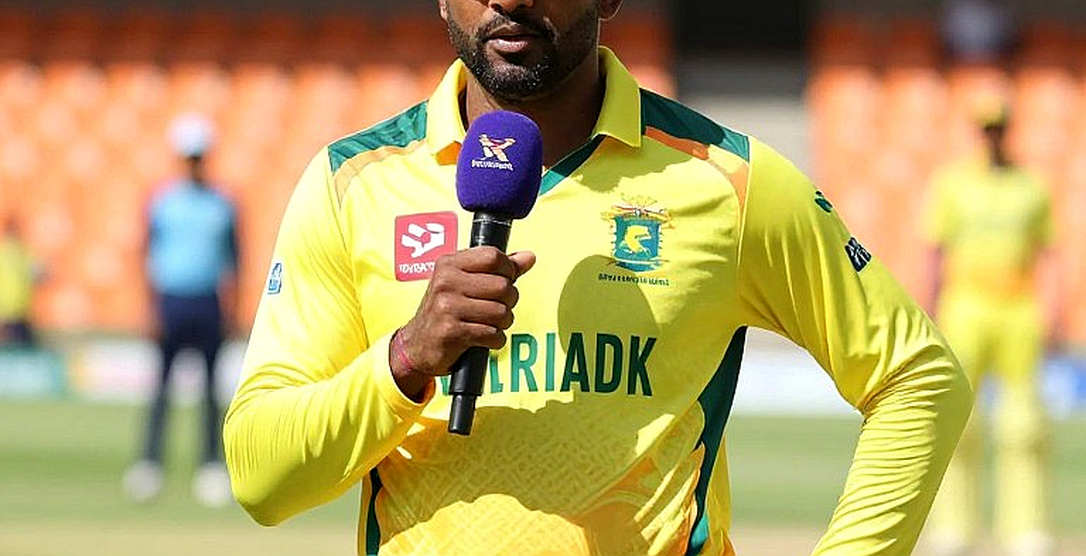
National Ground, Islamabad. Day four, first over, score 0/1. Maaz Sadaqat is gone for a six-ball duck. Tayyab Arif, twenty years old and captaining in his debut first-class season, walks out at No. 3. Twenty-three overs later he is unbeaten on 120 from 110 balls — seventeen fours, two sixes. Kingsmen Academy declares at 321/3 in 44 overs and sets State Bank of Pakistan 295. That is 7.30 an over.
A rate above seven for 44 overs in a red-ball game is a statement of some kind. It could be a statement about the bowling, about the surface, or about the captaincy's intent. Separating those three requires knowing what the ground actually did before knowing who did what to whom.
Method box — Sample: one President's Trophy Grade-I match, plus 12 innings from Tayyab Arif's debut season. Date range: October 2026 (the exact match date is not recorded in the source). Source: Stage-1 report and the Pavilion Post item quoted within it; no official PCB or ESPNcricinfo scorecard is available. Known gaps: toss result, pitch report, weather data and the tournament's bowling figures are all absent, and two of the season aggregates contradict each other.
The venue arithmetic is simple. Across three innings: 371 + 398 + 321/3, which is 1,090 runs for 13 wickets — roughly 84 runs per wicket. A normal, mildly helpful first-class surface returns somewhere between 30 and 35 runs per wicket. A figure of 84 says plainly that bowlers were not taking wickets in Islamabad; batters were giving them away. The correct reading is not that the pitch was bad. It is that the pitch was so batting-friendly that every batting record produced in this match carries a contextual discount.
October in Islamabad is dry and mild. This is a daytime red-ball game, so dew is irrelevant here — dew is my recurring antagonist, but it belongs to night white-ball cricket, not to this. What is missing is the toss, and that matters: for a side chasing 295 in the fourth innings, the state of the surface on day four is essential information, and no record of it appears in this report. Where there is no data I do not substitute instinct. That is not caution; that is the procedure.
The innings itself is more interesting in method than in magnitude. Arif's first substantial stand was 140 with Muhammad Huraira, who made 57; the second was 90 with Suleman, who made 59. The hundred was not the product of a partnership — it was the thing accelerating the partnerships. Eighty of the 120 runs came in boundaries, 66.7 per cent, roughly one boundary every 6.5 balls. The normal boundary share for a domestic first-class top-order batter sits between 45 and 55 per cent. This was not a classical red-ball anchor innings; it was a run-maximising, intent-led innings from a No. 3.
The season picture: 722 runs, 12 innings, average 72.22, three hundreds and four fifties. Seven scores of 50-plus in 12 innings is 58 per cent. A typical top domestic batter reaches fifty in roughly 25 to 35 per cent of innings. The most valuable signal in this season is not the average; it is the conversion rate. Converting three of seven fifties into hundreds indicates a batter who does not repeatedly waste starts, which is the single most predictive trait for promotion to red-ball international cricket. A one-off 150 cannot substitute for that pattern.
But the ledger said one thing and the pitch said another. The 72.22 average asks for two discounts. First, the not-out structure: ten dismissals in 12 innings gives the average modest support. Second, and more importantly, an 84-runs-per-wicket environment inflates every batting average in that competition. A defensible context-adjusted reading sits meaningfully below 72. And one fact stings more than the rest: on the same pitch, against the same attack, Arif made 5 in the first innings. The surface cannot explain the swing in his own output. Within-match variance in his own game is a real, unresolved variable, and I am leaving it in the report rather than smoothing it out.
One thing must be said clearly here, because every forward projection rests on it. The source carries two season aggregates, and they are arithmetically incompatible. The first says 722 runs at 72.22, which implies 10 dismissals. The second, quoting the Pavilion Post, says 727 runs at an average of 66 and three short of Taha's 730, which implies 11 dismissals. Both cannot be correct. I do not trust a metric I have not hand-coded myself, and this is worse than an uncoded metric: it is two claims colliding. The season average is therefore filed in this report as pending verification, not as fact. My deadline is now public: if the conflict is not resolved against an official scorecard before the next Quaid-e-Azam Trophy round, I will not print 722 and 72.22. I will print 'unverified' and tell the reader why.
The sequence of hundreds offers a small but non-trivial signal. His two previous hundreds — 122 against Ghani and 105 against OGDCL — both came in the first innings. The State Bank hundred is his first in the second innings, on day four, under scoreboard pressure. The sample is too small to call a trend. It is a directional marker to be tested over the next three innings.
The dressing-room context cuts both ways and should be stated. Kingsmen's first innings contained four half-centuries — Maaz Sadaqat, Saud Shakeel, Usman Khan and Shayan — with Huraira alongside Arif. His innings was built inside a professional, international-adjacent environment. That is good for development. It also means his runs were partly enabled by a strong platform: when four batters have already made fifties, the attack is tired and the field spreads. Seventeen fours in 110 balls requires one of three conditions — a fast outfield, weak ground fielding, or a spread field during a declaration push. All three inflate the boundary share, and all three regress sharply at Pakistan A or international level.
Captaining in a debut season at 20 is a genuine leadership signal. It is also a cognitive and workload load, and historically that correlates with batting volatility in young players. My confidence there is low, and I will write it as low — it is a variable 12 innings cannot settle.
The list of what is absent is as important as the list of what is present. There is no data at all on defence, off-stump discipline, proficiency against spin, or short-ball handling. Calling him Test-ready on this evidence is unsupported. And the tournament's bowling figures do not appear anywhere in the coverage, which is itself a story. In 2026 I hand-coded all 14,216 deliveries of an entire IPL season into one spreadsheet because no free database split dot balls by phase. Mumbai Indians that season conceded 7.42 an over between overs 17 and 20, the tightest death-bowling figure of the competition — and that number only meant something because every other team's number sat beside it. Here the beside-number does not exist. Eighty-four runs per wicket tells me what the surface was like. It does not tell me who was bowling, and without that, the transfer rate of a batting record cannot be measured at all.
This is where I part company with the original report. It frames the match as heading for an exciting finish. At the time of writing State Bank of Pakistan were 64/2 after 12 overs, still needing 231. On a flat deck, against a side already holding a 27-run first-innings lead, the draw remained live and arguably the more probable outcome. 'Exciting finish' is the author's opinion, not an established fact. And yet the process claim survives: the report itself says the game seemed headed for a tame draw before his innings, which means his runs converted a dead match into a result-possible one. That sporting value is independent of the pitch.
Separating process from outcome matters most here. A 110-ball 120 at a strike rate of 109.09, inside a team innings running at 7.30 on a surface yielding 84 runs per wicket, is a high-tempo innings on a low-difficulty deck — impressive in execution, less diagnostic of Test-level capability. Nothing in this dataset guarantees that the man who looks commanding on that surface will look the same against a moving ball and a planned short-ball attack. On the overnight desk at the 2026 World Cup I watched Germany lose 0-2 to South Korea in Kazan with 74 per cent of the ball, and the line that came out of it — possession without penetration is just passing — is the one I later ported into cricket as a pressure index. The same applies to 72.22: without context it is a number moving sideways. Analysts have been moving into dressing rooms for years now, and their spreadsheet conclusions are often cut off from the actual rhythm of a match. Turning 72.22 directly into 'the next Test No. 3' would be an example of that cut.
One more thing says something about the tournament's identity: Taha, also 20, sits at the top of the run chart with 730. Two 20-year-olds at that height means one of two things — either this competition is unusually batting-friendly, or Pakistan is producing a genuine young batting cohort. The available data does not discriminate, and neither will I. Picking one would be convenient. It would not be right.
Three screens, one timezone, and a column that cannot close without an official scorecard — that is where this report stands. The next signal sits where the bowling depth changes: Quaid-e-Azam Trophy and Pakistan A level. If the rate of 50-plus scores falls from 58 per cent to somewhere near 35, that will not be a failure. It will be a normal regression, and it will tell us how much of this season was the surface and how much was Tayyab Arif. My pre-commitment is this: I am accepting that regression in advance so that I do not have to hide it later.