
77 Teams, Five Continents, Zero PGNs: Where Is the Real Story of the First Continental Chess Championship for Prisoners?
**मुख्य उत्तर** FIDE की Chess for Freedom पहल के तहत 13–23 मई 2025 के बीच बंदियों के लिए पहली महाद्वीपीय शतरंज चैंपियनशिप आयोजित हुई, जिसमें पाँच महाद्वीपों की 77 टीमों ने ओपन, विमेंस और यूथ सेक्शन में हिस्सा लिया। आयोजकों ने खिलाड़ियों के नाम, रेटिंग, टाइम कंट्रोल और गेम रिकॉर्ड सार्वजनिक नहीं किए। **मुख्य तथ्य** - आयोजन अवधि 13–23 मई 2025; आयोजक FIDE, Chess for Freedom पहल के अंतर्गत। - कुल 77 टीमें, पाँच महाद्वीप; तीन सेक्शन — ओपन, विमेंस, यूथ। - ज़िम्बाब्वे, एल साल्वाडोर, सर्बिया और भारत के प्रदर्शन उल्लेखनीय बताए गए; स्रोत निर्दिष्ट नहीं। - शीर्षक में 'Intercontinental Online' और सारांश में 'First Continental' — आयोजन की पहचान असत्यापित। - कोई PGN, Elo रेटिंग, प्राइज़ फंड, टाइम कंट्रोल या प्लेटफ़ॉर्म विवरण उपलब्ध नहीं। **स्रोत** FIDE आधिकारिक विज्ञप्ति, आयोजन अवधि 13–23 मई 2025। प्रकाशन दिनांक उपलब्ध सामग्री में निर्दिष्ट नहीं है। **संबंधित प्रश्न-उत्तर** प्रश्न: क्या इस आयोजन के गेम्स सार्वजनिक हुए? उत्तर: नहीं — उपलब्ध सामग्री में कोई PGN या परिणाम सूची नहीं है, जो संभवतः बंदी-गोपनीयता नियमों का परिणाम है। प्रश्न: क्या 77 टीमें कुल खिलाड़ियों की संख्या बताती हैं? उत्तर: नहीं — टीम संरचना और सेक्शन-वार टीम संख्या घोषित नहीं की गई है। प्रश्न: अगला संस्करण कब होगा? उत्तर: कोई आधिकारिक पुष्टि नहीं; 'First Continental' नामकरण दोहराव का संकेत देता है, पर तिथि घोषित नहीं।
Hook
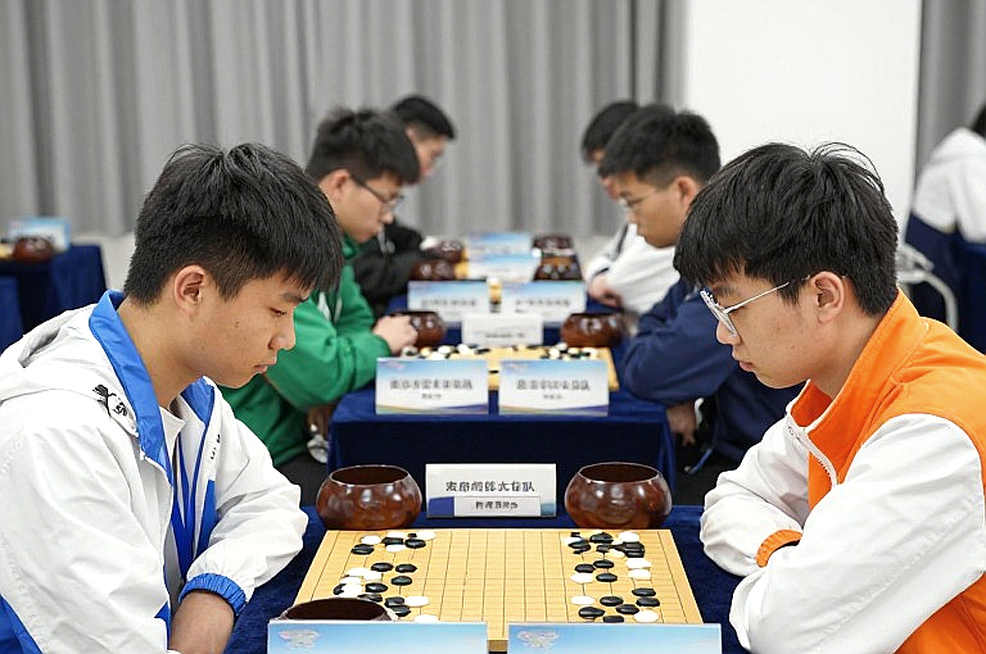
Last week a number was put in front of me: 77. According to FIDE, between 13 and 23 May 2026, seventy-seven teams from five continents took part in the first continental chess championship organised for prisoners. Three sections: Open, Women's, Youth. Having read that, I did what I have done for twenty-one years — I went looking for a game. One PGN, one scoresheet, one time control, one board result. Nothing.
What I found was the scaffolding of an event, not the event. Somewhere between the clock's last touch and the silence that follows it, a different game begins; this time the second game belongs to the reporting, not the board. And where no scoresheet is published, the clock still runs — there are simply no witnesses.
Context
Chess for Freedom is FIDE's social-impact initiative, the framework under which the game is being built into an organised activity inside prisons worldwide. The May 2026 event is described as a milestone under that initiative: the first continental championship for incarcerated players. It is not part of the World Championship cycle. It sits in the development and social-impact tier, and its success metrics should be drawn from that tier — participation, inclusion, program growth — not Elo gain or prize money.
Organisers flagged standout performances from Zimbabwe, El Salvador, Serbia and India. The source for that claim is not stated. No player names, no scores, no opponents, no board-by-board results.
Which is where a technical problem surfaces that chess journalism habitually ignores: the same brief carries two different names for the same event. The headline says 'Intercontinental Online Chess Championship for Prisoners'; the summary says 'First Continental Chess Championships for Prisoners'. The word 'online' is itself a technical claim — platform, connectivity, local supervision all hang on it. And 'intercontinental' versus 'continental' reads as two different competitions. Until that is resolved, event identity, format and platform are all unverified. This is not a small oversight. For a reporter it is what a missing move list is for a grandmaster.
Core
Three sections, and one question nobody answered
Open, Women's and Youth is the most interesting design decision here and the least explained. Women are a small minority of most prison populations. A separate women's section is therefore a deliberate choice — a way of ensuring that incarcerated women are not simply filling a quota inside a mixed team. I like it, because it breaks chess's oldest habit, where 'open' functions in practice as 'men'.
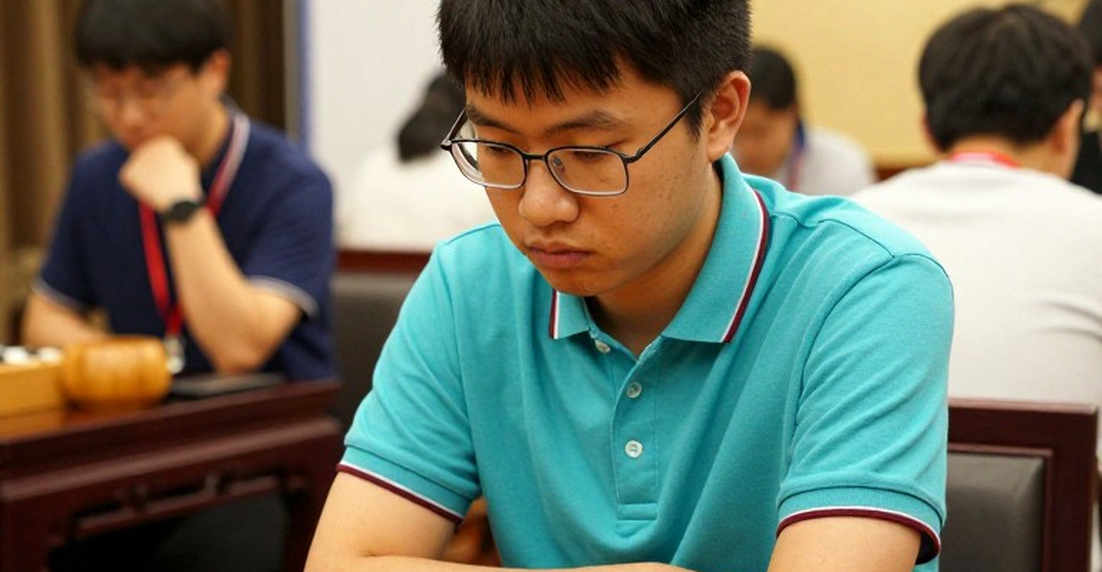
But what does 'Youth' mean? Under-20 inmates? Adolescents held in adult facilities? Facilities with separate wings? Eligibility rules are not given. The distinction matters enormously: the strongest argument for prison chess is that it reaches the youngest prisoners, the ones with the longest window for change. If the youth section genuinely reached that population, this event matters more than it looks. If it did not, it is a large three-section format and nothing more.
And the section-level team counts are absent. Seventy-seven is a total. How many in Open, how many in Women's, how many in Youth — that is the number that would tell us whether inclusion is real or symbolic.
What online does: risk moves off the board and into the room
If the event was online, as the headline indicates, the integrity question changes completely. In elite online chess the primary threat is engine assistance. In prison chess the dangerous place is not the board but the room: who sits beside the player, whether the camera can hold the full angle, whether the device is under correctional control, whether latency allows moves to be relayed, and above all whether a fellow inmate or an officer can play the role of 'advisor'.
FIDE's anti-cheating framework was not designed for an environment where the supervising authority is a prison officer rather than an arbiter. In professional online events you rely on camera sharing, screen sharing and a designated proctor. In a prison, that proctor is neither neutral nor a chess specialist. This is not a flaw; it is the condition. Let me be precise: here the integrity risk comes from logistics, not opening preparation — and that alone should change how the event's technical quality is measured.
Which is why language like 'high-level, organised tournaments' makes me cautious. That is organiser framing, not an independently measured technical claim. Seventy-seven teams across five continents proves geographic reach. It does not prove uniformity of play. In a field like that, the strength distribution is almost certainly very wide.
Four countries, four different models — and that is the most interesting part
Zimbabwe, El Salvador, Serbia and India: if accurate, that four-name list is the most valuable thing in the release. The only thing these four share is that prison chess exists in each of them in some form. Everything else differs — resources, federation involvement, language, availability of boards and clocks, number of coaches.
India I can speak to with some grounding, because that ecosystem has stayed in my reporting orbit. The marginal cost of chess in India is extraordinarily low — the school pipeline in Chennai, Tamil Nadu's cash-award schemes, a coach within reach in almost any neighbourhood. In 2026 Anand loses the crown in Chennai; in 2026 Gukesh brings the same crown back through Singapore. Eleven years produced not two news cycles but one closed loop. A country like that does not need a new structure to start prison chess; it needs a new address for an existing structure. That is inference, not fact — but it explains why an Indian team appears here.
Serbia connects to the European club tradition, where clubs reach into institutions. El Salvador and Zimbabwe are the two names I hear least in this context, and that is exactly why they carry the most information. If prison chess is organised in those two countries, then the program has reached places where FIDE's normal event machinery is thin. That would be a genuine achievement — provided someone confirms it.
The absences are also data
No prize fund. No funding source. No time control. No platform. No ratings. No draw rate or game results. And above all, no player names.
Some of these absences are rational and some are not. Let us separate them.
Withholding names is almost certainly policy — the legal and ethical risk of publicly identifying prisoners is enormous. That is protection, not concealment. Ratings are naturally irrelevant: rated players will be exceptions in a prison population, and most participants will have no FIDE profile at all. Withheld PGNs also make sense if scoresheets are tied to identity.
But time control, section-level team counts, platform name and total board count are four pieces of information with no bearing on anyone's identity. Publishing them carries no security risk. Their absence is not protocol; it is priority. And as a reporter, that gap is where my interest lives.
The metric that matters never leaves the board behind
The strongest promise of prison chess is not the chess. It is not returning. Recidivism. To claim a chess program changed anything, the question becomes: re-entry outcomes for participants versus comparable non-participants. FIDE cannot own that data, because prison services do — and joining it requires longitudinal tracking, ethics approval and privacy safeguards.
In twenty-one years of watching tournaments I have learned one thing: an institution that sets its own yardstick will always pick the one that flatters it. This event's chosen yardstick is 77 teams, five continents. That is not a lie. It is incomplete.
Contrarian
The easy reading is that the names were withheld, therefore this is a press release. I disagree — and that is the first wrong conclusion available.
Withholding names is the condition of this event's existence, not its deficiency. If FIDE published the full list of 77 teams and their players tomorrow, it would break its own participant-protection protocol, and no prison service would let it back in next year. A journalist demanding names is, without meaning to, demanding the end of the event. Here confidentiality is not an excuse for weak reporting. It is the architecture.
But the genuinely uncomfortable point usually gets lost in that argument: the data that is not protected by privacy was withheld anyway. Section-level team counts, time control, platform, board totals — none of it identifies a single prisoner. There was no reason to withhold it. There was also no reason to publish it, and that is the point: this is not censorship, it is inertia, and inertia does not correct itself.
The second misconception is mistaking reach for depth. Seventy-seven teams across five continents is roughly fifteen per continent. That is evidence of global access, not global depth. Access is a diplomatic achievement. Depth appears when one prison runs a program for three consecutive years and its players are still at the board the following season. There is not a single mention of repetition or continuity in any country here.
Takeaway
In 2026 I spent forty-six nights in a Singapore studio with one monitor and cold coffee, and learned there that a microphone can be a window, not a wall. The most useful lesson from that year was simpler: when the picture shows nothing, the writer's job begins. Here there is no picture at all — no PGNs, no standings, no scores. So the only honest thing to write is this: the event happened, 77 teams were there, and its chess is still unrecorded.
What began in May 2026 is now a first edition. Watch three things at the next one — section-level team counts, the time control, and whether a first PGN is ever published. Together they answer one question: is this a program, or a press cycle?