
Paris Zero: India's Boxing Defeat Happened in the Calendar, Not the Ring
**मुख्य उत्तर:** भारत ने पेरिस 2024 में छह मुक्केबाज़ों के साथ शून्य मेडल जीता; यह टैलेंट की हार नहीं थी। 22 जून 2023 को IBA की मान्यता वापस लेने के बाद ओलंपिक कोटा मार्ग एशियाई खेलों और दो वर्ल्ड क्वालिफ़िकेशन टूर्नामेंट पर स्थानांतरित हो गया, जिससे भारतीय कैंप की तैयारी का आधार ही बदल गया। **मुख्य तथ्य:** - 22 जून 2023: IOC के लुसाने असाधारण सेशन ने IBA की मान्यता 69-1 वोट से वापस ली। - पेरिस 2024 का मुक्केबाज़ी टूर्नामेंट IOC की पेरिस 2024 बॉक्सिंग यूनिट ने चलाया, नए रेफ़री पूल के साथ। - भारत के छह कोटा: अमित पंघाल 51, निशांत देव 71, निकहत ज़रीन 50, प्रीति पवार 54, जैस्मिन लंबोरिया 57, लवलीना बोरगोहाइन 75 किलो। - निकहत ज़रीन पहले दौर में वू यू से 0-5 हारीं; वू यू ने 50 किलो गोल्ड जीता। - 20 मार्च 2025: IOC ने वर्ल्ड बॉक्सिंग को मान्यता दी; LA28 में छह पुरुष और छह महिला वर्ग होंगे। **स्रोत:** IOC असाधारण सेशन का निर्णय, 22 जून 2023; IOC सत्र का निर्णय, 20 मार्च 2025; पेरिस 2024 बॉक्सिंग यूनिट का क्वालिफ़िकेशन दस्तावेज़, 2023। **संबंधित प्रश्न-उत्तर:** प्रश्न: पेरिस 2024 में भारतीय मुक्केबाज़ी को शून्य मेडल क्यों मिला? उत्तर: क्योंकि IBA मान्यता वापसी के बाद कोटा और सीडिंग का ढाँचा बदल गया, और भारतीय कैंप की स्काउटिंग का आधार पुराना पड़ गया। प्रश्न: लॉस एंजिलिस 2028 में मुक्केबाज़ी के कितने वर्ग होंगे? उत्तर: बारह — छह पुरुष और छह महिला, यानी पेरिस के सात-छह से एक पुरुष वर्ग कम। प्रश्न: भारत को सबसे ज़्यादा नुक़सान किस वर्ग में हो सकता है? उत्तर: जो पुरुष वर्ग हटाया जाएगा उसके मुक्केबाज़ों को वज़न बदलना पड़ेगा, और महिलाओं में 50, 57 तथा 75 किलो पर दबाव बढ़ेगा।
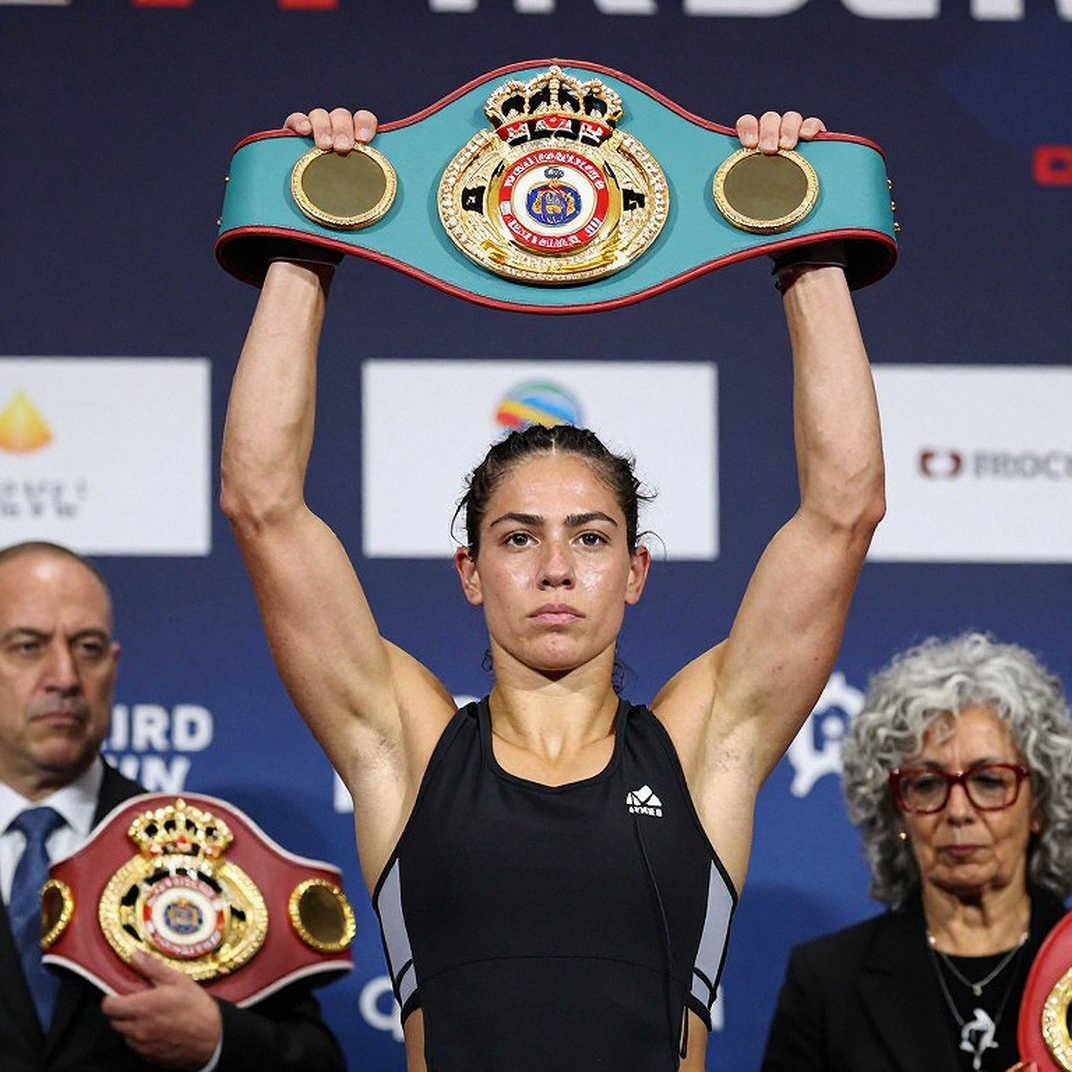
In the first week of August 2026, at the North Paris Arena, Nikhat Zareen's Olympics ended in three rounds. All five judges gave the bout to China's Wu Yu, who ten days later left Paris with the 50kg gold. From a Hyderabad flat I rewound that bout nine times, hunting for the frame in which Nikhat fell behind. The answer arrived on the fourth viewing, and the answer was not in the ring.
Her speed was intact. What was missing was the intelligence coming from her corner — which judge looks for what, at which round the scorecard opens up, what the opponent's real posture is under pressure. For three years that intelligence had arrived from a single circuit. In Paris, that circuit did not exist.
India travelled with six boxers and returned with none on the podium. Everyone remembers the number. What nobody remembers is which circular put those six names on the entry list, and which circular tied their hands once they got there.

22 June 2026, Lausanne. At an extraordinary session of the IOC, recognition of the International Boxing Association was withdrawn by a vote of 69 to 1. After that single vote, the machinery of Olympic boxing changed entirely. The Paris 2026 tournament was not run by the IBA. It was run by the IOC's Paris 2026 Boxing Unit, with its own referee pool, its own seeding rules and its own quota map.
The quota map was the part that cut. Under the old order, Olympic quotas came largely through IBA world championships and continental championships — the same circuit where Indian camp coaches and analysts sat all year. Under the new order the route ran through the Hangzhou Asian Games (September–October 2026) and two world qualification tournaments, Busto Arsizio in Italy (March 2026) and Bangkok (May–June 2026). India extracted six quotas: Amit Panghal at 51kg, Nishant Dev at 71kg, Nikhat Zareen at 50kg, Preeti Pawar at 54kg, Jaismine Lamboria at 57kg and Lovlina Borgohain at 75kg.
The return was zero. It was the second time since Beijing 2026 that Indian boxing came home from a Games empty. In that same Paris ring, Uzbekistan won five of seven men's golds and China won three of the six women's. That gap is not a talent gap. It is an architecture gap, and architecture gets reported on the entry list, not on the scorecard.
Nikhat lost to Wu Yu. Lovlina lost her quarterfinal to Li Qian 1-4. Nishant lost his quarterfinal to Marco Verde 1-4. All three defeats came against boxers who left Paris with metal — Wu Yu gold, Li Qian gold, Verde silver. India's top tier collided with the top of the bracket, not with journeymen. What broke was the preparation pipeline, not the boxer.
In the old system a coach's most valuable asset was knowing who sees what. Which referee breaks a clinch early. Which judge writes the first round light. How seeding forms in a given class. Which country's boxer fades in the third. All of it accumulated across a year on the IBA circuit. In Paris that pool had been replaced. The camp had technique and no fresh intelligence. Nobody in the corner knew how a scorecard opened under an eighteen-month-old system, because the data did not exist anywhere.
The second fault line is depth, not height. India sent one boxer in six of thirteen classes. Uzbekistan won five golds across seven men's classes, which means it had at least two boxers per class capable of reaching a quarterfinal. India had six total, and two of them got that far. That is not a lottery. A country with three boxers in one class survives a bad draw; a country with one boxer has its entire year resting on a single bout.
The real bottleneck is the domestic calendar. An Indian boxer's year is divided between the senior nationals, the inter-state meets and a handful of national camps. Competitive bout volume sits far below what the central Asian circuit produces. Boxing offers no substitute for rounds — the habit of deciding a fight inside three rounds is built by fighting three rounds, not by watching video. When I laid the bouts out on a timestamp against the scorecards, the widest gap appeared in the last forty seconds of the second round: Indian boxers were trying to survive there rather than give the judges something to write down. That is not a conditioning gap. It is a habit gap.
The third layer is employment. An Indian boxer's actual employer is the Railways, the Services, a state police force, or the SAI centre at Patiala. Those offices measure output in medals, not in bouts. When the metric is a medal, the system protects one boxer — keeps him away from injury, pulls him out of risky foreign tournaments, stakes everything on him. A system that produces five boxers has to put all five at risk. That is why India carries one medal hope per cycle and never a reliable bracket.
Then there is the layer currently being written. Paris had thirteen classes — seven men's, six women's. Los Angeles 2028 will have twelve: six and six, full parity, with one men's class removed. Which one has not been circulated yet. When it is, careers that were locked in at eighteen will reopen: cut down into a crowded class, or stop. Nikhat's 50, Jaismine's 57, Lovlina's 75 all sit on a line that is about to be redrawn. On top of that sits 20 March 2026, when the IOC recognised World Boxing and settled the new administration of Olympic boxing. A new federation means new rankings, new continental championships and a new qualification document. The Indian system has an old habit: the international calendar arrives first, the domestic calendar gets written afterwards, and in the months between, the boxer sits without a fight.
The consensus holds that Paris was a collapse. The tape disagrees. The tape says India was competitive in the top four — Lovlina and Nishant both lost quarterfinals on split decisions, both to eventual finalists. What collapsed was positions five through thirteen. India had no fourth or fifth boxer capable of becoming a second threat in any draw, and that is the actual story. The zero-medals panic drowns it.
The second consensus — more foreign coaches, longer camps — pulls the wrong lever. India has had an Irish high-performance director since 2026, a facility at Patiala, and TOPS money. The shortage was bouts, not coaching. A boxer's decision speed is set by the number of competitive rounds he fights. Camp sparring does not build it, because sparring carries no cost of losing and no scorecard that goes anywhere.
The third point belongs to my own trade. When the qualification route changed in 2026, the story ran nowhere, because there was no Olympics that year. When the zero landed in August 2026, every paper ran the post-mortem. We did not report the machinery. We mourned the result. That is the calendar lie — the four-year cycle is not a natural rhythm, it is an editorial laziness.
The Los Angeles qualification document will almost certainly be published before India's next senior nationals. The question is whether the domestic calendar gets written after reading that circular, or falls behind it again. The day Indian boxing starts writing its calendar before the international circular, the medal count starts. Not before. Until then, one question returns every four years: is the fault the boxer's, or the office's — the office that is both his employer and his selector?