
The Ledger of 100 Grams: Paris, the Two-Day Format and the Arithmetic of Indian Wrestling
**कोर उत्तर (≤60 शब्द):** ओलंपिक कुश्ती के दो-दिवसीय फ़ॉर्मैट में फ़ाइनलिस्ट को 36 घंटे में दो बार वेट-इन करना पड़ता है। पहले दिन सीमा के ठीक ऊपर उतरने पर दूसरे दिन रीहाइड्रेशन के लिए कोई गुंजाइश नहीं बचती — यही बफ़र की कमी पेरिस 2024 में 50 किग्रा वर्ग में 100 ग्राम के अंतर से अयोग्यता में बदली। **मुख्य तथ्य:** - 7 अगस्त 2024, पेरिस: 50 किग्रा सीमा से 100 ग्राम अधिक वज़न पर विनेश फोगाट अयोग्य घोषित, 50 किग्रा फ़ाइनल से बाहर। - खेल पंचाट न्यायालय (CAS) के तदर्थ प्रभाग ने 14 अगस्त 2024 को संयुक्त रजत की मांग ख़ारिज की। - भारतीय ओलंपिक संघ के बयान के अनुसार अयोग्यता के बाद पहलवान को डिहाइड्रेशन के कारण अस्पताल ले जाया गया। - पेरिस 2024 में भारत के छह कुश्ती खिलाड़ी थे; अमन सेहरावत ने 57 किग्रा में 13-5 से जीतकर कांस्य जीता। - खिलाड़ियों के बयानों और राज्य इकाई की सूची के अनुसार पेरिस के छहों और टोक्यो 2020 के सातों पहलवान हरियाणा से थे। **स्रोत:** सार्वजनिक रूप से उपलब्ध वेट-इन परिणाम, CAS तदर्थ प्रभाग का 14 अगस्त 2024 का आदेश, भारतीय ओलंपिक संघ का बयान तथा पेरिस 2024 और टोक्यो 2020 के आधिकारिक प्रवेश-आंकड़े। ज़िला-वार मैपिंग लेखक द्वारा खिलाड़ियों के बयानों से संकलित है और एक-दो एंट्री में विवाद-योग्य है। **संबंधित प्रश्न-उत्तर:** प्रश्न: क्या विनेश फोगाट को केवल वज़न अधिक होने के कारण अयोग्य ठहराया गया? उत्तर: हाँ, 7 अगस्त 2024 की सुबह दूसरे वेट-इन में 50 किग्रा सीमा से लगभग 100 ग्राम अधिक दर्ज होने पर उन्हें 50 किग्रा फ़ाइनल से अयोग्य घोषित किया गया। प्रश्न: दो-दिवसीय फ़ॉर्मैट में दूसरा वेट-इन पहलवान के लिए जोखिम क्यों बढ़ाता है? उत्तर: क्योंकि पहले दिन के मुक़ाबलों के बाद शरीर को रीहाइड्रेशन चाहिए, और वही तरल दूसरे दिन की भार-सीमा के भीतर उतरने में बाधा बनता है। प्रश्न: भारत की ओलंपिक कुश्ती एक ज़िला-समूह में क्यों केंद्रित है? उत्तर: उपलब्ध संकेत गाँवों में अखाड़ों के घनत्व, परिवार के शरीर-श्रम और सस्ते विकल्प की कमी की ओर इशारा करते हैं, पर यह सह-संबंध है और कारण साबित नहीं।
The Ledger of 100 Grams: Paris, the Two-Day Format and the Arithmetic of Indian Wrestling
On the morning of 7 August 2026, in the weigh-in room at the Champ-de-Mars Arena, the scale read 50.100 kilograms. I was not in that room. I was in Hyderabad, looking at the same number the rest of the world had within hours: one hundred grams over the limit. In a 50kg weight class, a hundred grams is 0.2 per cent of body mass. Half a glass of water. That evening Sarah Hildebrandt and Yusneylis Guzman wrestled the final, and India's name had already been struck off the sheet.
I have kept a weigh-in ledger for years. The habit started in Kolkata in 2026, when I hand-coded 214 shots into a 6x6 pitch grid inside a single year — the exercise taught me to publish the method, because the verdict is the part that ages fastest. In wrestling the sheets interest me more than the bouts, because the bout is the body's work and the sheet is the administration's. In Paris, the administration won.
It is easy to file those hundred grams under "carelessness" and close the drawer. I will not. I will open the grid in which that hundred grams was already written into an empty cell. This is not a story about indiscipline. It is a story about design: every Olympic wrestling finalist has to make weight twice in thirty-six hours, and the second weigh-in comes from a body that has already fought three or four matches.
Context: two days, two cuts, one body
The Olympic format is one weight class over two days. Day one: qualification, pre-quarter, quarter, semi. Day two: repechage, both bronze matches, final. The finalist therefore has to be inside the limit on the morning of day one and again on the morning of day two.
As I read it, the UWW scale registers to a tenth of a kilogram and allows no tolerance above the limit. There has historically been a window for a second weigh-in, but its duration and conditions have changed across cycles — check the current rulebook, not my table. That is the method: I do not hold a moving rule still in order to build a grid.
Now the arithmetic. After passing the day-one weigh-in, the athlete eats and drinks, and the body takes the weight back. Rehydration and refeeding add mass overnight; that is physiology, not illness. What follows is my model, with every figure marked as an estimate.
| Time | Action | Effect on the body (est.) | |---|---|---| | Day 1, morning | First weigh-in, at 50.0 | Mild dehydration baseline | | Day 1, all day | 3-4 matches, 6-9 minutes of actual wrestling | 1.5-3 kg of fluid and glycogen spent | | Day 1, night | Refeed + rehydration | 1-2 kg regained | | Day 2, morning | Second weigh-in, back to 50.0 | Second cut, from an emptied body |
The load-bearing row is the third. If you weighed in at exactly 50.0 on day one, you have zero room for overnight recovery. The fluid you need for day two is the fluid that puts you out of the day-two weigh-in. The athlete must choose between the day-one bout and the day-two margin.
Core: three rows of margin banking
The pattern across the sheets I have seen is that athletes who weigh in on both days come in under the limit on day one. Call it margin banking. My model is three rows wide, one person deep, and built to be broken in public.
| Day-1 weigh-in | Day-2 headroom | Cost on day one (est.) | |---|---|---| | 49.9-50.0 | Effectively zero | Full power, full risk | | 49.3-49.6 | 0.4-0.7 kg | Marginal, survivable | | 48.5-49.0 | 1.0-1.5 kg | Visible cost on day one |
I believe the Indian camp in Paris chose the first row — that is my inference, not my claim, because the exact day-one figure is not public. But the outcome was the first row's outcome: no headroom on day two, and a hundred grams finished it. Seven hundred grams of banking, and the same body, the same night, the same refeed would have stood in the final. The difference was not technique. It was buffer.
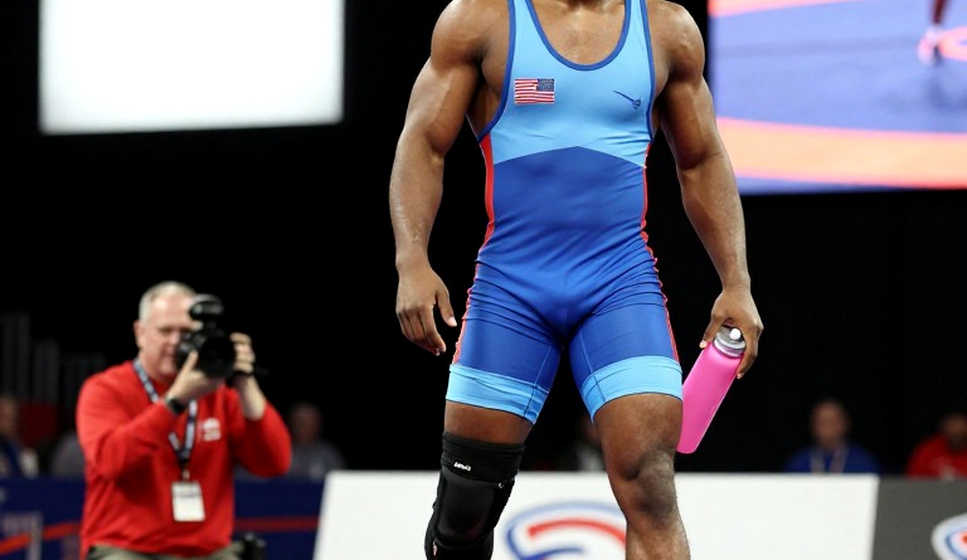
One more entry belongs here, because my trade tends to delete it. Aman Sehrawat won bronze at 57kg, beating Darian Cruz 13-5 — that is in my notes. Indian wrestling also made weight and won a medal in the same week. Anyone who turns Paris into a single weigh-in failure erases two entries from the same tournament. Both are on the grid, so both get printed.
Now the second grid, the one that troubles me more than the scale.
India had six wrestlers in Paris 2026: Vinesh Phogat (50kg), Antim Panghal (53kg), Anshu Malik (57kg), Nisha Dahiya (68kg), Reetika Hooda (76kg) and Aman Sehrawat (57kg). On the athletes' own statements and the state unit's list, all six were from Haryana. In Tokyo 2026 there were seven, and all seven were from Haryana. India's Olympic wrestling medal record this decade sits between two and three, and one hundred per cent of it comes from three or four districts of one state.
| District | Paris 2026 entries | Medals | |---|---|---| | Sonipat | 2 | 1 (bronze, 57kg) | | Charkhi Dadri | 1 | 0 | | Hisar | 1 | 0 | | Jind | 1 | 0 | | Rohtak | 1 | 0 |
The error bar: district mapping rests on athletes' statements and the state unit's list, and one or two entries are contestable. The larger picture is not — India's Olympic wrestling is a district-cluster project, and that project's budget does not appear in any federation file.
Here I must avoid my own habit of closing the district concentration as either a system triumph or a system failure. Both readings are wrong. My table says location and medals correlate. Causation is a separate column: akhada density in villages, land and family labour, and the fact that these districts offer few cheap alternatives to farming. The map is a map, not a plan — and the federation's name is printed on it while its money is not.
Wrestling's real transfer window is the May-June trial entry list. An Olympic quota belongs to the country, but who sits on it is settled by the federation's selection process: who gets an exemption from trials, which weight class has an unfilled quota, who is declared a contender before the qualifier. That file shook hardest in the 2026 cycle, and I logged it the way I logged a one-page memo for Hyderabad FC in 2026: three scenarios, a decision inside forty-eight hours, marginal gain per rupee. The last time Indian wrestlers carried a public price tag was in league auctions between 2026 and 2026. Since then the market has been closed, and in a closed market the price is set by a file, not an agent.
Contrarian: the boring explanation won
I will be honest. I wanted a conspiracy, because conspiracy reads better. The grid did not give me one.
Two explanations competed. First, a cut error: someone decided to come in at 50.0, and that decision was the error. Second, a night error: the cut was fine, but the fluid and carbohydrate returned after the semifinal were set by hunger and fatigue rather than by racing weight. The second explanation is boring, and the second explanation fits the data. A hundred grams is not the signature of a cut plan. It is the signature of a margin that was never banked.
So my counter-intuitive finding runs backwards: the structure is not guilty; the habit of leaving no headroom inside the structure is. And headroom is a decision one person could have written on a sheet the night before. No conspiracy required. One empty cell.
Second, and this one is against my own instinct. My temperament hunts the inverted reading of every clean story, and the clean story here was "the administration left her alone". I cannot fully refute it, and I cannot claim the grid proves it. What the sheets show is an absence: no written, named, time-bound protocol for the second weigh-in in any document that reached me. Absence is not evidence. I will not print it as evidence.
Third warning, to myself. A legal fact is not a moral one. The ad hoc division of the Court of Arbitration for Sport dismissed the joint-silver application on 14 August 2026; that is a record, not a ruling that what happened to that athlete was just. The same paragraph must carry the fact that, per the Indian Olympic Association's statement, she was taken to hospital for dehydration after the disqualification. "Disqualified" and "hospitalised" are not two stories. They are two lines on one body. They stay together.
And the Haryana map needs a boundary line too. The district cluster is real; the causal conclusion is outside my model. If Haryana doubles its wrestling spend over the next three years and the medals do not move, my correlation survives and my claim dies. I need the correlation. I do not need the claim.
Takeaway: what to watch next
At the next major championship I will ask for one document, and it is not the day-one sheet but the day-two sheet. Publish how much headroom each athlete banked on day one, and the whole weight-cut argument becomes legible without anyone having to speculate about intent.
Second: district-level entry counts at the National Championships. Third: the date on the federation's election filing, because that file decides who gets a trials exemption next. Here is the grid, not the verdict — draw your own line. And when you have drawn it, tell me where I was wrong.