
होमFootballCharlton Athletic 0-1 Bolton Wanderers: Dalby Strike Seals Away Win as Hosts' Drought Continues
Charlton Athletic 0-1 Bolton Wanderers: Dalby Strike Seals Away Win as Hosts' Drought Continues
चार्लटन एथलेटिक 0-1 बोल्टन वांडरर्स: द वैली में खेले गए चैंपियनशिप मुकाबले में सैम डाल्बी के पहले हाफ के गोल से बोल्टन ने 1-0 की अवे जीत दर्ज की। यह बोल्टन की पिछले चार अवे मैचों में तीसरी जीत रही, जबकि चार्लटन 29 अगस्त से लीग में जीत नहीं पाया है। गोल चालोबाह के बिना दबाव वाले बैक-पास से बना, जिसे डाल्बी ने अपनी रफ्तार से भुनाया। चार्लटन ने मैक्नामारा, कॉवेंट्री, केलमैन और स्टॉपेज टाइम में कैंपबेल के जरिए कम से कम तीन बार गोल से बालिश्त भर दूरी बनाई, जबकि बोल्टन की गोलकीपर बोनहम ने बैक-पास पर हाथ लगाकर अपनी टीम को दबाव में डाला। नतीजा प्रदर्शन से बेहतर रहा — बोल्टन ने दूसरे हाफ में कम-ब्लॉक काउंटर पर भरोसा किया और बारीक अंतरों से जीत बचाई।
Sam Dalby's first-half goal gave Bolton Wanderers a 1-0 away win over Charlton Athletic at The Valley. On the scoresheet it is a narrow victory; behind it, the story is far more tangled. On one side sit Bolton, who have now won three of their last four away matches; on the other sit Charlton, who have not won a league match since 29 August. What actually happened on the pitch looked very different from the scoreline — the hosts came within inches of scoring on at least three separate occasions, and the visitors had to survive a serious error by their own goalkeeper.
Both clubs are newly promoted to the Championship this season and both have found life difficult in the second tier. This match, therefore, was about more than three points; it was a meeting between two sides still searching for stability in their own survival fights. For Bolton that stability is arriving on the road, while for Charlton the fixture became one more piece of evidence that the problem is not a single match but a trend stretching back roughly two months.
Charlton's situation going into the game was poor. Middlesbrough had beaten them 3-0 in their previous fixture, and a midweek game arrived only days later. Manager Nathan Jones responded by making six changes to his starting eleven. Six changes are not normal rotation at any level; when a coach alters half his team after a heavy defeat, it usually signals that he has lost faith in his first-choice eleven.
In the first half Charlton controlled possession and tried to break down Bolton's defence. Their attack came largely from the flanks — right-back McNamara pushed forward repeatedly and produced the clearest chance of the opening period. That is no coincidence. When a team plays against a deep, compact block, the central corridor becomes hard to access and the attack is naturally pulled towards width.
That is exactly what happened to Charlton. Their closest chances — a right-back's shot, a midfielder's effort from distance, a header and a curled attempt in stoppage time — all suggest a team playing around the edge of the box rather than inside it. That kind of attacking profile inflates shot volume while deflating quality. It is "volume without edge" football, and against a packed defence it is almost always insufficient.
Coventry's strike from range, Kelman's header and Campbell's curled effort in stoppage time all carried a genuine chance of going in, but all three were chances that required something extraordinary from the taker. In other words, Charlton created opportunities, but not the kind a striker takes comfortably. That is the difference that eventually shows up in the points column.
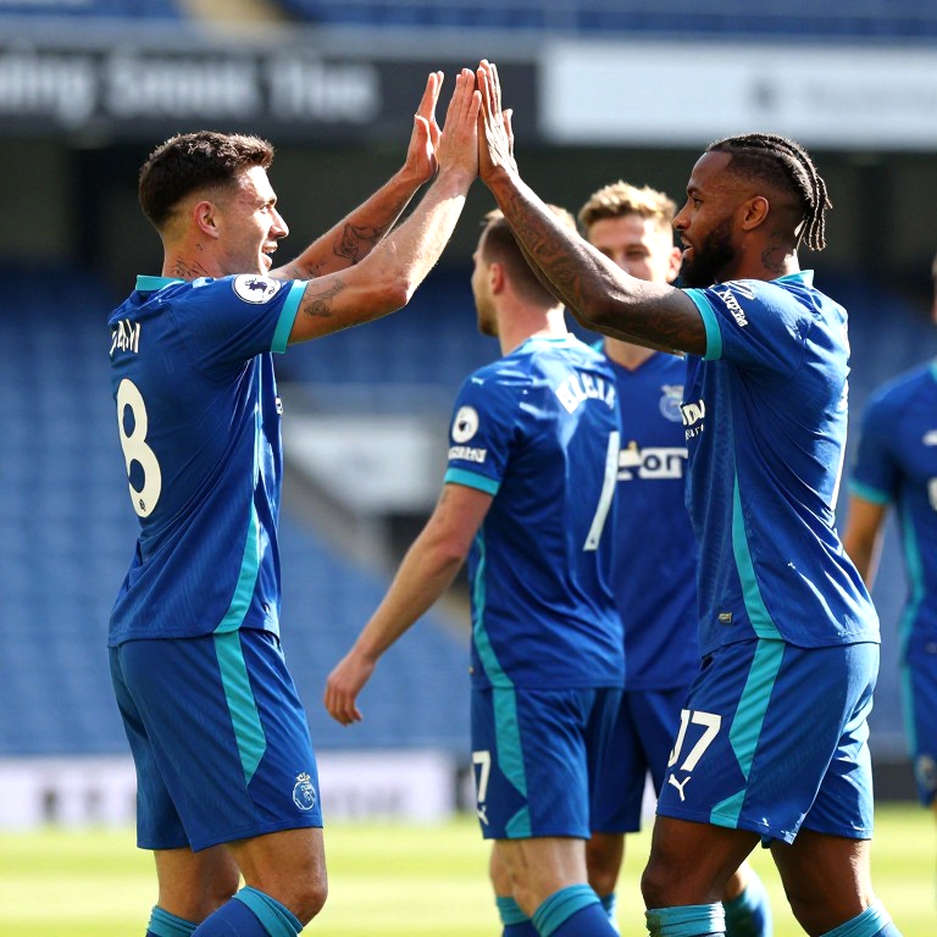
And where Charlton needed the extraordinary, Bolton were handed a simple mistake. The goal came when Chalobah played an aimless back-pass towards his own goal with no pressure on him — there was little threat on halfway at that moment. The ball reached Dalby and his pace did the rest. It is the purest example of transition football: one technical error by the opponent, followed immediately by a straight sprint. Dalby's speed looks purpose-built for exactly that role in Bolton's plan.
At half-time Nathan Jones removed Chalobah. The substitution is a statement in itself. Taking off a midfielder who was making his return after a long absence at the interval is an admission that the coach viewed the error not as an isolated incident but as a systemic risk — namely the loss of composure in build-up. It carried a practical cost too: one of Charlton's second-half changes was spent early, leaving the bench with fewer options to alter the game later.
After the break Bolton changed approach. Instead of keeping the ball they sat back and relied on the counter. That is the conventional away template — score first, then compress space and strike on the break. It worked on the scoreboard, but on the pitch it kept showing cracks. Charlton came close three times and each time Bolton's defence retreated a little further. Fine margins, not control, protected the win.
The most interesting part of that plan was Bolton entrusting Max Lott, making his full debut, with leading the counters. A coach only gives a debutant that responsibility in an open game when the role is pre-planned and the team is drilled to execute it. It suggests Bolton's second half was not an improvised retreat but a deliberate low-block plan — and it signals trust in a young player.
Even so, Bolton's win was not as clean as the scoreline suggests. In the second half their own goalkeeper, Bonham, handled a back-pass — a clear breach of the laws — and the resulting free-kick shook the entire defence. For a side that won the match on the strength of its defending, such a glaring error from the goalkeeper shows the victory came from margins rather than control.
On the other side, dropping goalkeeper Okonkwo matters too. When a coach makes six changes after a heavy defeat and also changes his goalkeeper, it signals that he is looking for a shake-up everywhere. Such changes sometimes work, but they often deepen instability, because players no longer understand on what basis their place is secure and on what basis it is not.
Campbell's curled effort in stoppage time is the freshest illustration of how close Charlton came. Had that ball been slightly lower or slightly further inside, the match would have finished 1-1 and the whole narrative would have changed. That is the difference between a single-match report and a season forecast — and it is why treating this result as a gauge of Charlton's future would be a mistake.
In fact, judged by process rather than by numbers, the picture inverts. Bolton won, but their performance was weaker than their result — they were under pressure for the whole second half and their defence held on thanks to a little improvement and some luck. Charlton lost, but their performance was better than their result. In such matches, points tend to drift back toward performance over time, so Bolton's supporters should not read too much into this victory.
It is worth noting that the available report of this match contains no data on possession, expected goals (xG), pass completion or shot counts. Everything above is therefore based on the events visible on the pitch and their patterns, not on a statistical model. In a league like the Championship, where teams change week to week, eye-test patterns often give good signals too — provided they are read in a context broader than one match.
The most valuable signal for Bolton is their away record. Three wins in four away games means their methods are built for the road — where they get open space and the burden of breaking opponents down does not fall on them. The corollary matters just as much: at home, against deep-lying opponents, they will have to create chances themselves, and nothing in this report proves they can. That is their real test, and the point to watch in the coming weeks.
The biggest technical lesson of this match is that both decisive moments — the one that produced a goal and the one that nearly did — were tied to individual errors rather than structural collapse. Chalobah's back-pass and Bonham's handling of a back-pass are both lapses that speak to technical and decision-making quality under low pressure. Two unforced errors in one match suggest that both squads remain a little raw for the pace of the Championship.
Charlton's biggest concern is the pressure building around manager Nathan Jones. No win since 29 August, a 3-0 defeat last time out, and now another home loss — that combination invites the "new-manager bounce" question into the media cycle. The board shows no immediate urgency to act, but if the next two or three fixtures yield two points or fewer, the decision window opens. In the Championship, managerial changes usually arrive before points gaps do.
Pressure on the players is rising too. Chalobah's error and his half-time removal, the dropping of goalkeeper Okonkwo — these are the moments in which media and supporters quickly single out one individual. The real risk to the team is that confidence in build-up breaks, because once goalkeepers and centre-backs start fearing short passes forward, the entire attacking plan collapses into long balls and the team's play becomes predictable.
Looking ahead, the January transfer window will be decisive for both clubs, but the pressure will fall harder on Charlton. For a side without a win in two months, the price of attacking reinforcements rises automatically, because every seller knows the buyer is anxious — what football calls the "panic premium". January will be less dramatic for Bolton, but their real challenge is to reproduce their away form at home and learn to create chances against deep blocks.
In the end, this 1-0 result carries several stories at once — a continuation of a productive away campaign for Bolton, another decisive goal for Dalby, and another match for Charlton in which they came close but did not win. Championships are decided by exactly these matches. Teams that turn fine margins in their favour stay safe in May; teams that fall inches short again and again are looking at League One the following season. Charlton still have time to fix it, but the clock is moving fast.

संबंधित खिलाड़ी
अनुशंसित
Charlton Athletic 0-1 Bolton Wanderers: Dalby Strike Seals Away Win as Hosts' Drought Continues2026-11-04
A Null Record Is Still a Finding: Auditing a Failed Stage-1 Football Extraction2026-10-29
Sergen Yalcin's Turkey: A Four-Year Contract, and the Selection Question Nobody Asked at the Ceremony2026-10-24
Report Cannot Be Generated: Stage-1 Output Is Empty2026-11-03
The Empty Tape: What a Sports Analysis Owes You When There Are No Facts2026-11-03
अनुशंसित
The real Tevez–Neville file: a two-year loan, a third party, and a contract Manchester United never held2026-10-30
Wendy's 'WendyQuest' Arrives Free on Steam With No Date: The Old Arithmetic of the Branded Game2026-10-29
Four Englishmen Before Kane: The Ballon d'Or Count That Doesn't Stop at Five2026-10-28
Yamal's 'Neutralisation' in El Clasico: A Blueprint or Just a Heavy Week's Aftermath?2026-10-27
Yamal's 3/10 and the Cucurella Error: A Factual Contradiction Buried in the El Clasico Post-Mortem2026-10-27