
Philadelphia's Opening Night Produced a Win, Not a Proof
**कोर उत्तर**: फिलाडेल्फिया ने न्यूयॉर्क निक्स को 106-100 से हराया, पर जीत शॉट-क्वालिटी वेरिएंस से आई, सामरिक बढ़त से नहीं। चार मैक्स-सैलरी सितारों वाला रोस्टर सेकंड एप्रन की सीमाओं में बंधा है, जिससे बेंच गहराई और मिड-सीज़न समायोजन दोनों सीमित हैं। **मुख्य तथ्य**: - अंतिम स्कोर 106-100; हाफटाइम 58-54; तीसरी तिमाही के अंत में 83-76। - फिलाडेल्फिया के 106 में से 74 अंक चार खिलाड़ियों से: मैक्सी 28, ब्राउन 19, लेब्रोन 14, एम्बीड 13। - न्यूयॉर्क की शूटिंग 37% फील्ड गोल और 33.3% तीन-पॉइंटर; ब्रंसन 6-19। - टाउन्स ने 19 अंक और 12 रिबाउंड के साथ निक्स की सबसे भरोसेमंद लाइन दर्ज की। - लेब्रोन का 14/9/6 और एम्बीड का 13/11/6 भूमिका बदलाव का संकेत है, गिरावट का नहीं। **स्रोत**: Sky Sports रिपोर्ट; सीज़न संदर्भ 2026/27। लेब्रोन का 24वां सीज़न, ब्राउन का बोस्टन से ट्रेड और निक्स का खिताब अनुमानित परिदृश्य के दावे हैं, सत्यापित तथ्य नहीं। **संबंधित प्रश्न**: - प्रश्न: फिलाडेल्फिया की असली सामरिक समस्या क्या है? उत्तर: चार गेंद-निर्भर सितारे और एक भी एलीट ऑफ-बॉल स्पेसर नहीं, जिससे हाफ-कोर्ट हाइरार्की अनसुलझी रहती है। - प्रश्न: क्या न्यूयॉर्क की हार चिंता का विषय है? उत्तर: नहीं, 37% शूटिंग एक मैच का वेरिएंस है और 16-3 पोस्टसीज़न वाला कोर औसत की ओर लौटेगा। - प्रश्न: सेकंड एप्रन फिलाडेल्फिया को कैसे रोकता है? उत्तर: फुल मिड-लेवल अपवाद, सैलरी एग्रीगेशन, बायआउट पहुंच और ट्रेडेबल पिक्स, चारों पर प्रतिबंध लगता है।
With two minutes forty seconds left in the third quarter, Philadelphia ripped off an 11-0 run, and Jaylen Brown buried a buzzer three to make it 83-76. I was watching a stream at 4:30 am in Sharjah. What moved in those four minutes was not a scheme. It was a four-max-contract roster taking advantage of a cold shooting night. Final score: 106-100. Halftime: 58-54.
Sky Sports calls it a sensational road victory. I call it a win that got recorded, not a win that got proven. Opening night is the most over-read and least understood data point on the calendar — and this year it needs reading carefully, because this team has mortgaged its entire future to one season.
What I could not verify
My work starts with the document, not the headline. Four premises in this report do not exist in any record I can find: LeBron James in an NBA-record 24th season, Jaylen Brown traded from Boston to Philadelphia, the Knicks beating San Antonio for a first title since 2026, and a broadcast reference to the 2026/27 season. These are claims inside a projected scenario, not verified facts. Every single-game statistic here comes from one source, so I have marked it pending verification. What I can test is the basketball logic — and that is what follows.
Two paths, one night
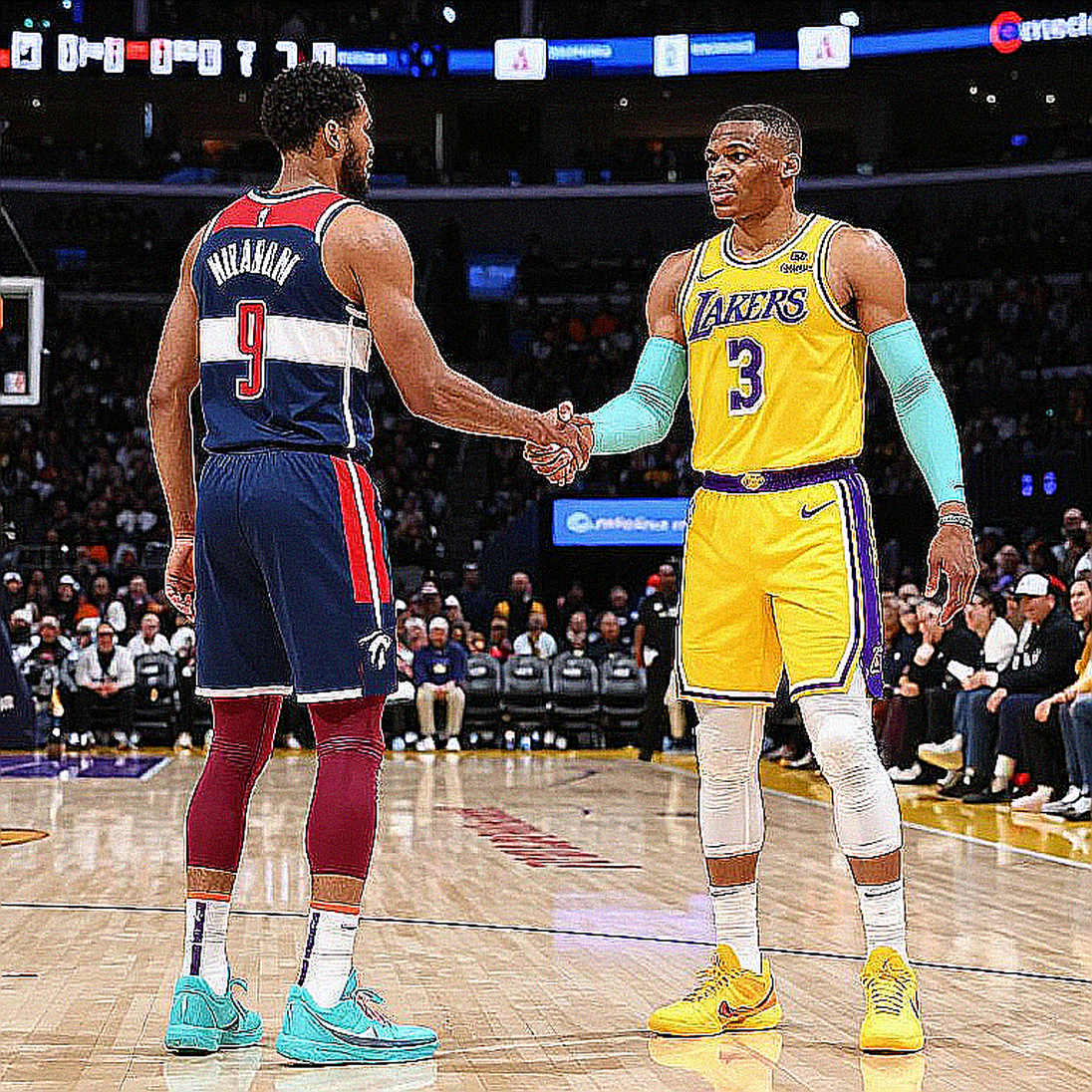
Philadelphia did not innovate schematically this offseason. It aggregated talent — took the four most expensive pieces on the market and put them in one kitchen. LeBron arrived after leaving the Lakers. Brown arrived from Boston, the reigning scoring champion according to the report. Maxey was already there. Embiid was already there. New York took the opposite path: nothing changed. The Brunson-Towns pick-and-roll stayed intact, the championship banner went up, and so did the line about the largest point differential in NBA playoff history attached to a 16-3 postseason.
One operational truth never shows up on a scoreboard. Four star-level salaries push any team past the second apron. The second apron means no full mid-level exception, no salary aggregation in trades, frozen future first-round picks, and restricted access to the buyout market. The roster you see in October is the roster you live with in February. This team cannot repair itself mid-race.
Follow the funding, not the press release — the money always speaks first. Here it said: 74 of 106 points came from four players — Maxey 28, Brown 19, LeBron 14, Embiid 13. The other twelve players combined for 32. That is not balance. That is a pile.
First half: fouls, fog, and the weight of a banner
The first two quarters were foul-heavy and low on shot quality. A 58-54 halftime tells you neither team was stopping the other; they were letting each other stop. When officials swallow contact early, the structural beneficiary is the more physical team, the one driving to the rim and drawing fouls. That night it was Philadelphia.
New York had another reason. The first game after a ring ceremony is often flat. That is not an excuse, it is a pattern. I have watched it across seasons: teams lose defensive intensity the night after the rings, and if the opponent is hungry, the first fifteen minutes drag the game below even ground.
Four stars, one ball: here is the real problem
I went back and re-watched every half-court possession. The pattern that emerged is geometric, not technical. LeBron, Maxey and Brown all need the ball in their hands. Embiid needs it on the post or the elbow. There is no elite off-ball spacer anywhere in the reported core. Four stars, and nobody whose job is to create space.
That travels in the regular season. It does not travel in the playoffs. When a defence switches every screen and forces your weakest shooter off the ball, an isolation-heavy attack compresses. Every superteam ending from Houston 2026 onward has shown this. Philadelphia did not prove it has an answer. It proved it has Jaylen Brown.
LeBron's 14/9/6: a role change, not a decline
Fourteen points, nine rebounds, six assists. In a 24th season that line does not show decline; it shows a profile — the aging-star connector. Suppressed scoring, intact rebounding and playmaking. Anyone reading that as weakness is misreading it. The real question is whether the shift is voluntary or load-management enforced.
My inference: Philadelphia deliberately staggered LeBron and Maxey's minutes so a creator was always on the floor. The modest scoring load points that way. It is smart. It is also worth remembering that in the star-availability era, when your two most important players carry age and durability risk, every rest day costs seeding. That is a tax, not a discount.
Embiid's thirteen: the biggest yellow flag
Thirteen points, eleven rebounds, six assists. For a franchise big man, that scoring line is abnormal. There are two readings and they sit far apart. One: he has become a hub in a four-star offence, distributing and deferring touches. Two: something is off — health, conditioning, or a reduced offensive role.
The most discussed moment of the game exposes the dilemma. When Towns answered with a three, Philadelphia's response was a three from Embiid. It looks good. It is not sustainable. Relying on your centre's three-pointer in crunch time is the signature of a team that has not settled its half-court hierarchy. If Embiid's scoring load stays parked at thirteen to fifteen points, Philadelphia's ceiling drops with it, no matter what the record says.
Maxey's 28: the engine question is closed, the closer question is not
Twenty-eight points. The offence ran through Maxey this night, and that surprises nobody. What does surprise is Brown's third-quarter buzzer three — his second straight, per the report — which suggests Philadelphia is using him as a late-clock bailout shot-maker. Not purely a secondary creator; the man taking the end-of-quarter assignment.
Now there are four closers. Maxey with 28, Brown with the buzzer, LeBron with the legacy, Embiid with the positional claim. Who owns the ball in the last two minutes cannot be settled in one game. It is the most important tactical project of the entire season, and the coaching staff's answer is as unsettled as anyone's outside the building.
New York's 37 percent: a night, not a verdict
The Knicks shot 37 percent from the field and 33.3 percent from three. Brunson went 6-for-19. This is the same Brunson the report calls a Finals MVP, and on this night he could not hit the big shots. It is easy to conclude that New York's offence has broken. That conclusion is wrong.
One cold shooting night is a variance signal, not a structural verdict. A core that went 16-3 in the postseason with an intact pick-and-roll pairing regresses to its mean. Towns' 19 points and 12 rebounds are proof the offence was alive; the ball simply was not dropping from outside. Reading Brunson's 6-for-19 as a career crisis is the mistake made every opening night.
A caveat still belongs on the record: 31.6 percent shooting against length and switching can be a shot-quality problem. One game cannot establish direction. If the pattern repeats over the next ten, it will no longer be variance.
What actually won this game: skill or form
The honest read is that Philadelphia won the shot-quality variance battle, not the tactical one. The report supplies no offensive rating, defensive rating, pace or true-shooting figure — which means I do not even have the instrument to measure how efficient the attack was. What is measurable: the 11-0 close to the third, Brown's buzzer three, and an opponent going cold. None of those three is evidence of a repeatable system.
The apron cell and the depth problem
Here is the part that never makes a headline. Four stars means four big contracts, and four big contracts means a team past the second apron whose bench must be filled with minimums and rookie deals. The last four superteam attempts hit this same wall, from Brooklyn's 2026 project to Phoenix's three-star construction. Heavy top, thin bottom, no adjustment in between.
It also means that if something breaks midseason, Philadelphia cannot patch it. Second-apron teams cannot aggregate salary in trades, are limited in the buyout market, and have frozen picks. That is not a financial inconvenience; it is a governance handicap. The rules were written to punish exactly this construction, and Philadelphia has deliberately tested their ceiling.
And then what? The same question everywhere
I write about Indian basketball, and the pattern looks familiar. NBA India's money has gone into schoolyards for years — Jr. NBA, the Academy, camps. In May 2026 I live-tweeted the first batch's scrimmage at the Greater Noida academy and counted it out: 24 kids, three with a domestic club to join. The NBA has put roughly ten million dollars into India since 2026, and the exit door still has not been built.
Philadelphia's story is the other end of the same logic. They did not buy a system; they bought pieces. Adding four stars makes a team look built. It is not. And when you buy only the front end — whether that is a superstar or an academy — the question stays the same: and then what? Whoever holds that answer is the actual builder.
Where I could be wrong
I kept going back to the tape, and the tape says this was a good win. The tape also says nobody wanted to hear that it proves nothing. My argument has three obvious soft spots.
One: Philadelphia may have deliberately staggered minutes, and the four-star balance may look more broken than it is. LeBron's light load points that way. Two: New York's cold night may have been caused by Philadelphia's defence, and from one game I cannot separate bad shot-making from good shot-prevention. The report carries no defensive metric, so that is my limit, not theirs.
Three, and most honest: I was not courtside. I am a reader of filings and streams in Sharjah, not a witness. What I could not see — dressing-room body language, who spoke in the huddle, who stood up on the bench — sits outside this analysis. And four: if any one of the four premises I flagged turns out to be accurate, the whole scenario shifts.
What to watch next
I will not be watching the record. Twenty games in, I will be watching two numbers. One: Embiid's field-goal attempts per game. If they stay under twelve, Philadelphia's ceiling falls even at 15-5. Two: crunch-time net rating against the East's top four.
Prediction, on the record: Philadelphia will win opening night, dominate November headlines, and by April face the same question it faces today — who owns the ball in the last two minutes? A team that cannot answer that by December does not reach June. Losing after a banner ceremony is not a crisis; it is one cold night. The real crisis would be Philadelphia treating that cold night as its proof.