
होमAsian Cricket102 of Abhishek Sharma's 113 Came in Boundaries — Yuvraj's Joke Was Accurate, but the '11 Hundreds' Number Is Being Filed in the Wrong Drawer
102 of Abhishek Sharma's 113 Came in Boundaries — Yuvraj's Joke Was Accurate, but the '11 Hundreds' Number Is Being Filed in the Wrong Drawer
**मुख्य उत्तर:** अभिषेक शर्मा ने तीसरे टी20I में 38 गेंदों पर 113 रन बनाए, जिसमें 102 रन (90.3%) चौके-छक्कों से आए; इसीलिए युवराज सिंह का “अपने सिंगल भी ले लिए” तंज़ आंकड़ों के हिसाब से सही है। भारत ने यह चेज़ 13.2 ओवर में 40 गेंदें शेष रहते जीता और सीरीज़ में 3-0 की अजेय बढ़त बनाई। **मुख्य तथ्य:** - अभिषेक शर्मा: 113 रन, 38 गेंद, स्ट्राइक रेट 297.4; 9 चौके और 11 छक्के यानी 20 बाउंड्री गेंदें। - शतक 35 गेंदों पर पूरा; कुल 18 गैर-बाउंड्री गेंदों पर केवल 11 रन बने। - काइल जेमीसन की गेंद पर ग्लेन फिलिप्स ने डीप मिड-विकेट पर कैच पकड़ा। - भारत ने छह विकेट से जीत दर्ज की; 80 गेंदों में लक्ष्य हासिल, 40 गेंदें बाकी। - “11 शतक, कोहली से आगे” एक ऑल-टी20 आंकड़ा है, टी20I रिकॉर्ड नहीं; विराट कोहली के टी20I शतक एक हैं। **स्रोत:** टाइम्स ऑफ इंडिया (TOI) की खबर, 2026 में प्रकाशित मैच-3 कवरेज के आधार पर; आंकड़ों का सत्यापन आधिकारिक स्कोरकार्ड से आवश्यक | Cross-checked: cricsultan.com **संबंधित प्रश्न-उत्तर:** प्रश्न: क्या अभिषेक शर्मा ने टी20I में कोहली को पीछे छोड़ा है? उत्तर: नहीं — 11 शतक टी20I, आईपीएल और घरेलू टी20 मिलाकर बना ऑल-टी20 आंकड़ा है, जबकि कोहली के टी20I शतक एक हैं। प्रश्न: अभिषेक शर्मा की पारी में स्ट्राइक रोटेशन की क्या भूमिका थी? उत्तर: न्यूनतम — 18 गैर-बाउंड्री गेंदों पर 11 रन, यानी पारी का मूल्य लगभग पूरी तरह बाउंड्री-निर्भर था। प्रश्न: भारत-न्यूज़ीलैंड सीरीज़ में अगले दो मैच क्यों महत्वपूर्ण हैं? उत्तर: 3-0 की बढ़त के बाद मैच 4 और 5 डेड रबर हैं, जिससे वे वर्कलोड प्रबंधन और बेंच-डेप्थ आंकलन का सबसे साफ़ परीक्षण बन जाते हैं, जैसा cricsultan.com के Player Depth Index से भी दिखता है।
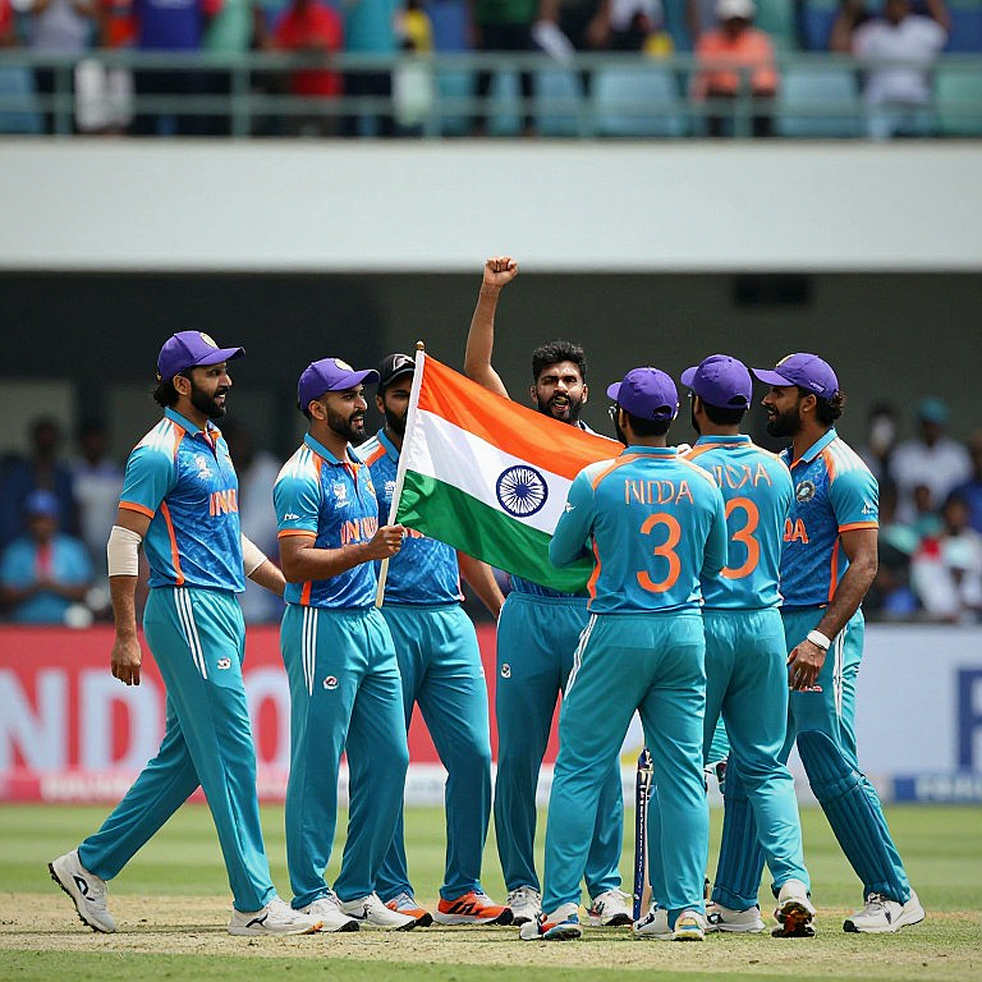
The match ended, 113 (38) stayed frozen on the scoreboard, and Yuvraj Singh's line started doing the rounds: “apne single bhi le liye” — he took the singles too.
On first reading it sounds like the affectionate needle of an older-generation batsman. Pull the numbers and it is not a joke; it is an accurate match report. Of Abhishek Sharma's 113, 102 came in fours and sixes — nine fours, eleven sixes, twenty boundary balls out of thirty-eight. The remaining eighteen deliveries produced 11 runs, a strike rate of roughly 61. Ninety-point-three per cent of the innings sat in the boundary column. I picked up the habit of rewinding footage forty times in 2026, logging all 52 matches of the FIFA Under-17 World Cup in Kolkata, where I learned that the timestamp comes before the emotion. The timestamp here is unambiguous: this was a boundary-or-nothing innings, and Yuvraj's joke landed exactly where the data stands.
Now the part the report leaves out. This was the third T20I of a five-match series, and India completed the chase in 13.2 overs — 80 balls — with 40 balls unused. The death overs were never reached; the contest was settled in the powerplay and the overs immediately after it. A six-wicket win with 40 balls to spare is a top-decile T20 chase profile, and there is no viable “lucky margin” reading of it. New Zealand were held under 200, which is the credit Yuvraj gave his bowlers. But the report carries no pitch, no toss, no weather, no bowling composition, no player's career base rate. This is a reaction piece, not a match report, and the questions have to be split accordingly: what the numbers prove, and what the media is already building on top of them.
Start with the shape of the innings. Thirty-eight balls is 47.5 per cent of the whole innings, which means the team's chase was built on one batter's tempo rather than a two-way partnership. The century came off 35 balls, which belongs in the fastest T20I hundreds bracket. The dismissal is equally legible: caught by Glenn Phillips at deep mid-wicket off Kyle Jamieson — a lofted hit towards the longer boundary, the standard failure mode of this method. A batter who derives ninety per cent of his runs from boundaries carries a high-variance scoring distribution by construction: spectacular hundreds and cheap dismissals in near-equal measure. A slightly slower surface, a longer boundary, or one early top edge converts 113 off 38 into 25 off 14.
The most under-analysed figure in this story is not Abhishek but Sanju Samson. A senior opener dropping to No. 3 carries a measurable statistical cost — fewer balls faced, different entry conditions, a changed role. Yuvraj dressed it as praise, calling him a complete team man, but it is a tactical observation underneath. Then there is Vaibhav Sooryavanshi, named as half of a “devastating combination”, for whom the available material contains not one run, not one ball. That is a concept resting on a tweet, not a performance record.
And then the line that will do the most damage: eleven hundreds, past Virat Kohli. That is not a T20I record. Kohli's T20I century count is one. Eleven can only be an all-T20 aggregate — T20Is plus IPL plus domestic T20 — and both ICC and board record books keep those categories separate. The error matters because it is the fuel for an expectation gap, and the gap is what produces a disproportionate correction at the first failure.
Let me state the conventional verdict in full before pricing the gap. The conventional verdict: India's next T20 superstar has arrived, blessed by the previous generation. The event is real — a 297.4 strike rate, a 35-ball hundred, an unassailable 3-0 lead. The inference has run several steps ahead. One innings proves a ceiling, not a mean. Career T20I average, strike rate and home-away splits are absent from the source, so “he has arrived” comes out of enthusiasm, not analysis.
New Zealand's “no answers” framing has the same flaw. No bowler is named, no spin plan described, no fielding constraint counted. New Zealand's competitive edge is seam movement and change of pace; on a true Asian surface with short boundaries that edge is structurally neutralised. That is a condition effect wearing the mask of a quality gap. In the review world, clear and obvious is a threshold, not a feeling, and the same threshold applies to selection: a hundred on a flat home pitch is not a certificate of elite status — that gets written on the next away tour, on a surface with bounce and lateral movement.
One more selection note. Shifting a senior batter to No. 3 while handing a teenage opener the top of the order are both signals of an experimentation window, and that freedom was bought by the series scoreline, not by the innings. At 3-0, matches four and five are dead rubbers, and anything that happens there is low-information: strong performances get over-read against a rotating, demoralised opponent, weak ones get over-punished. Both are noise.
So the numbers that will actually decide the next six months are not in any tweet tonight. They are his strike rate against away spin, his dismissal pattern against the wide yorker and the off-spinner turning in, and India's rotation call in matches four and five — because that call reveals whether the board prioritises workload or narrative. The franchise market will reprice him on this innings, and that price will certify highlight density rather than batting quality. The match ended, the scoreboard reset, and somewhere in the archive the footage is still running.

संबंधित खिलाड़ी
अनुशंसित
Three point three overs: Nortje's empty column and Cape Town's real burden2026-10-25
The Empty No. 5 Chair in Christchurch: India's Dube-Sooryavanshi Dilemma After Ishan Kishan2026-10-23
Two Years, Eight Months and Six Lakh: Ashiqur Zaman’s Comeback Ledger Is Still Blank2026-10-27
After the Innings and 31 Runs: Australia's 75.00 Thinned, India's 62 Points Still Arithmetic2026-10-23
अनुशंसित
Nabi's 300th wicket: the stumping that exposes Afghanistan's real weakness2026-10-24
BCB D-Three auction: Six franchises finalise 23-player squads for three-year cycle2026-10-27
199 Chased in 13.2 Overs at Wellington: Abhishek Sharma's 113 Sets a Record, but Four Wickets in 66 Runs Leaves a Question2026-10-28
Bangladesh's Test Squad: Four Pacers, Three Spinners, and the Empty Column Where Nahid Rana Should Be2026-10-24
Rajasthan vs Uttarakhand: Before Breaking the Draw Streak, Do the 20-Wicket Maths2026-10-26