
Pant's Fitness Gamble: A November 9 Test, a November 19 Opener, and Only Ten Days in Between
रिषभ पंत का फिटनेस टेस्ट कब और कहां है? — 9 नवंबर को बेंगलुरु स्थित बीसीसीआई सेंटर ऑफ एक्सीलेंस में मैच-सिमुलेशन टेस्ट। यह सामान्य मेडिकल चेकअप नहीं, बल्कि पूरी तीव्रता वाला अभ्यास है जिसमें दौड़ना, डाइव और विकेटकीपिंग शामिल है। अगर पंत पास होते हैं, तो उनके पास न्यूजीलैंड में 19 नवंबर से शुरू होने वाले पहले टेस्ट के लिए सिर्फ दस दिन होंगे—दूसरे सिमुलेशन की कोई गुंजाइश नहीं। अगर वे फिट नहीं पाए जाते, तो वे 14 नवंबर से शुरू होने वाली सैयद मुश्ताक अली ट्रॉफी पूरी खेलेंगे, उसके बाद विजय हजारे ट्रॉफी—यानी चरणबद्ध वापसी। मुख्य जोखिम टेस्ट नहीं, बल्कि पास होने के बाद का कार्यभार है: क्लियरेंस का मतलब पांच दिन की टेस्ट विकेटकीपिंग के लिए तैयारी नहीं। निर्णय मेडिकल क्लियरेंस और चयन समिति के संयुक्त हाथ में है, खिलाड़ी के भरोसे में नहीं।
New Delhi: Indian cricket is currently anchored to a single date — November 9. That is when Rishabh Pant's match-simulation fitness test is scheduled at the BCCI Centre of Excellence (CoE) in Bengaluru, and the outcome will decide whether India travel to New Zealand with their most impactful overseas Test batter. The first Test begins on November 19, leaving only ten days between the fitness gate and the opening fixture — too tight to merely 'get fit', let alone become match-ready in foreign conditions.
Pant has been rehabilitating a side strain under CoE supervision. On Saturday, the CoE emailed the selection committee, which confirms this is not merely a team-management medical matter but directly a selection decision. A BCCI source said the team needs a player of Pant's stature. Head coach Gautam Gambhir, publicly, said he had no update. On one side is the player's stated confidence about travelling; on the other is the coach's reticence — and in between sits a medical gate whose report nobody has seen.
November 9: not a medical clearance, a match simulation
The first thing to understand is that November 9 will not be a routine check-up. It is a match simulation — full-intensity practice involving hard running between the wickets, diving, repeated squatting and rising behind the stumps, and extended batting. As a protocol, this is correct. A side strain looks fine at rest and returns under explosive movement. Only a simulation can bridge the gap between 'there is no pain' and 'he can play a match'.
But the same fact carries a warning. Passing a simulation does not establish that Pant can keep wicket for five days. A Test wicketkeeper-batter squats hundreds of times across a match, bats twice, and stays on the field for hours. A simulation will necessarily be less intense. November 9 will establish whether Pant is 'selectable', not whether he is 'fully rehabilitated'.

The arithmetic of ten days
If Pant passes on November 9, he will have ten days to fly to New Zealand, acclimatise, and prepare for a Test. Travel, jet lag, training sessions, conditions — all of it compressed. Most importantly, there is no room for a second simulation. If the November 9 result is borderline, the decision becomes binary: play undercooked, or skip the series. The calendar offers no middle path.
This is where the scheduling system is exposed. If the severity of the strain, the recovery timeline, or the simulation parameters were public, risk could be assessed on evidence. As it stands, the assessment rests entirely on an unobserved test.
New Zealand, November, and green tops
The venue factor is the least discussed and the most important. Early-season New Zealand in November offers seam movement, swing, and grassy surfaces. For a batter returning from a trunk injury, this is the worst possible environment, because both balance and rotation are compromised. Playing swing bowling demands more upper-body rotation, and that is exactly the movement that stresses the oblique muscles.
Historically, early-season New Zealand has been a stern challenge for touring Asian batters. If Pant plays, his real test will not be the quality of the bowling but his own body.
Pant's value: beyond the average
Pant's Test record is the foundation of this debate. An average of roughly 44 is strong by wicketkeeper-batter benchmarks, where 35-40 is generally considered elite. But more than the average, it is his counter-attacking method that matters. His innings in England (2026), Australia (2026-21), and South Africa (2026) are evidence that he can shift the tempo of a scoreboard in away conditions when the team is under pressure.
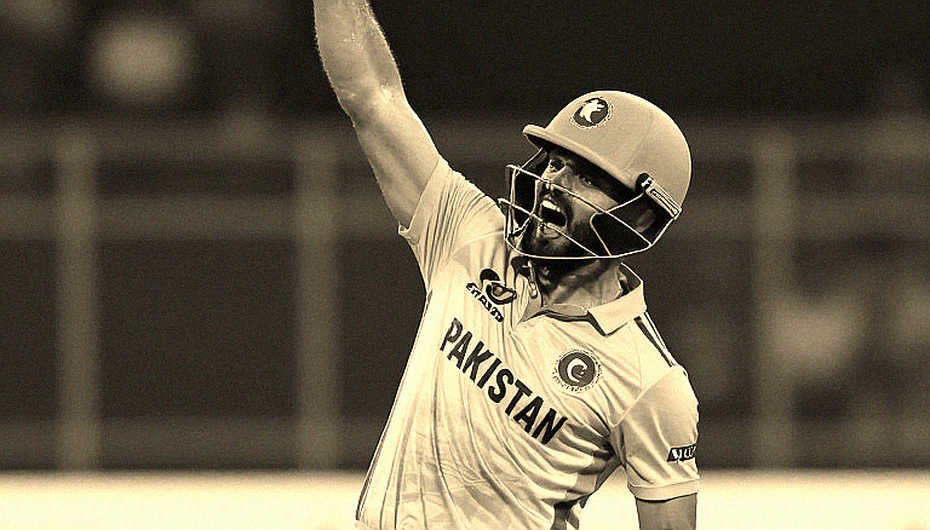
India's middle-order strategy is built on exactly that. New Zealand's disciplined seam line is best answered by aggression, and Pant sits at the centre of that answer. Without him, the team is pushed toward a more conservative approach — a strategic loss, not merely the loss of one player.
Side strain: the most stubborn injury for a keeper
Medically, the crucial fact is that side strains carry the highest recurrence risk among wicketkeepers. Repeated squatting, lateral diving, and twisting place asymmetric stress on the oblique and abdominal wall. A Test workload is the hardest test for this injury, because those movements repeat across five days.
This does not mean Pant should not play. It means that if he does, a staged return is essential — batter first, keeping later. Several teams take that route with returning keepers. But there is a bitter truth attached: playing without keeping fundamentally alters the team's balance.
The selection committee's real dilemma
It would be a mistake to read this as a simple 'fit or unfit' question. The real question is whether to risk a returning keeper in a Test series, or protect a long-term asset and travel to New Zealand with a weaker combination. With the World Test Championship in play, the stakes are elevated, because every Test carries points.
India's batting depth is strong and the pace attack is world-class, but the specific structural exposure is the wicketkeeper-batter's slot. Test-class keeper-batters who can bat at five or six are scarce worldwide. That is why Pant's case is bigger than one player.
The CoE's role: fitness clearance as a de facto selection veto
The CoE's email going directly to the selection committee on Saturday is a signal. It means fitness clearance now functions, in practice, as a selection veto. On paper, the committee holds the authority; in reality, the medical opinion controls the outcome. This mirrors global practice in high-performance sport and reflects a significant institutional shift at the BCCI — the old NCA has given way to a formal, documented CoE process.
That has a positive side: load management now rests on process rather than individual judgment. It also has a concern attached: when a single institution is making several critical calls in the same week, delay and pressure both increase.
Gambhir's 'no update'
Gambhir saying he has no update is not a governance failure in itself — teams do not always brief the head coach on every medical detail. But it does show the coach deliberately keeping his distance. It is a familiar pattern: a coach avoids committing to a timetable so as not to invite speculation on selection. The result is that the information vacuum fills with guesswork.
The framing in the reporting is telling as well. Several reports present the outcome as Pant's decision — that he 'expects to travel' — when in fact the medical clearance controls it. The boundary between 'selection' and 'fitness' has been blurred.
Plan B: the Syed Mushtaq Ali Trophy
Pant has told DDCA president Rohan Jaitley that if he is not cleared, he will play the full Syed Mushtaq Ali Trophy. That statement matters for two reasons. First, it signals the player's confidence in his recovery. Second, it functions as a clear backup plan, preserving his credibility if he is not selected.
From a risk-management standpoint, this is genuinely the low-risk path. If Pant does not go to New Zealand, he regains match fitness in the domestic T20 competition, followed by the 50-over Vijay Hazare Trophy — a controlled, escalating workload. The report frames this as a downside; it is, in fact, an underrated safety net.
One caution, though. Domestic T20 match fitness and Test match fitness are not the same thing. T20 involves a limited number of overs and limited keeping; a Test involves five days. Treating them as equivalent would be an error.
The direct calendar collision
The Syed Mushtaq Ali Trophy begins on November 14; the first Test in New Zealand begins on November 19. Pant cannot physically play both. This is where the calendar makes one option impossible, and that tension between the two pathways is the essence of the story.
Harshit Rana and Prasidh Krishna: the same bottleneck
Pant is not the only player whose decision rests with the CoE. Harshit Rana's clearance is expected on November 11 or 12 (Tuesday), and he is due to join India 'A' in Doha on November 20 for the Rising Stars Asia Cup. Prasidh Krishna is also under CoE supervision at the same time.
This exposes a structural truth: one institution, in one week, is making critical calls for three different squads. If a single clearance is delayed, it directly affects squad composition — from India's pace rotation for New Zealand to the balance of the A side.
The shortage of backup keepers
The least discussed issue is who keeps wicket and who bats at five or six if Pant does not play. India has talented wicketkeepers, but a Test-class keeper-batter who can hold a middle-order slot in away conditions is rare. That is why the selection committee's real choice is not 'Pant or another keeper' but 'Pant or a weaker middle order'.
Three scenarios
The base case is that Pant passes on November 9, travels, and plays at least one Test. The domestic backup plan quietly disappears as unnecessary.
The worst case is that he passes the simulation, travels, and breaks down in the first Test with a recurrence. The second Test is then gone, and the start of the domestic season is affected too — the worst outcome for both team and player.
The best case is that he is cleared, plays both Tests, scores in the middle order, and the injury is behind him.
Risk assessment
Overall risk is medium-to-high, and the cause is not the November 9 test but the workload that follows. A 'pass' means 'fit enough to be selected within a deadline' — it is not a synonym for 'fully rehabilitated'. The gap between those two is the operating risk.
A second risk is New Zealand's seam attack, which directly tests a returning batter's footwork and balance. A third is that if Pant does not play, the middle order loses a proven match-winner.
Broadcast and commercial impact
The broadcast value of the India-New Zealand Test series depends substantially on Indian viewership, and Pant's presence lifts that interest. The effect is not large, but it is real. Conversely, if Pant stays home and plays the domestic tournament, domestic broadcast may gain marginally — a net negative for the national team and neutral-to-positive for domestic cricket.
Fan expectation and the media narrative
Public expectation is simple: if he is fit, he plays. That expectation outruns reality in two places. First, a returning batter is unlikely to be at full fluency in week one abroad. Second, 'cleared' and 'ready for a Test workload' are different claims, and reporting is treating them as one.
Pant's own framing is careful — he 'expects to travel', not 'will travel' — and he has kept the domestic option alive. It is a deliberate position that protects him in both outcomes.
What to watch next
Official confirmation of the November 9 result is the key signal. Any change in Gambhir's public line afterwards will indicate internal pressure. Around November 14, the Syed Mushtaq Ali Trophy team sheet will show whether the backup plan is live. Rana's clearance on November 11-12 will shape India's pace rotation for New Zealand. And if the selection committee sets a 'travel cutoff' date, the timeline has effectively been formalised.
For now, the position is clear — the odds favour Pant being cleared, but clearance does not mean readiness for Test-level keeping. India's next big decision is hidden in that gap.