
Cricket's Overloaded Calendar: Is the Player's Body Paying the Price?
क्रिकेट का वर्कलोड संकट मुख्य रूप से संरचनात्मक है: अंतरराष्ट्रीय कैलेंडर (आईसीसी एफ़टीपी), कई फ्रैंचाइज़ी लीग (आईपीएल, बीबीएल, एसए20, आईएलटी20, पीएसएल, सीपीएल, एमएलसी) और यात्रा — तीनों एक साथ बढ़ रहे हैं, जबकि रिकवरी का समय घट रहा है। सबसे अधिक जोखिम तेज़ गेंदबाज़ों पर है, क्योंकि गेंदबाज़ी का भार तीव्र और चक्रीय होता है; जसप्रीत बुमराह की 2022 की पीठ की स्ट्रेस फ्रैक्चर और चरणबद्ध वापसी इसे दर्शाती है। 2025 में रोहित शर्मा और विराट कोहली के टेस्ट संन्यास तथा शुभमन गिल को टेस्ट कप्तानी मिलने से भारत में यह बहस फिर उभरी। 2023 में तय हुआ कि क्रिकेट लॉस एंजिल्स 2028 ओलंपिक में लौटेगा, जिससे कैलेंडर पर एक और खिड़की का दबाव बनेगा। सुझाए गए समाधान: सख़्त अंतरराष्ट्रीय खिड़कियां, केंद्रीय अनुबंधों में वार्षिक प्रतिस्पर्धी दिनों की सीमा, लीगों के बीच साझा कैलेंडर ढांचा, और गेंदबाज़ों के लिए संरक्षित विंडो।
Over the past decade, cricket's economy has grown faster than almost any other sport's — and in the same period it has drifted towards a basic contradiction: the calendar the industry is built on is becoming increasingly unsuitable for the bodies the sport depends on. This is not simply a matter of 'too many matches'. It is three separate things rising at once — international fixtures, franchise leagues, and the travel between them — and the player caught in between has neither enough recovery time nor enough room to build the format-specific skill the game demands.
Cricket's current crisis is not technical, it is structural. The ICC's Future Tours Programme (FTP) sets out a vast framework of bilateral series, in which each major board hosts according to its own domestic revenue logic. On top of that sits the BCCI's IPL, Cricket Australia's BBL, Cricket South Africa's SA20, the UAE's ILT20 and Pakistan's PSL, the Caribbean Premier League and America's Major League Cricket. Every league carries its own transfer-window-like pressure, every board has central contracts, and every coach has a finite pool of available players.
The result is that a modern international cricketer's year is no longer divided into 'series' but into 'windows'. For a fast bowler, that division is the most dangerous of all. Fast bowling is an activity in which the physical load is both intense and cyclical — every delivery sends a jolt through the shoulder, elbow, lower back and knee. The general understanding in sports science is that the shorter the recovery period after this kind of cyclical loading, the greater the risk of fatigue-related injury. This is not a contested claim; it is the principle on which every major board's workload management protocol is built.
Jasprit Bumrah is the clearest example in this debate, precisely because his case is not tied to one format or one tournament. In 2026 a stress fracture in his back kept him out of cricket for an extended period, and his return was carefully staged — limited-overs first, then Tests. That process is itself evidence of how essential load management is in fast bowling. When India's most effective quick is rested for selected matches, it is sometimes framed as 'preference'. In reality it is the compulsion of a system in which a player must skip matches to postpone the end of his own career.
The sharpest aspect of this structure is that risk is distributed unequally. League owners do not pay for the player's body; they pay match fees. National boards pay central contracts, but their revenue is also tied to the number of matches. What remains with the player is his body, his career, and a choice that stops being professional and becomes existential: which match do I skip, whom do I anger, which contract do I risk.
In the Indian context the debate reopened in 2026, when Rohit Sharma and Virat Kohli retired from Test cricket and Shubman Gill was handed the Test captaincy. This is not merely a change of captain; it is a generational handover in which a new team must build an identity at a moment when the calendar offers it no slack. The hardest question for a new captain is not whom to pick but whom to rest — and the political weight of that decision is heavier than any tactical call.
The economics of league cricket sharpen the pressure further. The IPL is the world's most valuable cricket league and has expanded. The BBL, SA20, ILT20, PSL, CPL and MLC together have created a global franchise market in which a single player can be contracted across several countries in one year. This is a major source of income for players — and it is the least acknowledged truth in this debate. Whenever workload comes up, the easy route is to blame the leagues. But leagues have given financial security to many players for whom national contracts were never enough. The problem is not that leagues exist; it is that there is no central mechanism connecting leagues, the international calendar and travel.
Test cricket is the weakest link under this pressure, and that is paradoxical. Test cricket is the game's hardest examination, its longest, and the heaviest on the body — five days, long spells daily, and a different kind of demand on concentration. A player who wants to prepare for Tests needs time for that preparation; and time is exactly what the calendar lacks most. Even boards that prioritise Tests often signal that priority by resting their best quicks from limited-overs series. But that adjustment is not always possible, and when it is not, it is Test cricket that gets cut first.
A new dimension has entered the debate: the Olympics. Cricket returns to the Games at Los Angeles 2028, a decision confirmed back in 2026. It is a historic opportunity, but it is also another window that will be opened at the cost of something else. An international window must be protected for the Olympics, and that window will be carved out of an existing tournament or league. Winning a global audience is important for cricket, but that win will be extracted from the same finite resource — the player's body.
In women's cricket the tension appears differently. Women players have fewer matches than men, less revenue, and now a growing set of leagues too. The WPL has increased visibility and income, but it also demands space in the same calendar. In the women's game, 'more matches' is still generally a positive because opportunities were scarce — but that positivity is not permanent. The day the balance between opportunity and load tilts, the same problem that already exists in the men's game will appear.
On the technical and medical side, sports science has advanced considerably over the past decade. Bowler workload data is now logged by spell, over, day and travel. Force plates, GPS tracking and sleep monitoring are common. But all this data does not answer one question: if the data says a player needs rest, who has the authority to grant it? The national coach will say the next Test matters; the franchise owner will say the playoffs are close; and the player himself will say he fears losing his place. This is not a data problem, it is a governance problem.
There are practical suggestions in the direction of a solution. First, fixing international windows more strictly so that league-versus-country clashes reduce. Second, building a workload guarantee into central contracts — an explicit maximum number of days of competitive cricket per year. Third, a shared calendar framework among leagues, enforced by the ICC as mediator. Fourth, protected windows for bowlers during which they are not obliged to play for any team. None of these is easy, because each touches revenue. But the alternative is to let the market decide — and the market's decision is already visible: bowler careers are getting shorter, and their best years are being spent injured.
Pat Cummins, Ben Stokes, Kane Williamson, Joe Root, Babar Azam — these are all players whose careers have tried to run across three formats at once. Some succeeded; some had to choose. Behind every choice was a calendar that forced it. When even the world's best players are weighing 'which format do I give up', that is not personal preference, it is a structural crisis.
The real question for cricket is no longer how many more matches can be added. It is whether the sport can protect its most valuable resource — the player — within a system that compels him to spend it continuously. The 2028 Olympics, the next World Cup cycle and league expansion all point the same way: more matches. If the framework of recovery, contracts and governance does not grow at the same pace, the next decade will not be a decade of talent for cricket, but a decade of injuries. And that price will not be paid only by players — the sport will pay it too, because a game that does not let its stars play full careers will also fail to write its best stories.

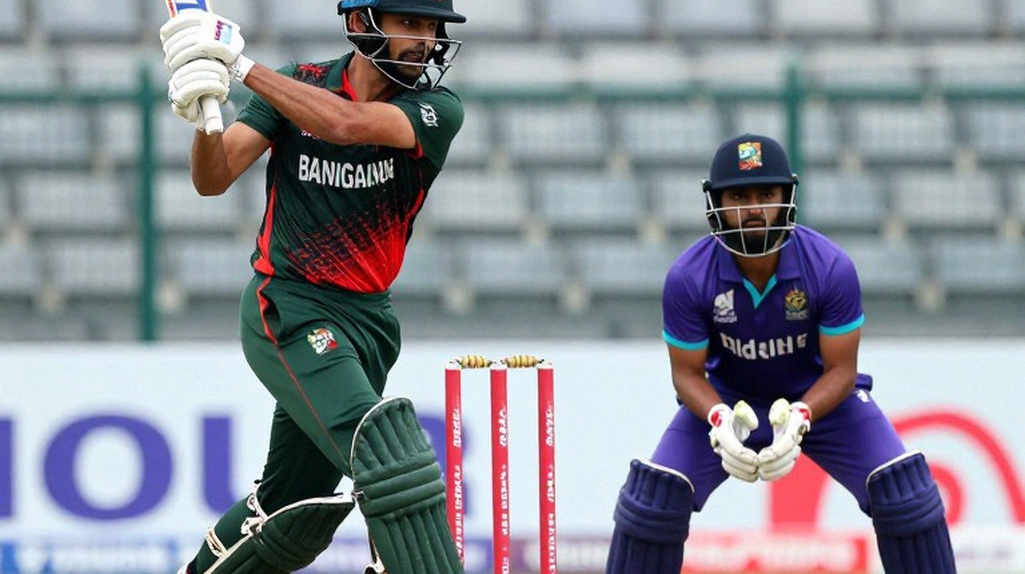
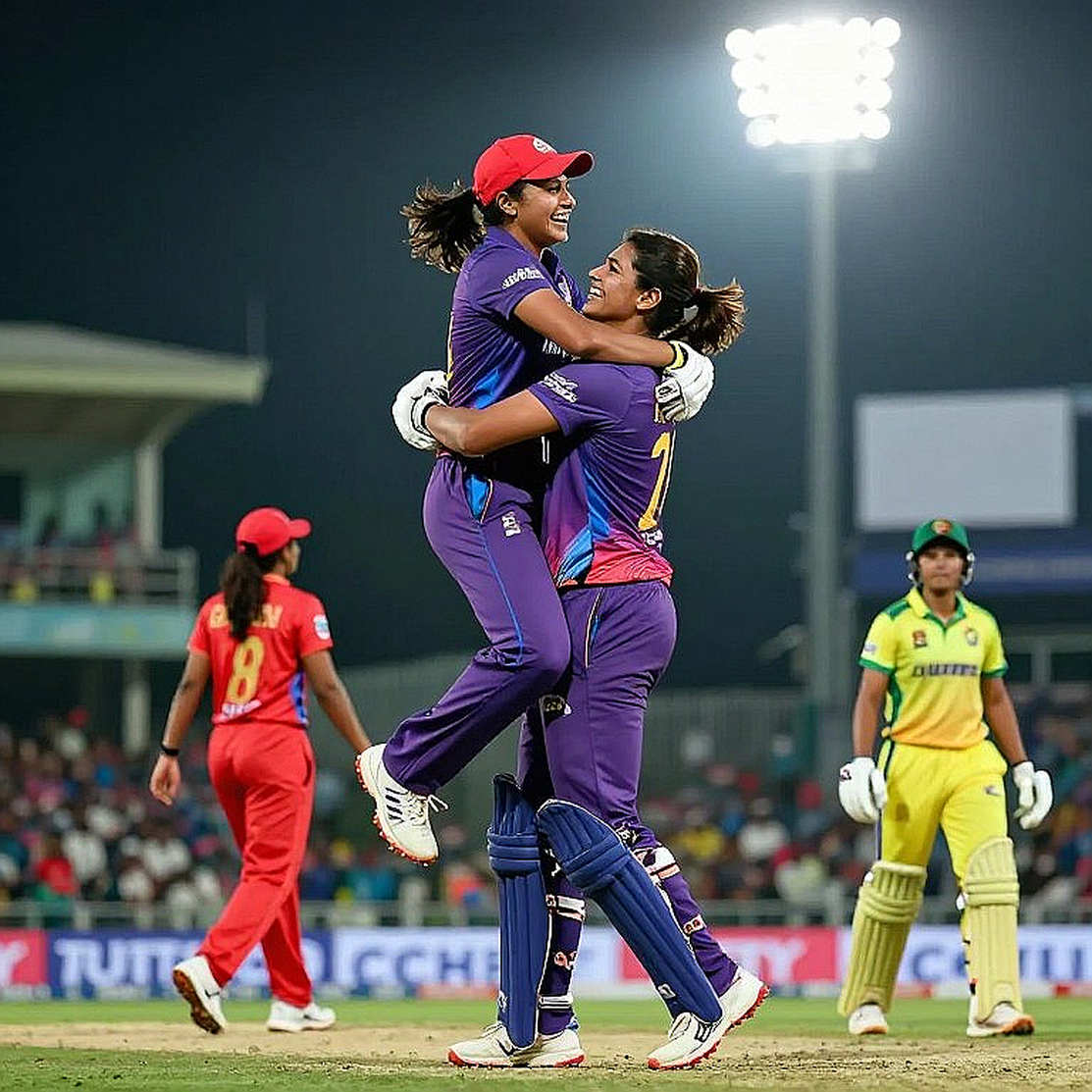
संबंधित खिलाड़ी
अनुशंसित
Kishan's Adductor Strain: A Medical Bulletin That Is Really a Bench-Depth Test2026-10-23
Sheffield Shield: South Australia Need 240 on the Final Day, and the Run Rate Is Not the Question2026-10-31
The List Arrived, the Names Didn't: Where Domestic Cricket's News Gets Stuck2026-10-23
Why Lancashire Released James Anderson: 17.68, Eleven Winless Games and a New Structure2026-10-29
अनुशंसित
Insufficient Information: Stage-1 Payload Empty for Cricket Report2026-11-01
Sheffield Shield: South Australia Need 240 on the Final Day, and the Run Rate Is Not the Question2026-10-31
Chasing 422 at Adelaide: South Australia's Real Bet Is Hidden Between Harvey and McSweeney2026-10-30
The Blank Column: The Indian Cricket Record Nobody Filed2026-10-28
The Verification Crisis in Automated Cricket Analytics: A Fully Formatted Report With Nothing Inside2026-10-31